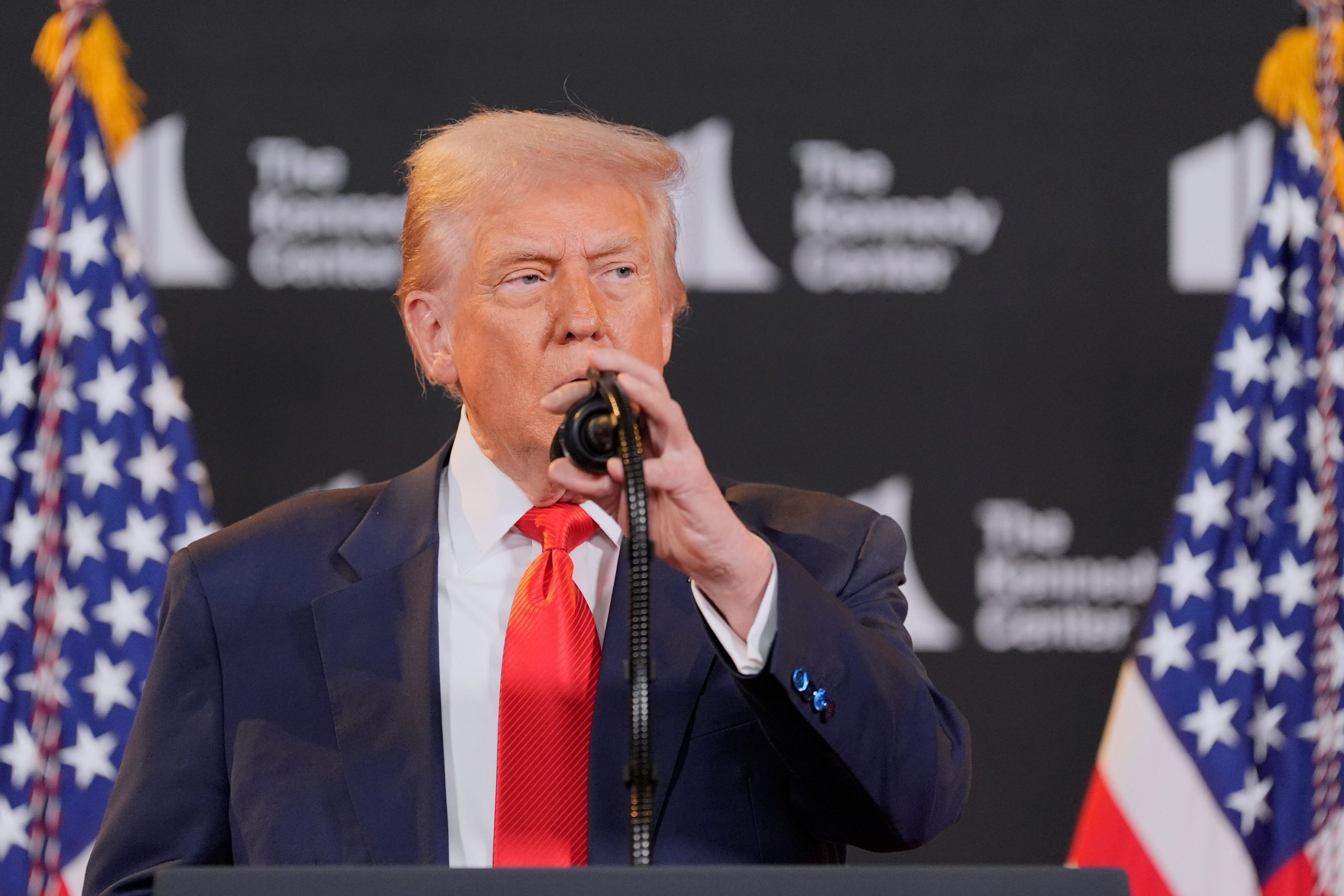
DAVOS, Switzerland: U.S. President Donald Trump is set to use the global stage of the World Economic Forum in Davos on Thursday to unveil his newly formed “Board of Peace,” a high-profile diplomatic initiative aimed at reshaping conflict resolution and post-war governance, beginning with Gaza but extending to Ukraine, Venezuela, and other global flashpoints. While the initiative has rapidly attracted international members, it has also sparked sharp debate over its legitimacy, effectiveness, and implications for established diplomatic frameworks.
The board includes senior Trump allies such as U.S. Secretary of State Marco Rubio, special envoy Steve Witkoff, billionaire financier Marc Rowan, and Trump’s son-in-law Jared Kushner, who sit both on the peace board and on a parallel executive structure tasked with governing Gaza’s post-war transition.
Trump’s ambition is to turn the board into a permanent, elite conflict-management mechanism, bypassing traditional multilateral institutions and anchoring peacebuilding around a coalition of states and private-sector leaders. Gaza, though not formally mentioned in the board’s charter, is widely understood as its first operational test case.
According to Marwa Maziad, a Middle East and security expert at the University of Maryland, Trump envisions Gaza as the first of several “franchises” for the board. “He wants to take this board concept to Gaza, then Venezuela and Ukraine. He is going to go around to different countries and tell them to join the board or face war and conflict,” she said.
Momentum behind the board has accelerated in recent days. Belarusian President Alexander Lukashenko signed an agreement this week to join the initiative, marking a dramatic step in Minsk’s rapprochement with Washington after years of diplomatic isolation. Lukashenko said he hoped his participation would contribute to peace in Ukraine, signaling a shift in Belarus’s international posture amid the protracted war.
Trump has also confirmed that Russian President Vladimir Putin has been invited to join, while Armenia announced it would participate. Trump has claimed credit for helping end the long-running conflict between Armenia and Azerbaijan, which fought two wars since the collapse of the Soviet Union in 1991, using that outcome as evidence of the board’s potential effectiveness.
Earlier, Morocco’s King Mohammed VI became the first world leader to formally confirm participation, while countries including the United Arab Emirates, Hungary, Italy, and Canada have expressed varying levels of support or interest.
However, a draft charter circulated by the U.S. administration to around 60 countries has raised eyebrows. According to the document, countries seeking membership beyond three years would be required to contribute $1 billion in cash, a provision critics say risks turning peacebuilding into a pay-to-play enterprise and skewing influence toward wealthy states.
Despite Trump’s framing of the board as a stabilizing force, the initiative has reportedly unsettled Israel, particularly due to its emphasis on what amounts to the internationalisation of Gaza. Israeli officials fear the framework could dilute Israel’s strategic control over post-war arrangements and weaken Prime Minister Benjamin Netanyahu’s leverage.
Former U.S. State Department negotiator Aaron David Miller dismissed the board as a distraction from urgent diplomacy on the ground. “This is a misplaced solution to a problem we don’t have,” Miller said. “The Board of Peace is not going to move Gaza from Phase 1 to Phase 2.”
Miller argued that what Gaza requires is not new institutional architecture but direct political pressure and coordinated leverage. “In Gaza, you need Trump to exercise his leverage over Israel and the Qataris, Turks, and Egyptians to exercise their influence over Hamas,” he said. He added that Trump’s attempt to internationalize Gaza could signal a strategic defeat for Netanyahu. “If you could internationalise Gaza, why not internationalise the occupied West Bank? That’s the last thing Netanyahu wants,” he said.
The emergence of the Board of Peace reflects a broader trend highlighted at Davos: deepening distrust in traditional multilateral institutions, particularly the United Nations, amid rising geopolitical rivalry, economic nationalism, and institutional fatigue.
Supporters argue that the board could inject speed, resources, and political momentum into stalled peace processes. Critics counter that it risks fragmenting global governance, weakening established norms, and subordinating diplomacy to elite financial and political interests.
The UN has so far responded cautiously, stating it will observe how the board evolves before engaging, while European leaders, especially France have expressed reservations about participating, citing concerns over legitimacy, accountability, and overlap with existing institutions.
Trump’s Board of Peace now stands at a crossroads: either emerging as a disruptive alternative model of global conflict management or becoming, as critics warn, a symbolic exercise that distracts from the painstaking diplomacy required to stabilize fragile ceasefires and address root causes of conflict.
As wars rage in Gaza and Ukraine, and geopolitical fault lines widen between major powers and across the Global North–South divide, the board’s success or failure could shape not only Trump’s diplomatic legacy but also the evolving architecture of global peacebuilding in an increasingly fragmented world.
European leaders, rattled by Trump’s latest global gambit, are seeking to present a united front in Davos, as CEOs warned against emotional reactions to the U.S. president’s ambition to take over Greenland. French President Emmanuel Macron said the European Union should not bend to “the law of the strongest,” adding it was “crazy” that the bloc was having to contemplate using its “anti-coercion instrument” against the United States.
-Smith/ WNN Newsroom
READ THE FULL E-MAGAZINE | WorldAffairs: Understand the World Before It Shapes You