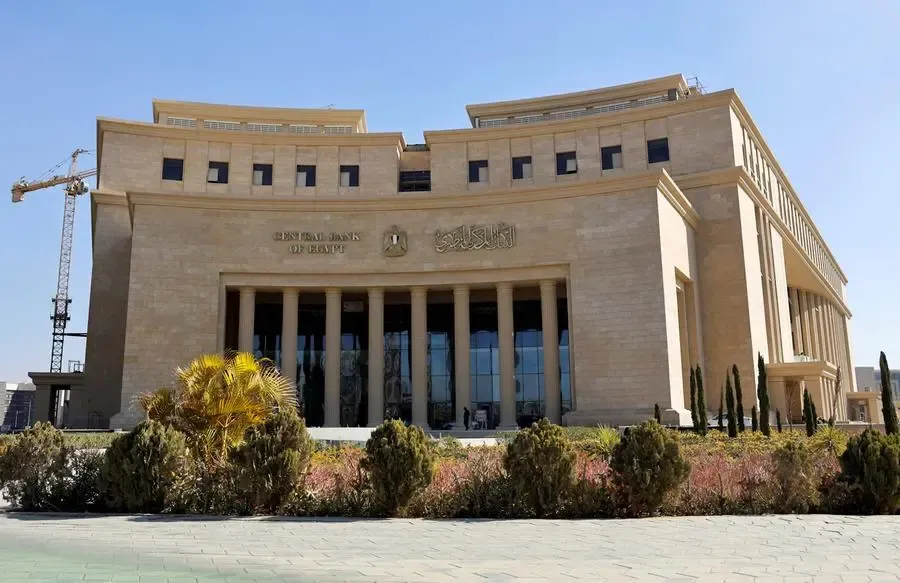
The Central Bank of Egypt has raised its key interest rates by 100 basis points, marking its first increase since March 2024 as policymakers respond to renewed inflation risks.
The decision, announced on Thursday, October 29, 2026, lifted the overnight deposit rate to 20% and the overnight lending rate to 21%. It reverses the direction of an easing cycle that began in April 2025.
The move comes after consumer prices rose more quickly in September than in August, despite a further decline in annual inflation. That distinction is central to understanding why the bank tightened monetary policy while year-on-year figures were improving.
Egypt’s New Interest Rates
The Monetary Policy Committee increased all four key rates by one percentage point.
| Policy rate | Previous rate | New rate | Increase |
|---|---|---|---|
| Overnight deposit rate | 19.00% | 20.00% | 100 basis points |
| Overnight lending rate | 20.00% | 21.00% | 100 basis points |
| Main operation rate | 19.50% | 20.50% | 100 basis points |
| Discount rate | 19.50% | 20.50% | 100 basis points |
A rise of 100 basis points equals one percentage point. For example, the deposit rate increased from 19% to 20%, rather than rising by 100%.
The central bank described the decision as a preventive step intended to contain inflation pressures and keep expectations about future price increases under control.
September Inflation Shows Renewed Monthly Pressure
Egypt’s inflation data presented a mixed picture in September.
Monthly urban headline inflation increased to 1.3%, up from 0.1% in August. Monthly core inflation also accelerated, reaching 0.8%, compared with 0.3% a month earlier.
However, both annual measures declined.
| Inflation measure | August 2026 | September 2026 |
|---|---|---|
| Monthly urban headline inflation | 0.1% | 1.3% |
| Monthly core inflation | 0.3% | 0.8% |
| Annual urban headline inflation | 14.5% | 13.9% |
| Annual core inflation | 14.9% | 14.1% |
The figures show that prices increased faster between August and September, even though the annual rate of increase slowed.
Why Monthly and Annual Inflation Can Move Differently
Monthly inflation compares prices with the previous month. Annual inflation compares them with the same month a year earlier.
Consequently, a stronger monthly increase can occur alongside a lower annual inflation rate. The annual calculation depends partly on the price changes recorded a year before.
In September 2025, monthly headline inflation was 1.8%, above September 2026’s 1.3%. That comparison helps explain why annual inflation could fall despite the acceleration from August.
For households, lower annual inflation does not mean that prices have returned to earlier levels. It means the overall rate of price increases has slowed over the year.
First Rate Increase Since March 2024
The October decision follows a period of substantial monetary easing.
An IMF report records cumulative policy-rate reductions of 825 basis points from April 2025, comprising 725 basis points during 2025 and another 100 basis points in February 2026.
The CBE subsequently held rates steady at its April, May, July, August and September 2026 meetings. Its October increase therefore represents a change from both the earlier reductions and the more recent pause.
The latest move reverses only part of those cumulative cuts. It nevertheless signals that policymakers see a need for tighter conditions rather than further easing.
Why the Central Bank Raised Rates
The CBE highlighted a more challenging external environment and greater uncertainty surrounding the inflation outlook.
Its statement identified risks from regional conflict, higher energy and agricultural commodity prices, supply disruptions and tighter global financial conditions. These pressures can feed into Egypt’s domestic prices through imported goods and production costs.
The bank also pointed to higher core food prices and seasonal factors behind September’s monthly core inflation acceleration.
Its stated objective is to bring inflation towards 7%, with a tolerance band of two percentage points either side, on average in the fourth quarter of 2027.
The decision shows that monetary policy is responding to the expected path of inflation, rather than relying only on the latest annual reading.
What Higher Rates Could Mean for Borrowers
Higher policy rates can put upward pressure on commercial borrowing costs.
Businesses seeking new credit may face more expensive financing, while some existing borrowers could see repayments change if their contracts use variable rates.
The effect will depend on the lender, the product and the loan agreement. A central bank increase does not automatically raise every customer’s interest rate by exactly one percentage point.
For companies, more expensive credit can affect decisions about equipment purchases, expansion and working capital. These are possible effects of tighter monetary policy, rather than confirmed outcomes of this particular decision.
What the Decision Could Mean for Savers
Higher policy rates may also encourage banks to adjust returns on some savings products.
However, the 20% overnight deposit rate is a central bank policy rate, not a promise that every retail savings account will pay 20%.
Commercial banks determine their own product terms. Existing fixed-rate deposits may retain their contracted returns, while new products or variable-rate accounts may respond differently.
The practical effect for a saver therefore depends on the bank’s published terms and any subsequent repricing.
What Happens Next?
Upcoming inflation releases will help show whether September’s stronger monthly price increases persist.
Policymakers will also be assessing developments in import costs, financial conditions and the wider regional environment.
The October increase does not establish that further hikes are inevitable. Equally, the earlier easing cycle does not guarantee that cuts will resume quickly.
For now, Egypt’s central bank has chosen tighter monetary conditions to address inflation risks, even as annual headline inflation continues to decline.
Frequently Asked Questions
How much did the Central Bank of Egypt raise interest rates?
The CBE increased its key policy rates by 100 basis points, equivalent to one percentage point.
What is Egypt’s new overnight deposit rate?
The overnight deposit rate increased from 19% to 20%.
What is the new overnight lending rate?
The overnight lending rate rose from 20% to 21%.
When was the decision announced?
The Monetary Policy Committee announced the increase on October 29, 2026.
Why did the bank raise rates when annual inflation fell?
Monthly inflation accelerated, while the bank identified greater risks to future price stability. Monetary policy considers the inflation outlook as well as current annual figures.
Does lower inflation mean prices are falling?
No. Lower positive inflation means prices are increasing more slowly. A decline in the overall price level would be a different development.
Will every bank loan become more expensive immediately?
Not necessarily. The effect depends on whether the loan has a fixed or variable rate, its contractual terms and the lender’s pricing decisions.
Read Also: PureHealth Nine-Month Profit Rises 14.1% to AED1.8 Billion