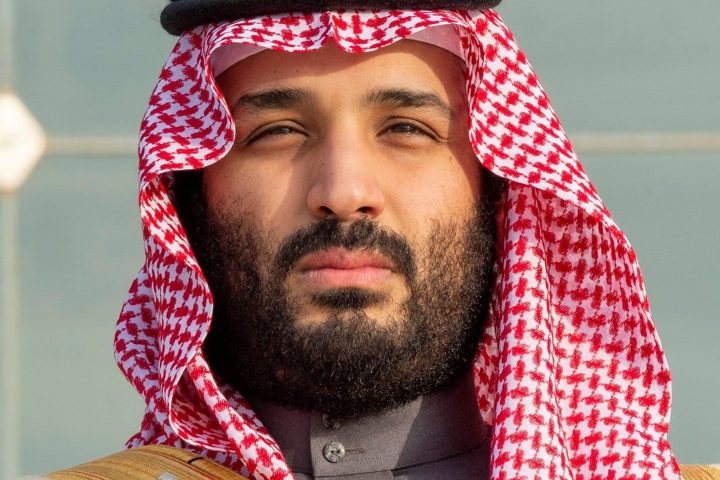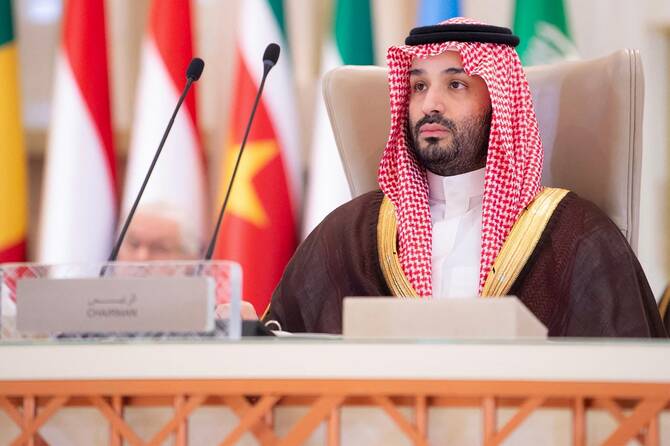
In recent years, Saudi Arabia has adopted a firm and uncompromising stance against extremism, which Crown Prince Mohammed bin Salman (MBS) has highlighted as a crucial national priority. This approach is not just an ideological statement, but rather a core principle driving the country’s domestic and foreign policy. Since his 2017 declaration, “We will destroy [extremism] today,” at the Future Investment Initiative in Riyadh, Saudi Arabia has taken significant steps to combat radical ideologies, making it clear that extremism in any form is unacceptable in the Kingdom.
At the heart of the recent discourse on Saudi Arabia’s position is the misguided narrative that the Kingdom is moving away from its historical commitment to moderation and adopting more radical policies. This argument is not only unfounded but fundamentally misrepresents the Kingdom’s long-standing policy of combating extremist ideologies. Saudi Arabia’s consistent stance against groups like the Muslim Brotherhood, which it labeled a terrorist organization in 2014, underscores its commitment to maintaining stability and unity in the region. The Kingdom has long viewed the Brotherhood and similar movements as threats to its state sovereignty and social cohesion.
In fact, this message was reiterated by Crown Prince Mohammed bin Salman in 2021 when he remarked on Saudi national television, “Anyone who adopts extremist thinking is a criminal and will be held accountable.” This declaration serves as a clear signal that the Kingdom’s fight against extremism remains as relevant and urgent as ever.
Saudi Arabia’s Comprehensive Approach to Countering Extremism
Saudi Arabia’s approach to countering extremism extends far beyond mere rhetoric. Under Crown Prince Mohammed bin Salman’s leadership, the Kingdom has crafted a multi-dimensional strategy aimed at eradicating extremism both at home and abroad. The country’s plan includes military, ideological, and financial components, working simultaneously to confront radicalism on multiple fronts. This strategy, often referred to as the MMM approach — men, mind, and money — underscores the holistic nature of Saudi Arabia’s efforts.
The “men” aspect refers to Saudi Arabia’s military and state capacities, along with its leadership in international coalitions to combat extremism. In 2015, the Kingdom established the Islamic Military Counter Terrorism Coalition (IMCTC), a groundbreaking alliance of more than 40 countries that focuses on confronting terrorist groups through joint military operations, intelligence sharing, and coordinated efforts across ideological and media sectors. This coalition highlights Saudi Arabia’s commitment to leading global counterterrorism efforts and supporting international peace and security.
The “mind” component emphasizes the importance of combating extremist ideologies at their roots. This is where the Kingdom has made notable strides in countering extremist thought through initiatives like the establishment of Etidal, the Global Center for Combating Extremist Ideology. The center’s mission is to monitor, counter, and neutralize extremist content online, providing a real-time, multi-lingual platform to address radical narratives as they spread. Furthermore, Saudi Arabia has created the Center for Safeguarding the Intellect within the Ministry of Defense, focusing on preventing radicalization and fostering intellectual development within society.
The third pillar, “money,” is perhaps one of the most crucial aspects of Saudi Arabia’s counter-extremism strategy. The Kingdom has played a leading role in global efforts to combat terrorist financing, working with international bodies to disrupt the financial networks that support extremist organizations. Saudi Arabia has taken proactive steps to monitor and shut down the channels used by extremist groups to fund recruitment, operations, and propaganda. By targeting these financial lifelines, the Kingdom aims to limit the ability of terrorist organizations to spread their ideologies and carry out violent acts.
The Islamic Military Counter Terrorism Coalition: A Global Leader in Counterterrorism
The Islamic Military Counter Terrorism Coalition (IMCTC), a monumental initiative spearheaded by Saudi Arabia, plays a central role in the Kingdom’s strategy to combat extremism. The coalition, which includes over 40 member states and numerous observers, represents a unified effort among Muslim-majority countries to tackle terrorism and extremist ideologies. The coalition’s work is diverse, encompassing military operations, intelligence sharing, ideological countermeasures, and media campaigns.
At the defense ministers’ meeting of the IMCTC in February 2024, Saudi Defense Minister Prince Khalid bin Salman emphasized the importance of international cooperation to combat terrorism. He highlighted that the efforts of the coalition must be coordinated and integrated with the broader international community to achieve long-term success in combating extremism. This comprehensive approach, which involves collaboration with global allies and strategic partnerships, showcases Saudi Arabia’s determination to lead the charge against terrorism and extremism on a global scale.
Rejecting Militia-Based Approaches: A Commitment to State Sovereignty and Stability
Saudi Arabia’s rejection of militia-based approaches to combating extremism is a key element of its foreign policy. The Kingdom has consistently opposed efforts to empower non-state actors under the guise of counterterrorism, recognizing that such initiatives only exacerbate instability and hinder efforts to create lasting peace. Saudi Arabia’s stance is clear: extremism cannot be defeated by empowering militias or separatist movements, which only undermine state sovereignty and territorial integrity.
This principle is evident in Saudi Arabia’s approach to regional conflicts. In Sudan, for example, the leader of the Rapid Support Forces (RSF), Mohamed Hamdan Dagalo, also known as Hemedti, has a history of involvement in violence and atrocities under the regime of former president Omar Al-Bashir. Despite claims that Hemedti and his militias were fighting against extremism, their actions have led to widespread suffering and destabilization in the region. Similarly, in Yemen, the Southern Transitional Council, backed by certain separatist groups, has been linked to Al-Qaeda–associated elements, further destabilizing an already fragile country.
Saudi Arabia has consistently rejected the logic of supporting such groups, choosing instead to prioritize statehood, sovereignty, and territorial integrity as the foundations of stability. The Kingdom’s commitment to peaceful conflict resolution, economic empowerment, and political reform stands in stark contrast to the chaos fostered by militia-based approaches.
Promoting Religious Moderation: The Role of the Muslim World League
Beyond its security and military efforts, Saudi Arabia has placed a strong emphasis on promoting religious moderation and interfaith dialogue through institutions like the Muslim World League (MWL). Under the leadership of Secretary-General Dr. Mohammed bin Abdulkarim Al-Issa, the MWL has become a leading global voice for moderation, advocating for peaceful coexistence among different faiths and promoting respect for the laws and cultures of host countries.
The MWL’s efforts to encourage religious harmony and understanding across the world have made it a key player in fostering global peace. The organization’s work is particularly focused on countering the rise of religious extremism and providing a platform for dialogue among Muslims, Christians, Jews, and other religious communities. This approach reflects Saudi Arabia’s broader vision of combating extremism through intellectual and religious reform, rather than relying on military force alone.
Saudi Arabia’s Global Leadership in Counter-Extremism
Through its comprehensive counter-extremism strategy, Saudi Arabia has established itself as a global leader in the fight against terrorism and radical ideologies. The Kingdom’s efforts, which combine military, ideological, and financial measures, have positioned it as a crucial player in global counterterrorism initiatives. Saudi Arabia’s focus on state sovereignty, moderation, and religious coexistence highlights its commitment to long-term stability, both within its borders and across the region.
By rejecting the use of militias and separatist movements, Saudi Arabia has consistently championed the importance of statehood and territorial integrity as the foundation for peace and security. The Kingdom’s emphasis on collaboration with international allies and its investment in intellectual and ideological countermeasures have made it a key actor in the global struggle against extremism.
As Saudi Arabia continues to evolve its counter-extremism strategy, its leadership in this field remains essential to shaping the future of global counterterrorism efforts. Through its ongoing commitment to moderation, religious harmony, and global cooperation, Saudi Arabia stands at the forefront of the fight against extremism and violence.