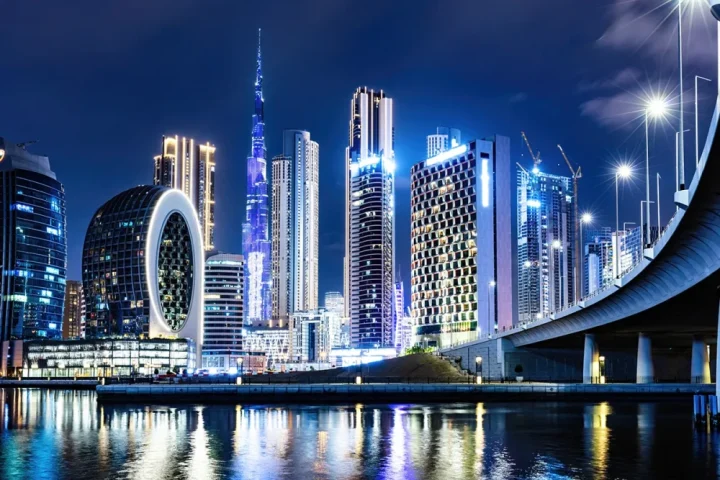
RIYADH/WASHINGTON: At a time when the world is shaking under geopolitical turmoil, economic insecurity, and collapsing trust in global systems, Saudi Arabia projects itself as the new anchor of stability. Vision 2030 promises a Kingdom that is modern, secure, transparent, and irresistibly attractive to global investors. Riyadh tells the world it is the safest investment destination in a region fractured by wars, sanctions, and political volatility.
But here is the uncomfortable truth: stability is not built on skyscrapers, trillion-dollar megaprojects, or glossy investment summits. It is built on justice. It is built on institutions that protect the rule of law over the rule of influence. And in cases like that of industrial investor Mohamed Azam, justice did not merely fail- it collapsed.
This is not a political attack. It is a factual tragedy. It is a warning signal born from lived experience inside the very system the world is being told to trust.
Azam came to Saudi Arabia in 2008, long before Vision 2030 existed, when regulations were opaque and foreign investors were fewer but hopeful. Backed by the Saudi Investment Authority, he built the Factory of Mohamed Azam for Petrochemicals, perfectly aligned with Saudi Arabia’s industrial and diversification goals. He bought land. He built infrastructure. He followed the law.
Then the illusion shattered.
The seller refused final transfer of land, forged a lease, and tried to retain ownership. A Riyadh court ruled in Azam’s favor, proving fraud. But the ruling was never enforced. And a justice system that cannot enforce its own verdicts does not just fail the victim, it fails the country’s credibility.
RELATED ARTICLE: Billion-Riyal Betrayal Saudi Arabia Can’t Hide – Even While Wooing Washington
What followed was not misfortune. It was systematic exploitation.
During medical treatment abroad, Azam learned that individuals had illegally seized his factory, kidnapped workers, stolen machinery and documents, and continued operations under a new company. Police intervened. Arrests happened. Yet, astonishingly, the factory was never returned to its rightful owner. The perpetrators paid in days of detention. Azam paid in decades of ruin.
Then came a darker dimension- power manipulation.
People claiming proximity to figures “close to MBS” offered help in exchange for money. He paid. They disappeared. No meaningful investigation followed.
Parallel land investments worth billions today remain outside his name despite multiple court victories, including from Saudi Arabia’s Final High Court. His own lawyer allegedly obstructed enforcement. Others exploited his power of attorney, drained finances, froze accounts, and sabotaged legal processes.
Pause and ask the question the global business community must ask:
If even the highest courts in a G20 nation cannot guarantee enforcement, what protection exists for foreign investors?
The world today is brutally unforgiving. Wars in Gaza and Ukraine, strained global supply chains, rising authoritarian tendencies, collapsing currencies, and political fragmentation have made investment trust the rarest commodity on earth. Investors are not just looking for opportunity, they are looking for safety of capital, legal certainty, and institutional credibility.
Saudi Arabia rightly aspires to be a global economic powerhouse. But Vision 2030 cannot coexist with selective justice. A trillion-dollar future cannot rest on fragile legal enforcement. A nation seeking global leadership cannot allow local power networks, procedural paralysis, and legal sabotage to override national reform goals.
This is not only about Azam. It is about what is at stake for Saudi Arabia. If investors see even a few cases where businesses are stolen, court orders ignored, and law overshadowed by influence, they will not come. Or worse, they will leave and take their stories with them, amplifying global skepticism at a time when geopolitical uncertainty has already made the world deeply cautious.
And here lies another irony: Azam is not bitter. He still speaks with respect for Saudi Arabia. He calls Vision 2030 a “moral promise.” His plea is not rebellion, it is an appeal to leadership to ensure that the spirit of Vision 2030 matches the reality on the ground.
Saudi Arabia stands at a decisive global moment. As the world navigates instability, energy insecurity, and economic fragmentation, the Kingdom has a historic opportunity to prove it is different that its rise is not built on image, but on integrity.
The Kingdom now faces a choice that will echo far beyond its borders:
Will Vision 2030 become a model of credible reform supported by strong justice, or will it risk becoming another grand narrative weakened from within?
True power is not in megaprojects. It is in systems that do not allow injustice to survive. If Saudi Arabia confronts cases like Azam’s and restores faith in its institutions, it will not simply attract investment, it will redefine leadership in an era where trust is the world’s scarcest resource.
-Elwelly Erickson with Input from Victim- Azam