The UAE plans to invest AED150 billion to AED200 billion—approximately $40.8 billion to $54.5 billion—in its energy sector by 2030, strengthening electricity infrastructure and meeting rising demand across the economy.
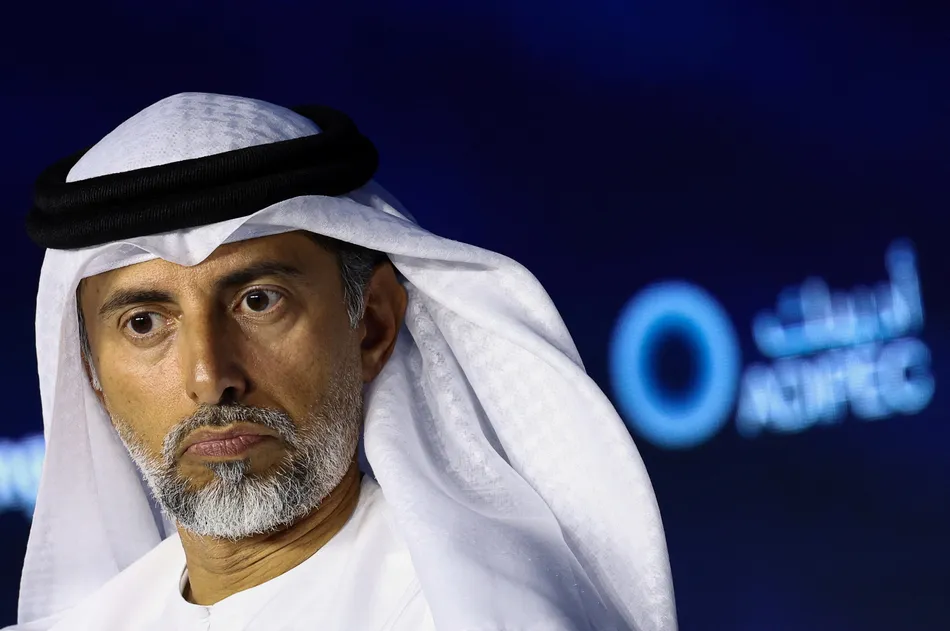
Minister of Energy and Infrastructure Suhail bin Mohammed Al Mazrouei highlighted the investment plans during a ministerial panel at ADIPEC 2026 in Abu Dhabi. He identified reliable and affordable energy as essential to national security, industrial development and the country’s expanding technology sector. وكالة أنباء الإمارات
The planned spending covers generation capacity, electricity networks, storage and better coordination across the power system. It represents an investment range through 2030, rather than a single newly awarded project or contract.
Where the UAE energy investment will go
The investment priorities extend beyond building additional power stations. They include the infrastructure and operating capabilities needed to deliver electricity reliably as demand changes.
| Investment area | Main objective |
|---|---|
| Power generation | Expand capacity to meet growing electricity demand |
| Electricity networks | Strengthen the infrastructure connecting generation with consumers |
| Energy storage | Improve flexibility and help balance supply and demand |
| Integrated system operations | Coordinate generation, networks, storage and consumption more effectively |
Al Mazrouei said the UAE’s approach combines diversified energy sources, infrastructure development and cooperation between government and private businesses.
The minister did not provide a project-by-project allocation of the investment range in the reported remarks.
AI and data centres add to electricity demand
Advanced manufacturing, artificial intelligence and data centres are becoming increasingly important considerations in energy planning.
Al Mazrouei highlighted the growing requirements of these sectors alongside rising global demand and geopolitical uncertainty. His message was that energy infrastructure must keep pace with the industries the UAE wants to develop.
For businesses that depend on continuous electricity supply, reliability and cost affect where they invest and how competitively they operate. Expanding generation alone therefore addresses only part of the challenge.
The UAE’s strategy also emphasises stronger networks, more flexible operations and infrastructure capable of responding to disruption without interrupting essential services.
Clean energy supplied 32.4% of electricity in 2025
Clean energy accounted for 32.4% of the UAE’s electricity generation in 2025, according to the minister, compared with a national target of 35% by 2031.
That leaves a gap of 2.6 percentage points between the reported share and the target. The figures measure electricity generated, rather than installed generating capacity or total energy consumption across the economy. وكالة أنباء الإمارات
Al Mazrouei said renewable energy, nuclear power and natural gas have complementary roles in maintaining reliable and competitively priced supplies.
Diversification remains central to the approach. Different sources contribute to the system in different ways, while investment in networks and storage helps coordinate their output with demand.
Energy security includes cybersecurity and climate resilience
The minister called for energy planning to account for a broader set of risks, including physical threats, cyber incidents, climate impacts and interruptions to business operations.
Protecting infrastructure requires coordination between government entities and energy operators, he said. Priorities include emergency preparedness, safeguarding critical assets and maintaining essential services during disruptions.
This makes resilience a consideration from the planning stage, rather than something addressed only after facilities have been built.
Al Mazrouei also highlighted the importance of local manufacturing, reliable access to critical equipment and investment in specialised Emirati talent. These capabilities can help support the operation, maintenance and expansion of energy infrastructure.
Storage and flexible demand become more important
Another priority is improving flexibility across both electricity supply and consumption.
Generation, storage, networks and demand patterns need to work together as the system expands. Better coordination can help manage fluctuations, improve efficiency and reduce exposure to supply interruptions and price volatility.
For example, storage can make electricity available at a different time from when it was generated. Coordinating consumption with available supply can also reduce pressure during periods of high demand.
The minister presented this flexibility as part of both energy security and industrial competitiveness.
Private investment and partnerships will support delivery
Al Mazrouei emphasised cooperation among governments, energy producers, technology developers, investors and industrial consumers.
He said clear national priorities and predictable regulatory frameworks are important for attracting investment and bringing new technologies into use. Cooperation between public and private organisations will also support innovation and stronger supply chains.
The investment programme is intended to advance the UAE Energy Strategy 2050 and the country’s Net Zero 2050 ambitions while meeting near-term demand.
Its delivery will require coordinated development across power generation, networks, storage and the workforce needed to operate them. The central objective is an electricity system that can support economic expansion while remaining reliable, affordable and resilient.
Read Also: Goldman Sachs Raises Oil Price Forecasts, Sees Brent Reaching $140 in Supply-Shock Scenario