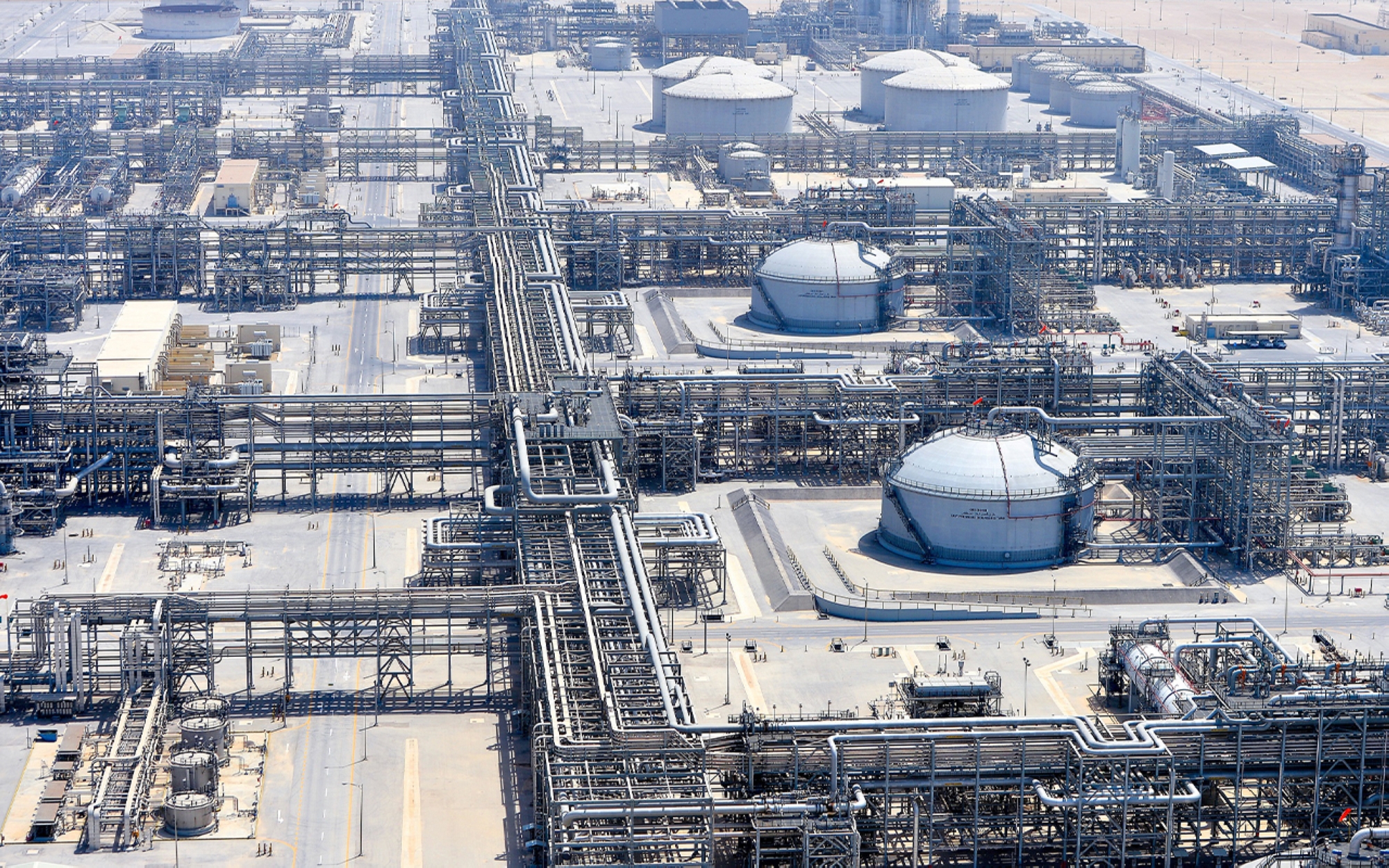
Saudi Aramco, officially known as the Saudi Arabian Oil Company, is the world’s largest integrated energy and chemicals company, headquartered in Dhahran, Eastern Province of Saudi Arabia. With a sustainable maximum crude oil production capacity of twelve million barrels per day, it is considered the backbone of the Saudi economy and a global energy leader.
Aramco ranks among the largest companies worldwide by market capitalization, with annual revenues comparable to the GDP of entire countries. Its operations span the entire energy chain, from hydrocarbon exploration and production to refining, petrochemicals, power generation, and global distribution.
In 2023, Saudi Aramco celebrated ninety years of exploration and innovation, marking its role as a cornerstone of the Kingdom’s industrial and economic development.
History and Establishment
Early Exploration and Discovery (1933–1949)
Saudi Aramco’s journey began in 1933, when Saudi Arabia signed a concession agreement with Standard Oil Company of California (SoCal) under the reign of King Abdulaziz Bin Abdulrahman Al Saud. In 1938, the historic Dammam Well No. 7, also known as the Prosperity Well, produced commercial oil for the first time, marking a turning point for the Kingdom.
On May 1, 1939, King Abdulaziz personally inaugurated the first crude oil export shipment at Ras Tanura Port, symbolizing the beginning of Saudi Arabia’s rise as a global oil exporter.
Expansion and Tapline Era (1950–1960s)
Between 1950 and the 1960s, Aramco expanded rapidly. The Trans-Arabian Pipeline (Tapline) was completed in 1950, stretching 1,648 km to the Mediterranean Sea, drastically reducing export times. In 1951, the company discovered the Safaniya Field, the world’s largest offshore oil field. By 1958, production exceeded one million barrels per day, and total cumulative output surpassed five billion barrels by the 1960s.
Nationalization and Saudi Ownership (1973–1980)
The Saudi government began acquiring Aramco in 1973, first with a 25% stake, rising to 60% in 1974. By 1980, Saudi Arabia achieved full ownership, transforming Aramco into a state-owned entity. In 1988, King Fahd Bin Abdulaziz issued a Royal Decree officially renaming it the Saudi Arabian Oil Company (Saudi Aramco).
Global Expansion and Technology Adoption
International Ventures (1990s–2000s)
Aramco expanded globally through acquisitions and partnerships:
- 1991: Acquired 35% of S-Oil in South Korea.
- 1994: Bought 40% of Petron Corporation in the Philippines.
- 1996: Acquired 50% of Motor Oil Hellas in Greece.
- 1998: Completed the Shaybah Field project in the Empty Quarter.
Technological Innovation (2000s–2010s)
Aramco embraced cutting-edge technology, establishing its Research and Development Center in Dhahran in 2000. It pioneered simulation technologies such as GigaPowers (2010) and TeraPowers (2016), advancing reservoir management on a billion- and trillion-cell scale.
In 2011, Aramco partnered with Dow Chemical to launch Sadara, the world’s largest integrated chemical complex. By 2015, it pledged to reduce greenhouse gas intensity, and in 2021, it announced a target of net-zero emissions (scopes 1 and 2) by 2050.
Saudi Aramco IPO and Shareholding
Aramco became a public joint-stock company in 2019, listing 3.45 billion shares (1.73% of capital) on the Saudi Exchange (Tadawul), the world’s largest IPO at the time.
In 2022, four percent of shares were transferred to the Public Investment Fund (PIF), and in 2024, Aramco completed a secondary offering of 1.545 billion shares, raising billions in capital. Despite these offerings, the Saudi government remains the majority shareholder, holding more than 82% ownership.
Operations and Production
Crude Oil
Saudi Aramco produces five main grades: Arab Heavy, Arab Medium, Arab Light, Arab Extra Light, and Arab Super Light. With 200.8 billion barrels in reserves, it supplies over 7 million barrels daily to global markets, cementing its role as the world’s most reliable oil supplier.
Natural Gas
Aramco is also the sole natural gas supplier in Saudi Arabia. It manages 246.7 trillion cubic feet of reserves and processes 18.3 billion cubic feet per day, supplying industries, electricity generation, and petrochemicals. Its plants include Berri, Wasit, Uthmaniyah, Haradh, Hawiyah, and Fadhili.
Chemicals
Since 1998, Aramco has grown its chemicals business. The acquisition of 70% of SABIC in 2020 positioned Aramco as a global chemicals leader, with operations in over 50 countries. In 2022, its chemicals production capacity reached 56.3 million tons annually.
Base Oils and Lubricants
Aramco markets base oils through Luberef, Motiva, and S-Oil, with annual sales surpassing 4.6 million tons in 2022.
Global Presence
Aramco maintains a strong presence in Asia, Europe, and North America, with subsidiaries including Motiva (USA), Hyundai Oilbank (Korea), YASREF (Saudi Arabia), and partnerships with ExxonMobil, Sinopec, Sumitomo, and TotalEnergies.
Innovation and Patents
Aramco fosters innovation through 12 global R&D centers, the Waed entrepreneurship program, and Lab7 innovation hub. It ranked first in the oil and gas sector for patents filed in 2021 (864 patents) and 2022 (966 patents), cementing its position as a global innovator.
Social Responsibility and Community Development
Saudi Aramco is deeply engaged in corporate citizenship, launching initiatives such as:
- Coffee Initiative (Jazan and Aseer): Supporting 1,000 farmers with 200,000 seedlings.
- Honey Initiative (Al-Bahah and Aseer): Producing 150 tons of honey annually.
- Roseyar Factory (Taif): Empowering women in cosmetics.
- Olive Oil Initiative (Al-Jawf): Supporting local industries.
- Ithra (King Abdulaziz Center for World Culture): A cultural and knowledge hub in Dhahran.
Sustainability
Saudi Aramco is a founding member of the Oil and Gas Climate Initiative (OGCI) and supports the World Bank’s 2030 zero-flaring initiative. In 2022, it launched a USD1.5 billion sustainability fund to support clean energy technologies. Its net-zero goal by 2050 highlights its role in the global energy transition.
Conclusion
Saudi Aramco is more than an energy company; it is a pillar of Saudi Arabia’s economy and a global energy leader. With unmatched production capacity, ambitious sustainability goals, pioneering innovation, and strong global partnerships, Saudi Aramco continues to shape the future of energy while supporting Saudi Vision 2030.