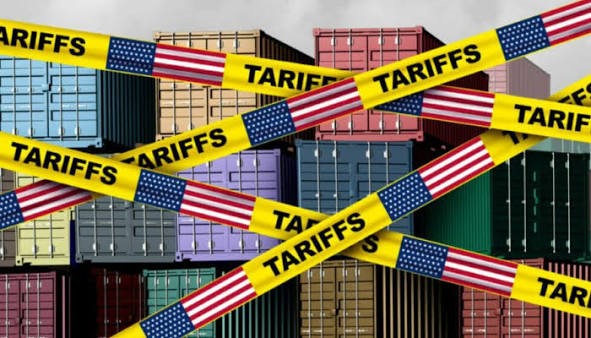
US Tariffs Nigeria became a major talking point after the United States imposed new import duties on 60 trading partners, placing Nigeria among countries facing a 12.5 percent tariff under President Donald Trump’s latest trade policy.
The new tariffs, which took effect on Friday, replace a temporary global duty introduced earlier this year and mark a significant escalation in Washington’s protectionist agenda. The measures affect major economies, including China, Japan, India, the European Union and several African countries, with officials arguing they will strengthen American industries and combat unfair trade practices.
US Tariffs Nigeria Raise Concerns for Exporters
The latest US Tariffs Nigeria decision places Nigerian exports under a standard 12.5 percent import duty when entering the United States.
Nigeria joins Saudi Arabia, South Africa, the United Arab Emirates, China, Brazil, Egypt and more than 50 other economies affected by the higher tariff bracket.
The Trump administration said countries that already enforce or commit to banning forced labour imports qualify for a lower 10 percent rate. Those without such commitments fall into the higher 12.5 percent category.
Trade analysts believe the new tariffs could affect the competitiveness of Nigerian exports in the US market, particularly non-oil products targeted under Nigeria’s export diversification strategy.
US Tariffs Nigeria Part of Wider Trade Overhaul
The US Tariffs Nigeria policy forms part of a broader restructuring of America’s trade framework following a legal setback earlier this year.
After the US Supreme Court invalidated several earlier tariffs introduced under emergency authorities, the Trump administration launched a fresh investigation under Section 301 of the Trade Act of 1974.
Officials said the new framework provides stronger legal backing and makes the tariffs more resistant to future court challenges.
US Trade Representative Jamieson Greer said the targeted economies account for most American trade and stressed that the measures support efforts to eliminate forced labour from global supply chains.
He argued that Washington expects its trading partners to strengthen labour enforcement standards while ensuring fair competition for American businesses.
Countries Face Different Tariff Rates
Under the revised framework, countries fall into different tariff categories.
Nations such as Canada, India, Malaysia, Bangladesh, Mexico, Pakistan and the United Kingdom will face a 10 percent tariff because of their labour enforcement commitments or trade arrangements.
Meanwhile, Nigeria joins countries including:
- China
- Japan
- South Korea
- Saudi Arabia
- Brazil
- Australia
- South Africa
- Morocco
- United Arab Emirates
- Vietnam
These economies will face the higher 12.5 percent duty.
Some trading partners, including the European Union, Japan, South Korea, Taiwan and Switzerland, received partial relief through previously negotiated trade agreements with Washington.
Products already covered by separate sector-specific tariffs, including steel and aluminium, remain outside the new measures.
Certain energy products, fertilisers and goods traded under the US-Mexico-Canada Agreement also remain exempt.
Global Reactions to US Tariffs Nigeria Decision
The US Tariffs Nigeria announcement triggered swift reactions across the international community.
China condemned the tariffs, accusing Washington of pursuing unilateral trade measures that could damage the global economy.
Japanese officials expressed regret over the decision, while Australia’s trade minister described the new duties as unjustified.
The European Union welcomed exemptions contained in its existing agreement with Washington, saying the latest measures remain consistent with previous commitments between both sides.
Trade experts warned that the tariffs could further complicate global supply chains already strained by geopolitical tensions and slowing economic growth.
More Trade Measures May Follow
The Trump administration signalled that additional trade restrictions could emerge in the coming months.
Washington has already launched investigations into 16 other economies over alleged industrial overcapacity and unfair trade practices.
Those inquiries could result in separate tariff rates depending on each country’s findings.
Trade specialists say the strategy allows the United States to maintain negotiating leverage while encouraging countries to comply with future trade agreements.
Analysts also believe the revised tariff framework will likely remain in force throughout President Trump’s current term because it rests on stronger legal foundations than previous emergency measures.
For Nigeria, the US Tariffs Nigeria policy presents fresh challenges for exporters seeking greater access to the American market, while reinforcing the need to diversify export destinations and strengthen the competitiveness of locally manufactured products.