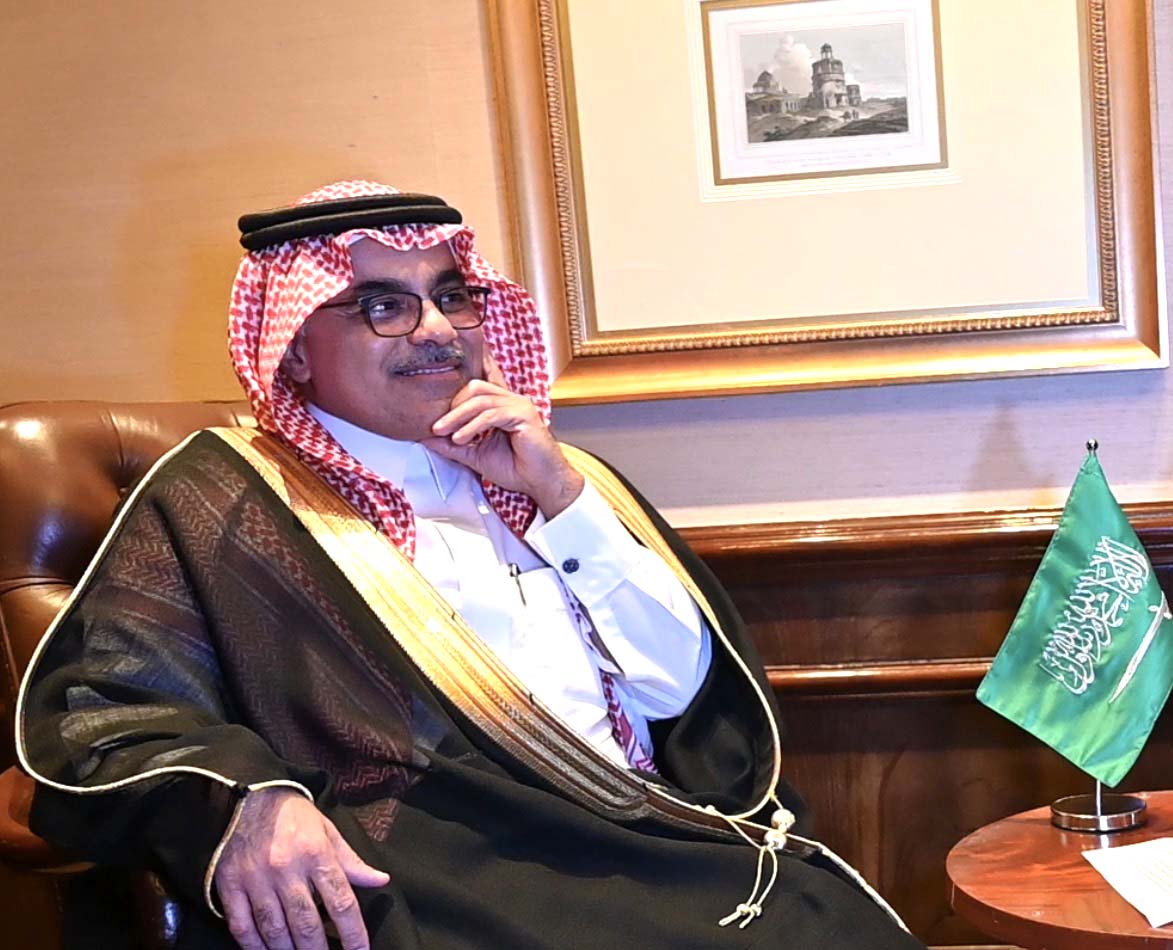
NEW DELHI, India: Saudi Arabia’s Vice Minister for Industrial Affairs, Ministry of Industry and Mineral Resources – H.E. Eng. Khalil Ibrahim Bin Salamah, speaks with the conviction of a man who views the world not through competition, but through co-creation. For him, Saudi Arabia’s partnership with India is not merely a diplomatic milestone; it’s the blueprint of a shared industrial and intellectual future.
In an exclusive conversation with Dr. Shahid Siddiqui from WNN in New Delhi, Khalil described the evolving Saudi–India engagement as “a realignment of priorities” rather than a conventional bilateral exercise.
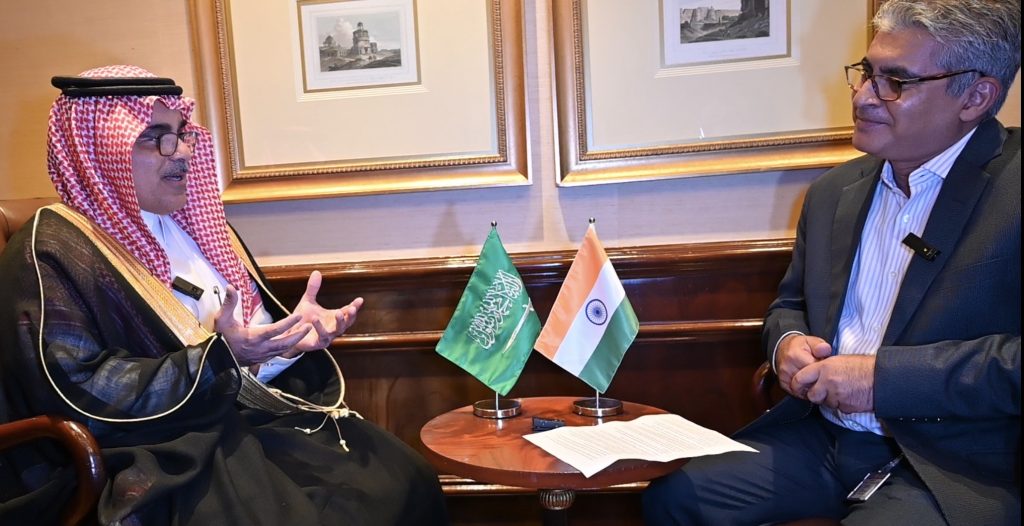
“Coming back to India is like coming full circle,” he said, recalling how the Kingdom’s first major engagement with India began nearly three decades ago. “Our first collaboration dates back to 1996, when we selected India for a satellite research center. Nearly thirty years later, we’re reconnecting the same dots, but with a broader and far more ambitious industrial vision.”
“It’s not only about manufacturing; it’s about manufacturing thought.”
That single line captures the intellectual essence of Khalil’s argument: a move from transactional partnerships to creative, future-oriented collaboration.
Saudi Arabia’s Ministry of Industry and Mineral Resources, where Khalil serves as vice minister, is spearheading a wave of strategic projects under the National Industrial Strategy, a core pillar of Vision 2030. The initiative is redefining Saudi Arabia’s economic identity from an oil-dependent exporter to a diversified, innovation-driven hub. And India, Khalil emphasized, is an indispensable partner in this transformation.
“In 1996 and 1997, before establishing the SABIC R&D Centre, we chose India because of its scientific capacity, its human talent, and its proximity,” he said. “Now, under Vision 2030, we’re scaling that relationship to industrial heights that will define the next generation.”
He outlined a broad roadmap for collaboration from chemicals and petrochemicals to automotive manufacturing, aerospace, and machinery.
“If we talk about downstream sectors, plastics, rubber, and synthetic materials, India’s manufacturing strength and Saudi Arabia’s raw resources perfectly complement each other,” he said.
“We’re not following others; we’re testing the future together.”
Khalil’s tone was calm yet emphatic. “The future is not to be inherited; it is to be designed,” he said. “It’s not about catching up with the world; it’s about co-creating what comes next.”
For him, Saudi Arabia’s industrial shift is not just about production, it’s about imagination.
“Imagine a car body made from advanced plastic that ensures both safety and color without needing paint,” he said, gesturing to underline his point. “That’s not fiction, it’s what happens when innovation meets collaboration.”
Saudi Arabia, he added, is preparing to emerge as a new player in aerospace, advanced mobility, and unmanned systems, both by air and sea.
“Few countries dare to enter as new players, but we’re doing exactly that,” Khalil noted. “By 2030, we aim to quadruple our manufacturing GDP, quintuple exports of manufactured goods, and create four times more high-quality jobs. Is it ambitious? Yes. Is it achievable? Absolutely.”
He paused, then added with quiet certainty: “We are moving on a very solid line.”
“No industrial transformation can survive without human transformation.”
The conversation naturally shifted from machines to minds from factories to people.
“We’re conscious about providing skills through collaboration between governments, private sectors, and universities,” Khalil said. “We are engaging with India’s CSIR and exploring partnerships with IITs to align vocational training with real industry demand.” Saudi Arabia’s strategy, he emphasized, is as much about knowledge creation as it is about production capacity. “We want Saudi engineers learning from Indian innovation ecosystems, and Indian firms learning from Saudi scale and infrastructure,” he said.
That same logic, Khalil noted, extends to sustainability.
“Our industrialization must take care of the environment,” he said. “We’re investing heavily in recycling, from plastics and metals to electronics. One of our national companies, CERP, is already recycling construction materials for reuse in new projects.” He described sustainability not as a moral debate, but as a strategic necessity: “Circular economies aren’t a global trend they’re the future of competitiveness.”
“We are not offering presence; we are offering partnership.”
On investment, Khalil’s message was clear and direct: come and build with us.
“We’ve built the plants come and join us,” he said, addressing Indian business leaders. “Saudi Arabia is not just offering access to our market, but to markets beyond in Africa, Europe, and Asia, through our trade corridors.” He outlined three pillars of the Kingdom’s investor strategy: market demand, supply chain readiness, and human capital. “As a government, we provide the full value chain for any industry set up in Saudi Arabia,” he explained. “Investors will always have both market feasibility and human resource support.”
“This is not a new partnership, it’s the renewal of an old one.”
Khalil reflected warmly on the cultural and historical bond between the two nations.
“Both India and Saudi Arabia have young populations, visionary leadership, and the determination to shape their futures,” he said. “That makes collaboration not only natural, but inevitable.”
He smiled as he concluded, distilling both ambition and purpose into one line:
“We are not following others. We’re testing the future and we’re testing it together.”
The Global Geoeconomic Rebalance
The expanding Saudi–India partnership sits squarely within the shifting landscape of global economic rebalancing, BRICS expansion, and Indo-Gulf trade corridors. What began as an energy alliance has matured into a strategic industrial partnership that connects the Gulf’s capital and resources with India’s manufacturing scale and technological innovation.
For Saudi Arabia, Vision 2030 represents more than diversification; it’s a bid for global reorientation. With its BRICS membership, Riyadh is forging deeper Eastward linkages, complementing its traditional Western ties. India, as a core BRICS economy, provides both market access and geopolitical alignment within frameworks like the India–Middle East–Europe Economic Corridor (IMEC).
For India, the partnership dovetails with Make in India while anchoring New Delhi more firmly in the emerging Global South industrial network.
This convergence spanning energy transition, innovation, logistics, and human capital positions the Saudi–India alliance as a defining pillar in the architecture of a multipolar global economy, where power is not inherited by geography but earned through ideas, technology, and shared purpose.
As Engineer Khalil aptly put it, “We’re not following others, we’re testing the future together.”
And that future, it seems, is already under construction, one partnership, one factory, and one idea at a time.
-Desk with agency input.