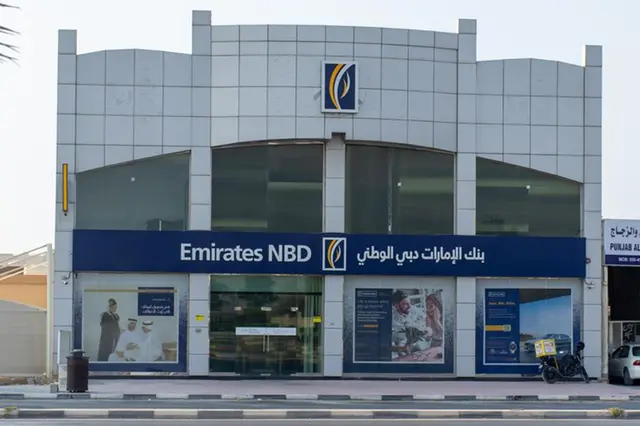
Dubai-based Emirates NBD is moving ahead with its planned acquisition of a major stake in RBL Bank, launching an open offer to public shareholders beginning June 1 as part of one of the largest cross-border banking deals involving India’s financial sector.
According to a letter of offer filed with stock exchanges, Emirates NBD plans to acquire up to a 26% stake in RBL Bank from public shareholders at a price of 282.38 Indian rupees per share. The offer period will remain open until June 12.
The move marks a major step in Emirates NBD’s broader expansion strategy into high-growth international banking markets, particularly India, which remains one of the world’s fastest-growing major economies.
Emirates NBD Pushes Ahead With India Expansion
The proposed transaction follows Emirates NBD’s announcement in October that it intended to acquire a majority stake in RBL Bank in a deal valued at approximately $3 billion.
The acquisition immediately attracted attention across regional and global financial markets because of its scale and strategic importance.
If completed successfully, the deal would strengthen Emirates NBD’s presence in South Asia while giving the UAE banking giant deeper access to India’s expanding retail and corporate banking market.
The acquisition has now cleared key regulatory hurdles.
Reserve Bank of India approved the transaction in April, while the Indian government granted additional clearance last week.
Those approvals paved the way for the mandatory public open offer process.
Understanding the RBL Bank Open Offer
Under Indian takeover regulations, companies acquiring a substantial stake in a listed firm must extend an open offer to public shareholders.
The rule is designed to protect minority investors by giving them an opportunity to exit at a defined price during major ownership changes.
In this case, public shareholders of RBL Bank can tender their shares to Emirates NBD between June 1 and June 12.
The offer price has been fixed at 282.38 rupees per share, which includes an interest component of 2.38 rupees.
However, the pricing also reflects roughly a 15% discount to RBL Bank’s closing market price on Friday, potentially affecting investor participation levels.
Total Deal Value Could Exceed 117 Billion Rupees
If the open offer is fully subscribed, Emirates NBD would spend approximately 117.35 billion Indian rupees on the transaction.
That would further increase the total scale of the acquisition, already regarded as one of the most significant foreign investments in India’s banking industry in recent years.
The transaction also signals growing confidence among Gulf financial institutions in India’s long-term economic outlook.
Indian banking assets continue attracting foreign interest because of:
- Rising consumer lending demand
- Rapid digital banking growth
- Expanding middle-class populations
- Increasing corporate financing activity
- Long-term economic expansion prospects
Why India Matters to Emirates NBD
For Emirates NBD, India represents both a strategic and natural expansion market.
The UAE and India maintain deep trade, investment, and expatriate connections. Millions of Indians live and work in the Gulf region, creating strong cross-border financial flows.
By securing a major foothold in India’s banking sector, Emirates NBD could significantly strengthen:
- Trade finance operations
- Remittance services
- Corporate banking relationships
- Wealth management offerings
- Retail banking expansion
The deal would also diversify Emirates NBD’s earnings beyond the Gulf region at a time when many Middle Eastern lenders are pursuing international growth opportunities.
RBL Bank Gains a Powerful Strategic Investor
For RBL Bank, the acquisition could provide stronger capital backing and improved international connectivity.
RBL Bank has spent years expanding its retail and commercial banking footprint in India, but competition within the sector remains intense.
India’s banking market includes:
- Large state-owned lenders
- Aggressive private banks
- Digital-first fintech competitors
- Global financial institutions
Partnership with a major Gulf banking group could improve RBL Bank’s:
- Capital position
- Technology investments
- International business capabilities
- Institutional credibility
- Regional expansion opportunities
Cross-Border Banking Deals Are Increasing
The Emirates NBD-RBL Bank transaction reflects a broader trend of rising cross-border banking acquisitions across emerging markets.
Banks are increasingly seeking international growth as competition intensifies within domestic markets.
Several factors are driving this shift:
Economic Diversification Strategies
Middle Eastern banks are expanding internationally to reduce dependence on regional economic cycles.
Strong Capital Positions
Many Gulf lenders possess healthy balance sheets and significant liquidity.
India’s Rapid Financial Growth
India’s financial services sector continues expanding faster than many developed markets.
Digital Banking Opportunities
Growing digital adoption creates new revenue channels across emerging economies.
The RBL Bank deal could encourage additional Gulf investments into India’s financial system in the coming years.
Investor Focus on Pricing and Participation
One of the key questions surrounding the open offer is whether public shareholders will tender significant volumes of shares given the pricing discount.
The offer price stands below RBL Bank’s latest market valuation, which may discourage some investors from participating unless market conditions weaken during the offer window.
However, shareholders may still consider:
- Liquidity certainty
- Strategic value of the acquisition
- Future ownership changes
- Long-term stock performance outlook
Market analysts will closely monitor subscription levels once the offer opens.
What This Means for UAE-India Financial Relations
The acquisition also carries broader geopolitical and economic significance.
Financial ties between the UAE and India have deepened considerably in recent years through:
- Trade agreements
- Infrastructure investments
- Energy partnerships
- Technology cooperation
- Financial sector collaborations
Major banking transactions such as this one reinforce the growing integration between Gulf and Indian financial markets.
For the UAE, investments in India align with wider ambitions to strengthen global economic influence beyond oil-dependent sectors.
Banking Sector Consolidation Continues Globally
The Emirates NBD-RBL Bank deal also highlights the continuing consolidation trend across the global banking industry.
Banks worldwide are facing pressure from:
- Digital disruption
- Regulatory costs
- Competition from fintech firms
- Changing customer expectations
- Slower growth in mature markets
As a result, larger financial institutions are increasingly pursuing acquisitions to expand market share and diversify operations.
India’s large population and rapidly modernizing banking ecosystem make it particularly attractive for international players seeking long-term growth.
Outlook for the Acquisition
With regulatory approvals largely secured and the open offer set to begin, the acquisition process is entering a decisive phase.
The level of shareholder participation during the June 1–12 offer period will provide a clearer indication of investor sentiment toward the transaction.
If completed successfully, the acquisition could become one of the defining banking deals linking the Gulf and Indian financial sectors in recent years.
It may also reshape competitive dynamics within India’s private banking landscape while accelerating Emirates NBD’s transformation into a more globally diversified financial institution.
Frequently Asked Questions
What is Emirates NBD offering for RBL Bank shares?
Emirates NBD is offering 282.38 Indian rupees per share to public shareholders of RBL Bank.
When does the RBL Bank open offer begin?
The open offer will begin on June 1 and close on June 12.
Why is an open offer required in India?
Indian takeover regulations require buyers acquiring substantial stakes in listed companies to provide public shareholders with an exit opportunity.
How much is the acquisition worth?
The open offer alone could reach 117.35 billion rupees if fully accepted, while the broader acquisition was previously valued at around $3 billion.
Has the deal received regulatory approval?
Yes. The transaction has received approval from the Reserve Bank of India and the Indian government.
Conclusion
Emirates NBD is entering a critical phase in its ambitious acquisition of RBL Bank as it launches its open offer to public shareholders on June 1.
The transaction represents more than a banking acquisition. It reflects the deepening economic relationship between the Gulf and India, the globalization strategies of major Middle Eastern lenders, and the growing attractiveness of India’s financial sector to international investors.
If finalized, the deal could reshape regional banking dynamics while positioning Emirates NBD as a more influential player across one of the world’s fastest-growing financial markets.