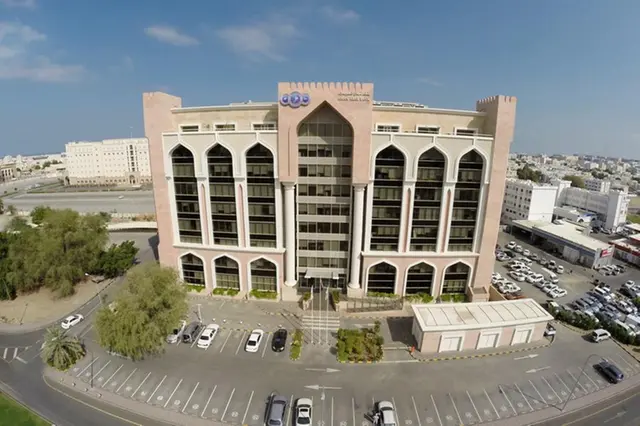
Oman Arab Bank has successfully raised $400 million through a perpetual Additional Tier 1 (AT1) capital securities issuance, attracting strong investor demand as Gulf financial institutions continue tapping international debt markets to strengthen regulatory capital positions.
Oman Arab Bank (Arabic: بنك عمان العربي) is a commercial bank in Oman, established in 1984. It is jointly owned by Arab Bank plc (49%), Oman International Development and Investment Company SAOG (31.63%) and other individual or corporate shareholders (19.37%).
| Website | www.oman-arabbank.com |
|---|
The Oman-based lender priced the perpetual non-call 5.5-year capital securities at par with a:
- Fixed resettable coupon of 6.75%
paid semi-annually.
The issuance was conducted under Regulation S and is expected to be listed on the:
- London Stock Exchange International Securities Market.
The transaction highlights sustained investor appetite for Gulf banking sector debt despite ongoing geopolitical and global macroeconomic uncertainty.
Investor Demand Exceeds $1 Billion
Investor interest in the Oman Arab Bank issuance proved strong.
According to reports, the final orderbook exceeded:
- $1 billion
excluding joint lead manager interest.
The strong demand enabled the bank to tighten pricing from the initial guidance in the:
- Low 7% area
down to the final coupon level of:
- 6.75%
The deal demonstrates continued confidence among international investors in GCC banking institutions and regional credit markets.
Spread Set at 242.8 Basis Points Over US Treasuries
The AT1 capital securities were priced with:
- A spread of 242.8 basis points over US Treasuries
The issuance carried:
- Yield: 6.75%
- Benchmark rate: 4.322%
Like many AT1 instruments, the securities are perpetual in structure but include a first call date after 5.5 years.
AT1 instruments are designed to help banks strengthen their capital buffers and meet international regulatory requirements under Basel III frameworks.
Oman Arab Bank Maintains Investment-Grade Ratings
Oman Arab Bank currently holds investment-grade ratings from major global credit agencies:
- Moody’s: Baa3
- S&P: BBB-
- Fitch: BBB-
All ratings reportedly maintain:
- Stable outlooks
The ratings helped support investor confidence during the issuance process.
Ownership Structure Supports Bank Stability
Oman Arab Bank is listed on the:
- Muscat Stock Exchange
The bank’s ownership structure includes major regional institutional backing.
Key shareholders include:
- Arab Bank with 49%
- Oman International Development and Investment Company with 31%
The strong shareholder base provides additional support for the bank’s long-term financial stability and capital market access.
Previous AT1 Issuance Completed in 2023
The latest deal follows Oman Arab Bank’s previous AT1 issuance completed in October 2023.
That earlier transaction involved:
- OMR 50 million ($130 million)
through a private placement structure.
The 2023 issuance also included:
- Green shoe option of OMR 10 million
- Coupon of 7%
The bank has remained active in capital markets as GCC financial institutions continue optimizing capital structures amid evolving regulatory and market conditions.
Read Also: Oman Logistics Sector Booms with $8.8 Billion Investment in 2025
Bank Also Redeeming Earlier Tier 1 Securities
Last week, Oman Arab Bank also announced plans to redeem its:
- $250 million Perpetual Tier 1 Capital Securities
on the first call date of:
- June 4, 2026
The securities will reportedly be redeemed at:
- 100% of principal amount
The original offering was issued in 2021 and also listed on the London Stock Exchange’s ISM market.
The redemption demonstrates the bank’s continued access to refinancing opportunities in international capital markets.
GCC Banks Continue Active Debt Issuance
Banks across the Gulf Cooperation Council region have remained highly active in global debt markets over recent years.
Financial institutions continue raising capital to support:
- Lending growth
- Regulatory compliance
- Digital transformation
- Infrastructure financing
- Economic diversification
The GCC banking sector has generally benefited from:
- Strong oil-linked economies
- Government support
- Expanding liquidity conditions
- Rising regional investment activity
Fitch Warns of Heavy AT1 Refinancing Wave
According to a recent report from Fitch Ratings, approximately:
- $10 billion worth of dollar-denominated AT1 instruments
across GCC banks are expected to reach their first call dates during 2026.
The report suggests private placements may become a more important funding mechanism this year if geopolitical tensions, including the US-Iran conflict, continue escalating.
Regional banks may increasingly rely on flexible funding structures depending on global market volatility.
Read Also: The Billionaires of Kenya: Suleiman Shahbal — The Visionary Behind Kenya’s First Islamic Bank
Geopolitical Risks Continue Influencing GCC Debt Markets
Although investor appetite for Gulf banking debt remains relatively strong, regional geopolitical uncertainty continues affecting market conditions.
Investors remain closely monitoring:
- US-Iran tensions
- Oil price volatility
- Global interest rate expectations
- Regional economic growth
- Currency stability
Despite those risks, GCC financial institutions continue attracting substantial international demand due to relatively strong sovereign support and healthier balance sheets compared to many global peers.
AT1 Market Remains Important for Banks
AT1 securities remain a crucial financing tool for banks globally.
These instruments allow financial institutions to:
- Improve capital ratios
- Meet Basel III requirements
- Strengthen financial resilience
- Optimize balance sheets
However, AT1 markets have also faced heightened scrutiny globally following turbulence in the banking sector over recent years.
Strong investor demand for GCC bank AT1 instruments suggests confidence in the region’s financial system remains relatively resilient.
Final Thoughts
Oman Arab Bank has successfully secured $400 million through a heavily oversubscribed AT1 capital securities issuance, highlighting continued international investor appetite for Gulf banking sector debt.
The transaction reinforces the growing sophistication of GCC capital markets while underscoring the importance of AT1 instruments in regional banking sector financing strategies.
As Gulf financial institutions continue navigating global uncertainty, rising refinancing needs, and evolving regulatory requirements, debt issuances like Oman Arab Bank’s latest transaction are likely to remain a central feature of the region’s financial landscape.