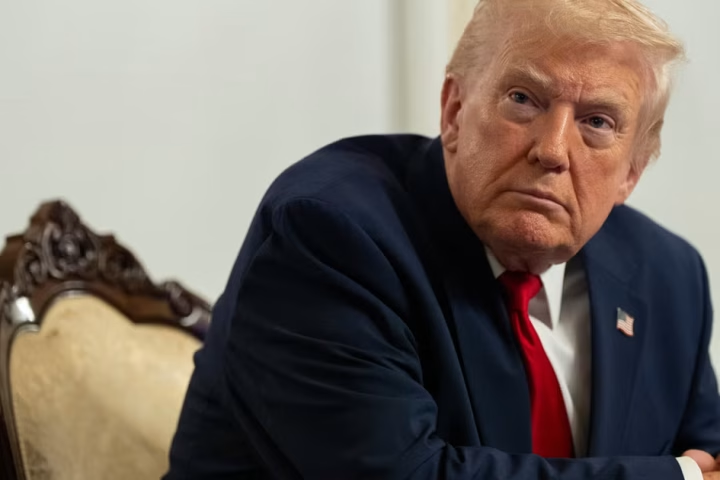
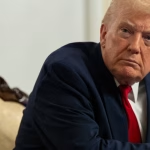
Amid rising tensions in the Middle East, former US President Donald Trump has issued a stern warning to Iraq, cautioning the country against reinstating Nouri al-Maliki as Prime Minister. Trump described the possibility as a “very bad choice” and a move that could lead Iraq back into instability. The former president, known for his tough stance on foreign policy, stated that a return of Maliki to power would be detrimental not only to Iraq’s internal stability but also to its relationship with the United States.
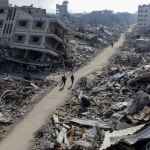
In a post on Truth Social, Trump reminded Iraq of the chaos and poverty that marked Maliki’s tenure from 2006 to 2014. During this period, Iraq experienced sectarian violence, political instability, and the rise of militant groups, factors that led to widespread suffering and a weakened state. Trump’s comments have ignited a heated debate in Iraq, where Maliki’s potential return to power is seen as divisive.
Trump’s Concerns and Repercussions for US-Iraq Relations
Trump’s opposition to Maliki’s possible return is rooted in his belief that Maliki’s policies contributed to Iraq’s decline. He emphasized that the US would no longer offer support to Iraq if Maliki were reinstated, citing concerns over the country’s future prosperity and freedom. Trump stated that without US backing, Iraq would have “ZERO chance of Success, Prosperity, or Freedom,” reinforcing the importance of US-Iraq relations for the stability of the region.
During his time as Prime Minister, Maliki’s government was criticized for exacerbating sectarian divisions, neglecting minority groups, and failing to address the growing influence of militant groups, including ISIS. Maliki’s leadership is often blamed for the breakdown of security and the resulting humanitarian crisis that followed. Trump’s warning serves as a reminder that the US sees Iraq’s future as intertwined with the policies of its leadership, especially concerning regional stability and alignment with US interests.
Rubio’s Warning Against a Pro-Iran Government
US Secretary of State Marco Rubio also weighed in on Iraq’s political situation, urging the country to avoid forming a government aligned with Iran. Rubio expressed concerns that a pro-Iranian government could undermine Iraq’s independence and long-term stability. In a phone call with Iraqi Prime Minister Mohammed Shia Al-Sudani, Rubio stressed that Iraq’s future depended on prioritizing its own national interests rather than being swayed by external powers, particularly Iran.
Rubio’s warning highlights the ongoing tension between Iraq’s sovereignty and its complex relationship with Iran. Iran’s influence in Iraq has been growing, particularly through militias and political factions that support Tehran’s interests. Rubio’s comments underscore the importance of maintaining a balanced relationship with both the United States and regional powers to ensure Iraq’s security and prosperity. A government dominated by Iran, Rubio argued, would not only risk Iraq’s autonomy but also its ability to remain neutral in regional conflicts and maintain a strong partnership with the United States.
A Divisive Issue in Iraqi Politics
The possibility of Nouri al-Maliki’s return to power has sparked intense debate within Iraq. Supporters of Maliki argue that he is a seasoned leader capable of stabilizing the country, while critics point to his legacy of sectarianism, poor governance, and the rise of ISIS during his tenure. The divisive nature of the issue reflects Iraq’s broader struggle to balance the demands of political factions, external pressures, and its quest for stability.
Maliki’s return could further deepen Iraq’s internal divisions, especially given his ties to Iran and his previous conflicts with Kurdish and Sunni leaders. His leadership style has often been seen as authoritarian, which has raised concerns about the future of Iraq’s democratic institutions and the potential for further unrest.
Conclusion:
The warnings from both Donald Trump and Marco Rubio reflect the growing concerns in Washington over Iraq’s political direction and its future relationship with the United States. The potential reinstatement of Nouri al-Maliki as Prime Minister poses significant risks for Iraq’s stability and its alignment with US interests in the region. As Iraq navigates this critical moment in its political history, the international community will be watching closely to see how it balances internal divisions with external pressures, particularly from Iran and the West. Whether Iraq chooses a path of stability or falls back into the chaos of its past will have far-reaching implications for the Middle East.