The Al Taweelah refinery has restarted alumina production, marking a major step in Emirates Global Aluminium’s effort to restore one of the UAE’s most strategically important industrial sites after operations were suspended in March.
Emirates Global Aluminium, commonly known as EGA, said production at the Abu Dhabi facility is expected to rise to 50% of plant capacity within days. The company expects to have the technical capability to return the refinery to full alumina production by the end of 2026, although the timing of any further increase will depend on supply-chain conditions and its broader raw-material sourcing strategy.
The restart is significant because alumina is the essential feedstock used by aluminium smelters. Al Taweelah produced 2.4 million tonnes of alumina in 2025, supplying 46% of EGA’s total requirements. Its return therefore strengthens the company’s access to a locally processed raw material while reducing immediate dependence on external alumina purchases.
Production had been suspended on March 28 after Iranian attacks affected the Khalifa Economic Zone Abu Dhabi, where the wider Al Taweelah industrial complex is located. The site includes the alumina refinery, a major aluminium smelter, a power plant, casthouse facilities and an aluminium recycling operation.
The resumption follows a phased recovery process. The refinery began producing hydrate, the intermediate material from which alumina is made, on June 24. Restoring finished alumina output represents the next critical operational milestone.
For the UAE, the restart goes beyond the recovery of a single plant. It restores an important component of the country’s industrial value chain, supports EGA’s aluminium operations and strengthens the resilience of a sector that supplies customers in construction, transport, packaging, automotive manufacturing and other industries worldwide.
Al Taweelah Refinery Returns to Alumina Production
EGA announced that alumina production had resumed at Al Taweelah following more than three months of suspended operations.
The company expects output to reach approximately half of the refinery’s capacity within days. Technical work is also progressing toward giving the plant the ability to return to full production by the end of the year.
However, reaching technical readiness does not necessarily mean the refinery will immediately operate at maximum capacity.
EGA said the pace of further ramp-up will be determined by supply-chain dynamics and the optimisation of its alumina sourcing strategy. That wording suggests the company will balance local production against the cost, availability and logistical reliability of alumina purchased from international suppliers.
The distinction is important for investors and commodity-market participants.
Industrial plants do not always operate at their maximum technical capacity. Companies consider input availability, maintenance needs, energy costs, customer demand, shipping conditions and the price of alternative supplies before determining the most commercially efficient production level.
For EGA, the reopening creates additional flexibility. The company can progressively increase domestic alumina production while evaluating how external market conditions affect the economics of imported material.
The refinery’s return also reduces one of the uncertainties created by the interruption at the broader Al Taweelah complex.
EGA had previously said the site sustained significant damage following attacks in March. The refinery, smelter, casthouse, power plant and recycling operation were evacuated and placed into emergency shutdown.
Bringing the refinery back into service demonstrates that part of the industrial complex can resume production even while restoration work continues across other facilities.
What EGA Said About the Restart
EGA Chief Executive Officer Abdulnasser bin Kalban described the return of alumina production as another major milestone in the company’s effort to restore Al Taweelah’s position as one of the world’s most important aluminium production complexes.
He credited the refinery team’s dedication and operational flexibility for enabling production to resume safely and quickly.
The company’s emphasis on safety is particularly relevant because restarting an alumina refinery is a technically demanding process.
Refining involves high temperatures, pressure, chemical processing, large material flows and tightly controlled industrial systems. EGA says temperatures in parts of the Al Taweelah refining process exceed 1,000 degrees Celsius, while pressure in some sections can reach 100 times atmospheric pressure.
A restart therefore requires more than simply turning equipment back on.
Engineers must examine infrastructure, test systems, confirm the integrity of pressure vessels and pipelines, restore utilities, restart individual processing stages and ensure that materials can move safely through the plant.
The refinery’s transition from hydrate production on June 24 to finished alumina output indicates that these restoration activities have progressed through important stages.
Hydrate is a precursor material created during the refining process. It must undergo further processing before becoming the alumina powder supplied to smelters.
The production of finished alumina confirms that EGA has been able to restore a larger portion of the refinery’s processing chain.
Background: Why the Al Taweelah Refinery Matters
Al Taweelah is central to EGA’s strategy of integrating more of its aluminium supply chain within the company.
Before the refinery began operating in 2019, the UAE’s aluminium industry depended more heavily on imported alumina. Establishing a domestic refinery gave EGA greater control over a raw material essential to its smelting operations.
The plant was the first alumina refinery built in the UAE and only the second in the Middle East when it began production. It represents a total investment of approximately $3.3 billion, according to EGA.
The refinery processes bauxite, an ore containing aluminium-bearing minerals, into alumina. Smelters then use electricity to convert alumina into primary aluminium metal.
This sequence forms the central industrial chain:
Bauxite is mined and transported to a refinery.
The refinery processes the bauxite into alumina.
The alumina is delivered to a smelter.
The smelter converts the alumina into molten aluminium.
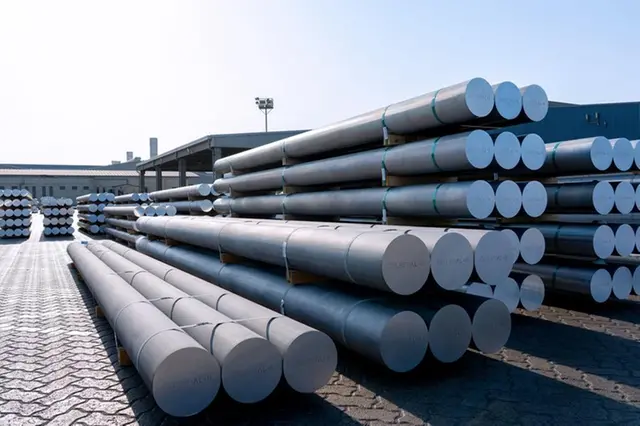
The metal is cast into products such as billets, slabs, ingots and foundry alloys.
Manufacturers then use those products in vehicles, buildings, electrical systems, packaging and consumer goods.
By operating both refining and smelting assets, EGA captures more economic value from the production chain and reduces its exposure to interruptions in third-party alumina supply.
The Al Taweelah refinery converts more than five million tonnes of bauxite into over two million tonnes of alumina annually. In 2025, production reached 2.4 million tonnes, covering 46% of EGA’s total alumina requirements.
That volume illustrates why the refinery’s temporary closure mattered.
Losing a source that normally supplies almost half of the company’s alumina needs creates immediate procurement and logistical challenges, even when alternative material is available in the international market.
Key Details From the Al Taweelah Restart
Production to Reach 50% of Capacity Within Days
EGA expects production to rise rapidly to half of the refinery’s capacity.
This initial target suggests that the company has restored enough equipment and infrastructure to operate a substantial portion of the plant.
Reaching 50% capacity would return a meaningful volume of alumina to EGA’s internal supply network.
Based on the refinery’s recent annual output, half-capacity operations could provide an important contribution toward the needs of the company’s aluminium smelters. Actual production volumes will depend on the duration of operation, maintenance schedules and the final configuration used during the ramp-up.
The early target also reduces the length of time EGA must rely entirely on external sources for alumina normally supplied from Al Taweelah.
Technical Capability for Full Production Expected in 2026
EGA expects to have the technical capability to restore full alumina production by the end of the year.
This is a forward-looking operational target rather than a guarantee that the facility will immediately move to full utilisation.
The company will still assess supply-chain conditions and the economics of its sourcing strategy before making that decision.
Technical readiness nevertheless provides valuable flexibility.
Once the refinery is capable of operating at maximum output, EGA can adjust production in response to the availability of bauxite, alumina market prices, customer requirements and conditions affecting regional shipping.
Hydrate Production Resumed Before Alumina Output
The refinery began producing hydrate on June 24.
That restart was an intermediate step toward the resumption of full alumina processing.
In the Bayer refining process commonly used across the global aluminium industry, bauxite is processed to separate aluminium-bearing material from other components. Aluminium hydroxide hydrate is then produced before being heated in a calcination stage to form alumina.
The move from hydrate to finished alumina therefore signals that additional sections of the facility have returned to operation.
Ramp-Up Will Depend on Supply-Chain Conditions
EGA has not committed to immediately running the refinery at full capacity once technical restoration is complete.
Instead, it will consider supply-chain dynamics and seek to optimise the balance between internal production and externally sourced alumina.
This approach reflects the complexity of the international alumina market.
Prices can fluctuate according to refinery output in major producing countries, bauxite supply, freight costs, energy prices, environmental restrictions and demand from smelters.
Logistical considerations are equally important.
The Gulf aluminium industry depends on international shipping for inputs such as bauxite, alumina and carbon materials. Disruption to shipping routes can affect delivery schedules even when sufficient material exists elsewhere in the global market.
Smelter Ramp-Up Does Not Require Full Refinery Output
EGA clarified that restoring aluminium production at the neighbouring Al Taweelah smelter does not depend on the refinery returning to maximum production.
This means the smelter can use alumina from a combination of local production, imported supply and existing inventories.
The operational independence provides resilience.
Although the refinery and smelter are physically integrated, EGA does not have to wait for full refinery recovery before increasing metal production.
That separation may allow the company to restore its aluminium output faster than would be possible under a completely closed supply system.
How the Refinery Supports the Al Taweelah Smelter
The refinery is located next to EGA’s Al Taweelah aluminium smelter.
Finished alumina is transferred to storage and later carried into the smelter through a conveyor system. This arrangement reduces the need to transport the material over long distances by road or ship.
EGA says millions of tonnes of material move through the refinery each year using an 8,150-metre conveyor system. The plant also has a bauxite storage shed with capacity for approximately 450,000 tonnes.
The physical integration offers several commercial advantages.
It reduces handling requirements.
It limits transportation costs between the refinery and smelter.
It can shorten delivery times.
It reduces exposure to local road congestion.
It allows production teams to coordinate inventories across adjoining facilities.
However, integration also creates concentration risk.
When several major processing operations are located at one industrial complex, an event affecting the site can interrupt multiple stages of production simultaneously.
The March shutdown demonstrated this risk. The alumina refinery, smelter, casthouse, power plant and recycling facility were all affected by the emergency.
The phased restart now illustrates the other side of integration: restoring one facility can quickly begin supporting neighbouring operations as they return to service.
What Alumina Is and Why It Is Important
Alumina is a white crystalline material formally known as aluminium oxide.
It is produced from bauxite and serves as the principal raw material used in primary aluminium smelting.
Producing aluminium requires large quantities of alumina. As a general industrial relationship, roughly two tonnes of alumina are required to make one tonne of primary aluminium, although exact requirements vary according to material quality and operating conditions.
A smelter cannot maintain normal output without a reliable alumina supply.
This makes refinery availability strategically important, especially for major Gulf producers whose output is sold to global manufacturing customers.
Aluminium itself is valued because it is lightweight, corrosion-resistant, conductive and highly recyclable.
It is used in aircraft, vehicles, railway equipment, beverage cans, electrical networks, solar installations, window frames, building façades and industrial machinery.
Demand from these sectors means disruptions at alumina refineries can eventually affect aluminium availability and regional physical-market premiums.
The relationship is not always immediate because producers and customers may hold inventories. However, prolonged shortages can force smelters to reduce output if replacement alumina cannot be delivered.
Why the March Suspension Affected Global Markets
The suspension at Al Taweelah occurred during a period of wider disruption across the Gulf metals sector.
The Middle East has approximately seven million tonnes of aluminium smelting capacity, accounting for about 9% of global capacity. Around three-quarters of the region’s aluminium output is exported, making Gulf production important to manufacturers outside the region.
Europe and the United States are significant buyers.
Europe imported roughly 1.2 million tonnes of primary and alloyed aluminium from the Middle East and Egypt in the preceding year, equivalent to around 20% of its imports in those categories. US imports from the Middle East reached approximately 3.4 million tonnes, or nearly 22% of the total, according to trade data cited by Reuters.
Disruption at EGA and Aluminium Bahrain therefore raised concerns about the availability of metal for international markets.
Aluminium prices on the London Metal Exchange reached a four-year high of $3,492 per tonne in late March as buyers assessed the potential effect of production interruptions and shipping restrictions. Physical premiums also increased in Europe.
The restart of the Al Taweelah refinery does not by itself restore all affected aluminium supply.
Alumina refining is only one stage of the production chain. The pace of recovery at the smelter and supporting infrastructure will determine how quickly EGA can return primary metal output toward normal levels.
Nevertheless, restoring the refinery removes an important constraint and improves the company’s ability to supply alumina to its own operations.
Gulf Alumina Supply Faced a Separate Challenge
The disruption exposed a structural vulnerability within the Gulf aluminium industry.
The region operates several large smelters but has relatively few alumina refineries. Reuters reported in April that the Gulf had six smelters but only two alumina refineries, leaving most producers dependent on imports of the intermediate material.
Al Taweelah is therefore important not just because of its size, but because local refining capacity is limited.
When its production stopped, alumina originally intended for Gulf customers had to be redirected or rescheduled. Smelters also faced uncertainty over how quickly incoming shipments could reach their facilities.
The international alumina market had already shifted toward oversupply before the conflict-related disruption.
Expanded production in China and Indonesia had placed downward pressure on alumina prices. Macquarie Bank estimated a global surplus of 2.54 million tonnes in 2025 and later increased its projected 2026 surplus to 2.2 million tonnes as material intended for the Gulf was redirected.
This produced an unusual market situation.
The international market had adequate alumina availability, but Gulf smelters still faced potential shortages because shipping and logistical constraints limited their ability to receive it.
The experience demonstrates why industrial supply security depends on more than global production totals.
A commodity may be abundant globally yet unavailable in the place where it is needed because of port restrictions, route closures, insurance costs, vessel availability or delays in unloading and inland transportation.
Restoring Al Taweelah reduces EGA’s exposure to that mismatch.
Impact on EGA’s Aluminium Operations
The most direct benefit of the restart is an improvement in EGA’s internal alumina supply.
The company produced around 2.7 million tonnes of primary aluminium annually in the UAE before the disruption, including output from Al Taweelah and Jebel Ali. Al Taweelah alone produced approximately 1.6 million tonnes of cast metal in 2025.
Supplying operations of that scale requires a continuous flow of alumina and other raw materials.
The refinery’s initial 50% ramp-up will not meet all of EGA’s needs. Even under normal conditions, Al Taweelah supplied 46% of the group’s requirements, meaning the company already relied on external alumina sources for the balance.
The restart nevertheless restores a major part of that diversified sourcing system.
Instead of depending almost entirely on imports, EGA can again combine its own refinery production with supplies purchased from the international market.
This may improve procurement flexibility and reduce the risk that a disruption at a single external supplier affects operations.
It may also help the company control costs.
Internally produced alumina can provide a more predictable supply cost than spot purchases, although the final economics depend on bauxite prices, energy use, processing expenses and freight.
Impact on UAE Industry
The refinery’s restart supports the UAE’s broader strategy of developing a more integrated and diversified industrial economy.
Aluminium is one of the country’s largest manufactured exports outside oil and gas.
Rather than exporting only energy or unprocessed resources, the sector uses power, infrastructure, technology and skilled labour to produce high-value industrial materials for global customers.
Al Taweelah deepens this model by adding refining to the domestic value chain.
Bauxite is imported and processed into alumina in Abu Dhabi. The alumina is then converted into aluminium, cast into customer-specific products and sold to manufacturers.
Each additional production stage creates industrial activity, supports specialised employment and contributes to local procurement.
EGA said that 80% of the contracts awarded during the refinery’s construction, measured by value, went to UAE-registered companies. The project required around 72 million work hours and covers an area of 1.4 square kilometres.
The restart therefore supports an industrial ecosystem extending beyond EGA itself.
Contractors, maintenance providers, transport businesses, engineering companies, port operators and industrial service firms all have exposure to activity at the complex.
Implications for Global Aluminium Buyers
Customers will watch the recovery for signs of improved supply reliability.
EGA sells aluminium to manufacturers across numerous international markets. Its metal is used in sectors where customers often require precise technical specifications and dependable delivery schedules.
A manufacturer cannot necessarily replace one aluminium product with any available metal.
Automotive companies, aerospace suppliers, packaging producers and construction-material manufacturers may require particular alloys, dimensions, strength characteristics or certification standards.
Supply disruptions can therefore have consequences even when headline global production remains adequate.
The refinery restart helps EGA move closer to stable operations, but customers will continue monitoring the recovery of primary aluminium production at the Al Taweelah smelter.
EGA previously said it held substantial stocks of metal on the water, in the UAE and at some overseas locations when the disruption began. Those inventories were intended to help the company manage customer deliveries during the interruption.
The duration of the recovery will determine how long inventory and production from other assets can offset reduced output at Al Taweelah.
Implications for Investors and Commodity Markets
EGA is not publicly traded, but its production decisions remain relevant to investors in aluminium producers, mining companies, manufacturers and commodity-linked funds.
The restart can influence expectations for regional alumina demand.
As the refinery increases production, EGA may require fewer purchases from third-party alumina suppliers. This could leave additional material available in the international market, particularly if other Gulf operations remain below normal capacity.
At the same time, restoring the refinery may support an increase in smelter output, which would increase consumption of alumina and other industrial inputs.
Investors must therefore consider the entire production chain rather than treating the refinery restart as a simple increase in raw-material supply.
The announcement may also reduce some of the disruption premium that entered aluminium markets after the March attacks.
However, the effect on prices will depend on several factors:
The speed of the smelter recovery.
The condition of regional shipping routes.
Production at other Gulf facilities.
Chinese aluminium output.
Global industrial demand.
Energy costs.
Physical inventories in Europe and North America.
Trade measures affecting aluminium imports.
The refinery restart is positive for supply confidence, but it does not remove all the regional and global factors affecting aluminium prices.
Al Taweelah’s Scale and Technical Complexity
The refinery is one of the UAE’s most complex industrial facilities.
It contains approximately 222 tanks with a combined volume of about 350,000 cubic metres. EGA compares that volume to roughly 140 Olympic-sized swimming pools.
The facility includes about 9,500 instruments and extensive piping, cabling and process-control systems.
Its control room has three times as many instruments as an advanced airliner, according to the company.
This scale helps explain why a phased restart is necessary.
Each major system must operate safely within specific pressure, temperature and chemical conditions. The refinery must also maintain the correct balance between bauxite preparation, digestion, clarification, precipitation, calcination, residue handling and product storage.
A failure in one area can restrict the throughput of the entire facility.
Reaching 50% capacity within days is therefore an operationally significant target.
Moving from that level to full capacity may require further testing, repairs, inspection and optimisation.
Supply-Chain Flexibility Will Shape the Final Ramp-Up
EGA’s statement that further production will depend on supply-chain dynamics is one of the most commercially important elements of the announcement.
The refinery requires a steady supply of bauxite.
When Al Taweelah originally began production, EGA said the plant would process bauxite imported from Guinea. The company has developed upstream mining interests in the West African country as part of its effort to secure raw-material supply.
Moving millions of tonnes of bauxite from West Africa to Abu Dhabi requires reliable ports, vessels, freight arrangements and storage.
Any interruption at one stage can affect refinery utilisation.
EGA must also compare the cost of refining bauxite internally with the cost of purchasing alumina from outside suppliers.
When seaborne alumina prices are low, external purchases may be commercially attractive. When prices rise or logistics become unreliable, maximising internal refinery output may offer greater value.
The company’s final production decision will therefore likely reflect both supply security and cost optimisation.
Environmental and Efficiency Considerations
Alumina refining is an energy- and resource-intensive process.
It also produces bauxite residue, a material that must be stored and managed responsibly.
EGA says residue at Al Taweelah is washed, pressed into a dry cake and moved to a dedicated managed storage area. The company has also been researching possible commercial uses for the by-product.
The environmental performance of the refinery will remain important as EGA restores production.
Global aluminium buyers are paying increasing attention to the carbon footprint and traceability of the materials they purchase.
Manufacturers in automotive, packaging and construction markets face pressure from customers, investors and regulators to reduce emissions across their supply chains.
EGA has developed lower-carbon aluminium products, including metal produced using solar electricity and recycled aluminium. However, the emissions profile of the full value chain also includes mining, refining, shipping and smelting.
Efficient refinery operations can help reduce energy and material consumption per tonne of alumina produced.
The ramp-up process will therefore be judged not only by volume but also by operational stability, safety, efficiency and environmental management.
Market and Industry Context
The aluminium industry is experiencing competing forces.
Demand is supported by electrification, renewable energy, transport manufacturing, urban development and the need for lighter materials.
Electric vehicles use aluminium to reduce weight and improve efficiency.
Solar installations require aluminium frames and structural components.
Electricity networks use aluminium in transmission systems.
Construction companies use the metal in façades, windows, roofs and structural applications.
Packaging demand also remains significant because aluminium is light, protective and recyclable.
However, the industry faces uncertainty from trade restrictions, energy costs, slower economic growth and increased production in China.
China accounts for the majority of global aluminium output. Reuters reported that its share of global production reached a record 60.2% in March 2026 as Gulf disruptions reduced Western output and Chinese production continued rising.
This creates a strategic concern for buyers outside China.
Reduced Gulf production can make international markets more dependent on Chinese supply at a time when tariffs and trade restrictions complicate cross-border flows.
The restoration of EGA’s operations is therefore relevant to efforts to maintain a more geographically diverse aluminium supply base.
What Comes Next
The immediate milestone will be EGA’s progress toward 50% refinery capacity.
Investors, customers and industry participants will look for confirmation that the initial ramp-up remains stable and that the plant can maintain production without major interruptions.
The next phase will involve completing technical work required for full production capability.
EGA has set the end of 2026 as its target for reaching that stage.
Afterward, the company must decide how quickly to utilise the restored capacity.
That decision will depend on the availability of bauxite, the price of imported alumina, freight conditions, smelter demand and the wider recovery of the Al Taweelah site.
Attention will also remain focused on the neighbouring smelter.
The refinery’s recovery improves alumina availability, but the return of aluminium metal output will ultimately determine how much finished supply EGA can deliver to global customers.
Further company updates may provide details on reduction-cell restoration, power infrastructure, casthouse operations and customer deliveries.
Expert Analysis
The restart represents a meaningful reduction in EGA’s operational risk, but it should not be interpreted as the complete recovery of the Al Taweelah complex.
The refinery is one of several interconnected industrial facilities at the site. Restoring alumina output addresses a major raw-material constraint, while the recovery of primary aluminium production remains a separate process.
The rapid move toward 50% capacity suggests EGA has successfully prioritised sections of the refinery capable of returning safely and delivering immediate commercial value.
The company’s cautious language regarding full utilisation is also financially disciplined.
Operating at maximum capacity is not always the most profitable decision, particularly when the international alumina market is oversupplied. EGA can use the restored plant as a source of strategic flexibility rather than committing to full output regardless of market conditions.
The restart also reinforces the value of upstream integration.
Before the disruption, Al Taweelah supplied almost half of EGA’s alumina needs. Losing that production increased the company’s reliance on shipping routes and external suppliers precisely when regional logistics were under pressure.
Restoring local refining capacity provides a buffer against those risks.
For the wider market, the announcement improves confidence in Gulf industrial recovery but does not eliminate supply uncertainty. Aluminium prices and physical premiums will continue to reflect the condition of smelting operations, regional shipping, global demand and trade restrictions.
The most important measure of progress will not be the refinery’s technical capacity alone. It will be EGA’s ability to restore an integrated flow from bauxite and alumina through to finished aluminium products delivered reliably to customers.
Frequently Asked Questions
What is the Al Taweelah refinery?
The Al Taweelah refinery is an alumina-processing facility operated by Emirates Global Aluminium in Abu Dhabi. It converts imported bauxite into alumina, the main feedstock used in aluminium smelters.
When did EGA restart alumina production?
EGA announced the restart on July 10, 2026. The facility had begun producing hydrate, an intermediate product in the alumina process, on June 24.
Why was production suspended?
Production was suspended on March 28 after Iranian attacks affected the Khalifa Economic Zone Abu Dhabi and caused significant damage at EGA’s wider Al Taweelah industrial site.
How quickly will production increase?
EGA expects alumina production to reach 50% of the refinery’s capacity within days. The company aims to have the technical capability to return to full production by the end of 2026.
Will the refinery immediately operate at full capacity?
Not necessarily. EGA said further increases will depend on supply-chain conditions and the optimisation of its alumina sourcing strategy.
How much alumina did Al Taweelah produce in 2025?
The refinery produced 2.4 million tonnes of alumina in 2025, meeting 46% of EGA’s total alumina requirements.
Does the Al Taweelah smelter need full refinery output to restart?
No. EGA said the smelter’s production ramp-up does not depend on the refinery reaching full capacity. The company can combine alumina produced locally with externally sourced material.
Conclusion
The restart of alumina production at Al Taweelah marks an important stage in EGA’s recovery from the disruption that halted one of the UAE’s largest industrial complexes in March.
Reaching 50% of refinery capacity within days would restore a substantial part of the company’s internal raw-material supply. Achieving technical readiness for full production by the end of the year would give EGA even greater flexibility to respond to market and supply-chain conditions.
The recovery matters because Al Taweelah normally supplies almost half of the alumina required by EGA’s smelters. Its return reduces dependence on imported material, improves supply security and supports the gradual restoration of aluminium production in Abu Dhabi.
For the UAE, the development strengthens a major non-oil industrial value chain. For international customers, it offers an early sign that an important source of aluminium supply is moving closer to normal operations.
The remaining challenge is to restore the entire production chain. Refinery output must be matched by progress at the smelter, power facilities, casthouse and supporting infrastructure.
EGA’s ability to complete that process safely and efficiently will determine how quickly Al Taweelah can again operate as a fully integrated aluminium complex and resume its broader role in global metals supply.
Read Also: Mature Real Estate Markets Between Liquidity and Stability