UAE non-oil PMI growth slowed sharply in June as regional geopolitical tensions, weaker customer demand and rising business costs combined to weaken momentum across the private sector.
The seasonally adjusted S&P Global UAE Purchasing Managers’ Index declined to 50.8 in June from 52.6 in May. While the reading remained above the 50-point threshold that separates expansion from contraction, it marked the weakest June performance for the non-oil private sector in more than five years.
The slowdown reflected the lingering effects of the Iran conflict on business confidence, customer activity and travel, even as domestic spending and government investment continued to provide support for parts of the economy.
Survey data showed that businesses remained operationally resilient in some areas, particularly construction, digital services and projects backed by public investment. However, those strengths were not enough to offset broader softness in demand and increasing cost pressures.
UAE Non-Oil PMI Signals Slower Business Growth
The June PMI report points to an economy that is still expanding, but at a noticeably slower pace than earlier in the year.
Businesses reported that customers remained cautious, delaying spending decisions despite a modest improvement in new orders compared with recent months. Although new business reached a three-month high, it remained well below historical averages.
The survey suggests that uncertainty linked to regional developments continued to influence purchasing decisions. Companies also cited heightened competition, making it harder to translate sales opportunities into stronger overall growth.
As a result, operating conditions weakened to their lowest level since February 2021.
The report indicates that domestic demand has not collapsed. Instead, businesses are experiencing slower growth alongside greater caution from customers and narrower operating margins.
Employment Contracts for the First Time in Years
One of the report’s most notable findings was the deterioration in the labor market.
Employment fell at the fastest pace since August 2020, marking the first contraction in workforce numbers in more than four years.
Companies appeared to respond to weaker demand and softer business conditions by reducing staff. At the same time, capacity pressures remained relatively limited, reducing the immediate need for additional hiring.
The report also showed that work backlogs accumulated at one of the slowest rates seen over the past two and a half years. That suggests businesses were generally able to manage workloads despite supply chain disruptions affecting some sectors.
Where delays did occur, firms pointed to disruptions in production planning caused by shipment interruptions and volatility in raw material prices.
For employers, the combination of slower demand, manageable backlogs and rising costs created a less favorable environment for expanding payrolls.
Rising Costs Continue to Pressure Margins
Cost inflation remained another challenge during June.
Businesses reported higher input costs driven by transport charges and commodity price increases. Those expenses continued to outpace the rise in selling prices, leaving many firms under pressure.
Companies did increase prices charged to customers during the month, but only modestly. Because output prices rose more slowly than input costs, profitability remained under strain through the end of the second quarter.
That pricing imbalance illustrates the difficult position many businesses currently face. Passing higher costs directly to customers risks reducing demand even further, particularly during a period when clients are already delaying purchases.
The result is continued pressure on operating margins across parts of the non-oil economy.
Supply Chains Show Signs of Improvement
Despite the weaker overall business environment, the report highlighted one encouraging development.
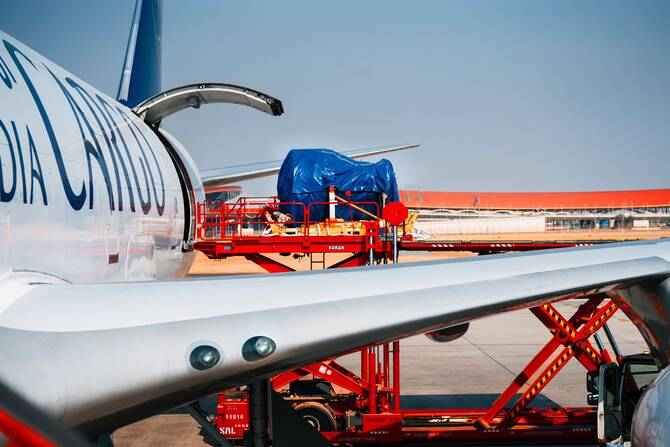
Supply chain performance improved at the fastest pace in four months as shipping conditions through the Strait of Hormuz began to recover.
Earlier disruptions had complicated logistics and delivery schedules for many businesses operating in the region. During June, however, easing bottlenecks allowed delivery times to improve.
That improvement helped reduce some operational pressure, although it did not fully offset the broader impact of higher transportation costs and raw material inflation.
If shipping conditions continue to normalize, businesses may benefit from more reliable inventory management and improved production planning during the months ahead.
Dubai’s Private Sector Also Loses Momentum
Dubai reflected the broader national trend.
The Dubai PMI declined to 50.7 in June from 52.0 in May, representing the weakest improvement in the emirate’s non-oil private sector since January 2021.
Businesses reported that demand growth slowed as customers postponed spending and travel activity remained affected by regional tensions.
Even so, companies continued increasing output, with production growth accelerating to its fastest pace since March.
That combination suggests firms remained willing to complete existing projects and maintain activity despite weaker incoming demand.
However, higher operating costs and softer market conditions also weighed on employment in Dubai. Staff numbers declined at the fastest pace recorded in five and a half years, highlighting how companies are adjusting costs while navigating a more uncertain economic environment.
Government Investment Continues to Provide Support
Although the survey reflected slower momentum, it also identified several areas of resilience.
Government investment continued supporting business confidence, while construction projects and digital services provided opportunities for growth in selected industries.
Those factors helped prevent a broader deterioration in activity despite softer external demand.
Companies with stronger exposure to domestic infrastructure projects appeared better positioned than businesses relying more heavily on tourism, international trade or externally driven demand.
That distinction may become increasingly important if regional conditions remain uneven during the second half of the year.
Outlook Hinges on Regional Stability
The report suggests that geopolitical developments will remain a major influence on business performance in the months ahead.
According to S&P Global Market Intelligence Principal Economist David Owen, easing regional tensions should help demand recover while allowing supply chains to normalize further.
Improved shipping conditions through the Strait of Hormuz during June already provided early evidence that logistics can recover as disruptions ease.
Even so, businesses remain cautious. Rising costs, slower customer spending and pressure on profitability continue to weigh on confidence despite ongoing public investment and domestic economic support.
For investors, policymakers and business leaders, the next key indicators will be whether customer demand strengthens, hiring stabilizes and shipping improvements continue. If those trends develop alongside easing geopolitical tensions, the UAE’s non-oil private sector could regain momentum during the second half of 2026.
Read Also: Best Civil Engineering Companies in Dubai