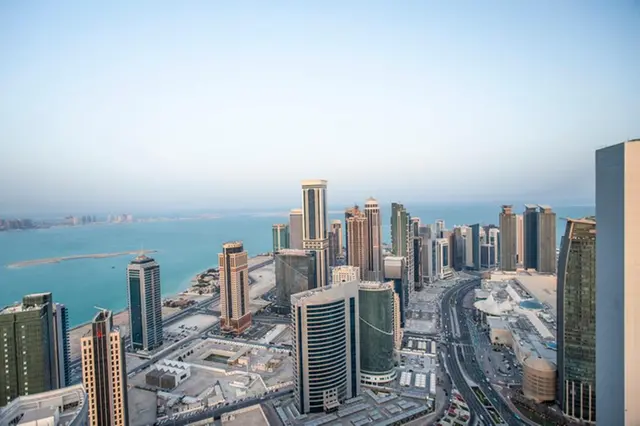
Qatar mortgage transactions reached QR12.966 billion, equivalent to about $3.56 billion, during the first quarter of 2026 as high-value properties in Doha drove a sharp increase in the value of real estate-backed financing.
Data attributed to Qatar’s Ministry of Justice showed that 426 mortgaged properties were registered between January and March. Although the number of transactions was slightly lower than the 434 recorded during the same period of 2025, their combined value increased substantially from QR10.037 billion.
The figures indicate that the value of registered mortgages rose by approximately QR2.929 billion year on year, an increase of about 29.2%. At the same time, the number of transactions declined by eight, or roughly 1.8%.
That contrast is one of the most important signals from the first-quarter data. It suggests that the increase was not primarily driven by a broad rise in the number of properties being financed. Instead, larger transactions and more valuable assets accounted for a greater share of registered mortgage activity.
Doha Municipality dominated both the number and value of transactions. It registered 238 mortgaged properties, representing 55.9% of the national total, with a combined value of QR9.311 billion. That means Doha alone accounted for nearly 72% of all mortgage value registered during the quarter.
Concentration was also evident among the largest individual deals. The ten highest-value mortgaged properties represented 52% of the total value recorded nationwide, showing that a relatively small group of major assets had an outsized influence on the headline figure.
For investors, developers and financial institutions, the results point to continued liquidity in Qatar’s premium property and commercial asset segments. However, they also underline the need to distinguish between overall transaction value and broad-based market participation.
Qatar Mortgage Transactions Reach QR12.97 Billion
Qatar recorded 426 mortgage transactions worth QR12.966 billion during the first three months of 2026.
The total was significantly higher than the QR10.037 billion registered from 434 transactions during the corresponding period of 2025.
Based on those figures, the average value per registered mortgage rose from approximately QR23.1 million in the first quarter of 2025 to about QR30.4 million in the first quarter of 2026.
That represents an increase of roughly 31.7% in the average value per transaction.
The change provides a clearer view of what drove the market.
Mortgage activity did not expand evenly through a larger number of deals. Instead, the average financial value attached to each registered transaction increased considerably.
Several explanations may be consistent with that pattern.
The quarter may have included more commercial buildings, development land, income-generating assets or large residential portfolios. Existing properties may also have been refinanced at higher valuations or used to secure larger borrowing facilities.
The available data does not identify the purpose of each mortgage or establish that every transaction represented a new property purchase. Mortgage registration figures can include financing linked to acquisitions, refinancing, development, business borrowing or the restructuring of existing obligations.
It would therefore be inaccurate to treat the QR12.966 billion total as equivalent to residential home lending or property sales.
Nevertheless, the increase demonstrates that substantial capital continued to move through Qatar’s property financing system during the first quarter.
Official real estate statistics are published through Qatar’s Ministry of Justice and the country’s open-data platform, including regular transaction bulletins covering real estate activity.
Doha Dominates Qatar’s Mortgage Market
Doha Municipality registered the largest number of mortgaged properties during the quarter, accounting for 238 of the national total.
That represented 55.9% of the 426 registered transactions.
The municipality also ranked first by value, with mortgage transactions amounting to QR9.311 billion.
Doha’s share of total mortgage value was therefore approximately 71.8%, substantially higher than its share of the number of transactions.
This gap indicates that the average mortgaged property in Doha carried a much higher value than the national average.
Dividing Doha’s total mortgage value by its 238 transactions produces an average of approximately QR39.1 million per transaction.
By comparison, the national average was about QR30.4 million.
Doha’s dominance is not surprising. The capital contains Qatar’s largest concentration of commercial offices, hotels, mixed-use developments, high-value residential buildings, government-related facilities and established urban land.
Major districts in and around the capital also attract corporate occupiers, institutional investors, developers and high-net-worth buyers.
The first-quarter figures suggest that Doha became even more important to mortgage activity compared with the previous year.
In the first quarter of 2025, Doha registered 164 transactions, equivalent to 37.8% of the national total. Those mortgages were valued at QR5.313 billion.
By the first quarter of 2026, the number had risen to 238 and the value to QR9.311 billion.
This means Doha recorded 74 more mortgage transactions than a year earlier, an increase of about 45.1%.
The total value of Doha mortgages increased by QR3.998 billion, or approximately 75.3%.
The municipality therefore accounted for more transactions, but the value of those transactions rose at an even faster rate.
Doha’s average mortgage value increased from roughly QR32.4 million in the first quarter of 2025 to QR39.1 million in the same period of 2026.
That combination of higher volume and larger average deal size made the capital the main driver of the national increase.
Background: Why This Story Matters
Mortgage data provides an important view of the relationship between Qatar’s banking system and its real estate economy.
Property markets are often analysed through sale prices, transaction volumes, rental yields and construction activity. Mortgage registrations add another layer by showing how real estate is being used to support financing.
A mortgage creates a legal claim over property as security for a loan or another financial obligation. The registration process helps establish the rights of the lender and provides an official record attached to the property.
These transactions matter because real estate is one of the most valuable forms of collateral available to households, businesses and investors.
Strong mortgage activity can indicate confidence among lenders, continued investment demand or the use of existing property wealth to finance new projects and business expansion.
However, a rise in mortgage value does not automatically mean that the entire property market is strengthening.
The figure can be heavily influenced by a small number of large transactions. It may also reflect refinancing or corporate borrowing rather than new property purchases.
That distinction is particularly important in Qatar’s first-quarter data because the ten largest mortgaged properties represented more than half of total mortgage value.
The concentration means the headline increase should be interpreted alongside the number, location and distribution of transactions.
Qatar’s wider property market also recorded stronger sales activity during the first quarter of 2026. Ministry of Justice data reported by several publications showed QR5.201 billion in property deals across 1,162 transactions, compared with QR4.097 billion from 1,030 transactions a year earlier.
Mortgage value was therefore much higher than registered sales value during the same broad period. This difference reinforces the point that mortgage registrations are not limited to financing property purchases completed during that quarter.
Key Details From the Development
Mortgage Value Rose Despite Fewer Transactions
The number of registered mortgages declined from 434 in the first quarter of 2025 to 426 in the first quarter of 2026.
At the same time, total value increased from QR10.037 billion to QR12.966 billion.
The contrasting movement suggests a shift toward larger secured transactions.
A simple count of mortgage registrations would therefore provide an incomplete picture. Although activity declined marginally by number, the capital involved increased sharply.
For banks, this may imply greater exposure to higher-value assets or larger corporate borrowers.
For developers and investors, it may indicate continued access to funding for major properties even when the number of individual deals is not expanding.
For regulators, the pattern makes concentration and valuation increasingly important.
Large secured facilities can be relatively safe when supported by high-quality properties, strong cash flows and conservative loan-to-value ratios. They can also create risk when lending is concentrated among a limited number of borrowers, asset classes or locations.
The published aggregate figures do not provide enough information to assess the quality of individual loans. They do, however, show that large transactions played a more important role during the quarter.
Doha Registered 238 Mortgaged Properties
Doha’s 238 transactions gave it a decisive lead among Qatar’s municipalities.
Al Rayyan ranked second with 70 transactions, representing 16.4% of the national total.
Al Daayen and Umm Slal each registered 36 transactions, equivalent to 8.5% apiece.
Together, Doha, Al Rayyan, Al Daayen and Umm Slal accounted for 380 of Qatar’s 426 registered mortgages.
That is equal to approximately 89.2% of the national total.
The concentration reflects the location of Qatar’s largest population centres, business districts, new communities and development corridors.
Doha contains the country’s central commercial market, while Al Rayyan includes major residential, institutional and mixed-use areas.
Al Daayen includes Lusail and other rapidly developing locations. Umm Slal has also attracted residential and land-development activity as urban growth expands beyond central Doha.
The distribution shows that mortgage activity remains closely tied to Qatar’s main metropolitan region rather than being spread equally across the country.
Al Rayyan’s Transaction Count Fell Sharply
Al Rayyan registered 70 mortgage transactions during the first quarter of 2026.
That was down from 117 in the same period of 2025.
Its share of the national total consequently fell from 27% to 16.4%.
The municipality recorded 47 fewer transactions, a year-on-year decline of approximately 40.2%.
The source data did not provide Al Rayyan’s total first-quarter mortgage value for 2026. It is therefore not possible to determine from the available figures whether the drop in transaction count was accompanied by a similar decline in value.
The reduction nevertheless contrasts with Doha’s increase.
This divergence may reflect changes in the mix of assets being financed, the timing of large transactions or shifting lender and investor activity between municipalities.
It would be premature to conclude that demand in Al Rayyan weakened broadly based on mortgage count alone. Sales, rents, development launches and property completions would also need to be examined.
Al Daayen Recorded 36 Transactions
Al Daayen Municipality registered 36 mortgaged properties, accounting for 8.5% of the national total.
That was lower than the 50 transactions recorded in the first quarter of 2025, when the municipality accounted for 11.5% of the market.
Al Daayen is important because it includes Lusail City, one of Qatar’s largest planned urban developments.
Lusail contains residential towers, offices, hospitality assets, retail destinations, villas and major infrastructure. Mortgage activity there can therefore include a wide range of property categories.
The fall in transaction count does not necessarily indicate a decline in the total value of financing, since one large commercial mortgage can exceed the combined value of numerous smaller residential transactions.
The data supplied does not include Al Daayen’s total mortgage value, limiting the conclusions that can be drawn.
Umm Slal Matched Al Daayen by Number
Umm Slal also registered 36 mortgage transactions, representing 8.5% of the nationwide total.
The municipality’s inclusion among the leading areas by number reflects the continued expansion of property activity beyond central Doha.
Umm Slal includes residential communities, undeveloped land and areas positioned along Qatar’s wider metropolitan growth corridors.
As transport connections and public services improve, locations outside the traditional city centre can become more attractive to developers and buyers seeking larger plots or comparatively lower entry prices.
Mortgage registrations in these areas can support residential construction, land acquisition and the development of income-producing properties.
The Ten Largest Mortgages Shaped the Quarter
The ten highest-value mortgaged properties accounted for 52% of the total value registered during the first quarter.
Applied to the national total of QR12.966 billion, that share equals approximately QR6.74 billion.
This means the remaining 416 registered transactions collectively accounted for about QR6.23 billion.
The average value among the top ten would be approximately QR674 million if the 52% share were distributed evenly. The actual individual values are likely to have varied substantially.
By contrast, the average among all remaining transactions would be close to QR15 million.
This comparison demonstrates how strongly the largest deals influenced the national result.
Seven of the ten highest-value properties were located in the municipalities identified in the source: six in Doha and one in Al Rayyan. The information provided did not specify the location of the remaining three.
The dominance of Doha among the largest mortgages is consistent with the municipality’s overall lead by value.
Large Doha transactions could involve office towers, hotels, mixed-use complexes, commercial land, residential portfolios or development assets.
Without property-level descriptions, it would be speculative to assign the transactions to particular projects or asset classes.
The broader conclusion is clearer: a small number of major properties accounted for an unusually large portion of financing activity.
For market analysts, this makes the median transaction value potentially more informative than the average, although a median was not included in the published data.
Averages rise sharply when a small number of exceptionally large transactions are recorded. Medians are less affected and can offer a better indication of the typical transaction.
Future market bulletins would provide a fuller picture if they included both measures.
Doha and Al Khor Showed Higher Value Concentration
The Ministry of Justice data compared each municipality’s share of the number of mortgaged properties with its share of total mortgage value.
In most municipalities, the share of transaction numbers was higher than the share of financial value.
Doha and Al Khor were the exceptions.
In those two municipalities, the value share exceeded the transaction share.
This means the average mortgage value in Doha and Al Khor was higher than the national pattern.
For Doha, the scale of the difference is clear. It accounted for 55.9% of registered properties but approximately 71.8% of total value.
Al Khor’s precise figures were not included in the source material, but its position as an exception suggests that one or more relatively large properties lifted its value share.
Municipal comparisons of this kind help identify where higher-value assets are concentrated.
A municipality with many transactions but a smaller value share may be dominated by lower-priced residential properties or land parcels.
A municipality with fewer transactions but a higher value share may include larger commercial, industrial or portfolio assets.
The figures do not necessarily indicate stronger or weaker performance. They show differences in the composition of activity.
Al Shamal Recorded the Lowest Mortgage Value
Al Shamal Municipality registered the lowest total mortgage value among the areas that recorded activity, at QR13.914 million.
The figure reflects the municipality’s smaller property market and lower concentration of major commercial assets.
Northern Qatar has a different economic and demographic profile from Doha and the surrounding metropolitan municipalities.
Property activity may include residential land, local commercial properties, agricultural holdings and projects linked to tourism or regional development.
A low quarterly mortgage value does not mean the area lacks long-term investment potential. It shows that little secured financing was registered there during the specific three-month period.
Quarterly data for smaller markets can also be volatile.
A single large transaction can cause a sharp increase, while the absence of such a deal can make activity appear unusually weak.
Investors assessing Al Shamal would therefore need to examine a longer time series rather than relying on one quarter.
Al Sheehaniya Recorded No Mortgage Transactions
Al Sheehaniya Municipality did not register a mortgage transaction during the first quarter of 2026.
That compares with a mortgage value of QR637,000 in the same quarter of 2025, when it ranked lowest among Qatar’s municipalities.
The absence of transactions may reflect the municipality’s smaller and less liquid formal property market.
It does not necessarily mean that no real estate investment or construction occurred during the quarter. Projects can be financed through equity, government allocations, internal company resources or facilities secured against assets in another location.
Mortgage registration captures only one part of real estate financing.
Al Sheehaniya’s result also illustrates how national statistics are shaped primarily by Doha and the municipalities surrounding the capital.
Impact on Qatar’s Banks
The increase in mortgage value is relevant to Qatari banks because property is a major source of collateral across corporate, investment and household lending.
Registered mortgages can support construction finance, investment property acquisitions, refinancing and general corporate borrowing.
Higher mortgage value may create opportunities for banks to expand interest income and deepen relationships with major property owners.
It may also reflect confidence in the legal enforceability and valuation of Qatari real estate as collateral.
However, larger transactions require careful risk management.
Banks must assess the borrower’s ability to repay rather than relying only on the value of the pledged property.
A high-quality asset can provide security, but repayment usually depends on rental income, business cash flow, project sales or another reliable source of revenue.
Lenders must also consider loan-to-value ratios, interest-rate changes, construction risk, vacancy levels and the time required to sell a property if a borrower defaults.
The concentration of more than half of national mortgage value among ten properties makes the quality of those individual exposures particularly important.
The data does not indicate whether the financing was distributed across multiple banks or concentrated among a small number of lenders.
Qatar’s banking sector is well established and plays a central role in financing the country’s infrastructure, corporations and property projects. The first-quarter mortgage figures suggest that major real estate assets remain active within that financial system.
Impact on Property Developers
For developers, the increase in mortgage value can signal that lenders remain willing to finance substantial real estate assets.
Access to credit is essential for projects requiring large upfront expenditure before units are sold or rental income begins.
Financing can support land acquisition, construction, infrastructure installation and the completion of mixed-use developments.
However, the slight fall in the number of mortgage transactions suggests that funding conditions may not have broadened evenly across the market.
Large and established borrowers may be securing sizeable facilities, while smaller developers or individual buyers face different conditions.
The concentration in Doha may also influence where developers direct new investment.
Locations with active lending, strong infrastructure and established demand generally offer a more favourable financing environment.
At the same time, intense concentration can encourage developers to seek opportunities in Al Rayyan, Al Daayen, Umm Slal and other municipalities where land availability or pricing may offer advantages.
The direction of future mortgage activity will depend on project completions, buyer demand, rental performance and bank lending standards.
Impact on Investors
Real estate investors can interpret the first-quarter figures in several ways.
First, the growth in mortgage value demonstrates that large properties can still attract financing.
That is important for institutional investors, family offices and developers that depend on leverage to improve returns or release capital from existing assets.
Second, Doha remains the primary market for high-value transactions.
Investors seeking liquidity and access to financing may continue favouring established districts in the capital.
Third, the concentration of value among a small number of properties suggests that the market is segmented.
The performance of premium commercial or portfolio assets may differ greatly from that of ordinary apartments, villas or undeveloped land.
Fourth, mortgage data alone does not establish whether property prices are rising.
A larger mortgage may result from a higher asset valuation, but it can also reflect refinancing, additional borrowing or a change in the loan structure.
Investors should compare mortgage statistics with sale prices, rental yields, occupancy rates, construction pipelines and population trends.
Qatar’s first-quarter sales market showed increased transaction activity, with reported deal value reaching QR5.201 billion across 1,162 transactions. February was the strongest month, recording QR2.709 billion, compared with QR1.732 billion in January and QR768 million in March.
The variation between months shows why investors should avoid assuming that a strong quarterly headline reflects uniform activity throughout the period.
Qatar’s Real Estate Regulatory Reforms
Qatar has continued to modernise the legal and administrative framework governing property transactions.
Recent measures have addressed real estate registration, documentation, brokerage, ownership rights and the recording of off-plan developments.
A more transparent registration system can improve confidence by providing clearer evidence of property ownership, mortgages and other legal rights.
Digitalisation can also reduce processing time and make market data more accessible.
In 2026, Qatar introduced implementing measures related to its preliminary real estate registry, building on Law No. 5 of 2024 governing real estate registration. The framework is intended to create a digital register and streamline the recording of property transactions and rights.
A preliminary registry is particularly relevant to properties under construction.
Buyers and lenders need a reliable system for recording rights before a final title is issued. Without such a framework, financing off-plan projects can be more complicated and disputes may be harder to resolve.
Clearer registration procedures can support the mortgage market by giving banks greater certainty over the collateral attached to loans.
Regulatory reform alone will not guarantee higher investment, but it reduces friction and strengthens the institutional foundations of the market.
Foreign Ownership and Investment Demand
Qatar has used property-market reforms to attract both domestic and international capital.
Foreign ownership and long-term use rights are permitted in designated areas under Qatar’s property investment framework.
These measures can expand the pool of potential buyers and support demand in locations such as Lusail, The Pearl, West Bay Lagoon and other approved zones.
International investors assess more than purchase prices.
They consider residency benefits, financing availability, rental yields, service charges, resale liquidity, taxation, legal protection and currency stability.
Qatar’s fixed exchange-rate framework and high-income economy may appeal to investors seeking exposure to Gulf property markets.
However, competition across the region is significant.
Dubai, Abu Dhabi, Riyadh, Muscat and other cities are also expanding their property offerings and investment regulations.
Qatar’s ability to attract long-term capital will depend on the quality of its projects, transparency of market data and ease of completing transactions.
The first-quarter mortgage numbers show that financing remains active, particularly for large Doha assets. Whether this translates into sustained foreign investment will depend on the underlying commercial performance of those properties.
Infrastructure Supports Long-Term Property Demand
Qatar invested heavily in transport, utilities, public spaces and urban development before hosting the 2022 FIFA World Cup.
That infrastructure continues to influence the property market.
The Doha Metro, road networks, Hamad International Airport and new urban districts have improved connectivity across the capital and surrounding municipalities.
Large-scale developments such as Lusail have created new residential, office, hospitality and entertainment assets.
Infrastructure can support property values by reducing travel times, increasing accessibility and encouraging businesses and residents to move into previously undeveloped areas.
However, infrastructure does not guarantee investment returns.
Projects must still attract occupants and generate sufficient rental or sales income.
The long-term strength of Qatar’s property sector will depend on population growth, employment creation, tourism, business formation and economic diversification.
Mortgage financing can accelerate development, but it also increases the importance of matching new supply with sustainable demand.
Mortgage Growth Does Not Eliminate Market Risks
The increase in mortgage value is a positive indicator of capital availability, but it also raises several questions.
The first is concentration.
With 52% of value linked to ten properties, the national total depends heavily on a small number of deals.
The second is geographic exposure.
Nearly 72% of total mortgage value was concentrated in Doha.
The third is asset type.
The available data does not show how much financing went to residential, commercial, industrial, hospitality or undeveloped land.
The fourth is leverage.
The figures state the value of mortgage transactions, but they do not provide the value of the underlying properties or the loan-to-value ratios.
Without that information, it is impossible to determine whether borrowers are taking on more debt relative to asset values.
The fifth is refinancing.
If a large share of the total involved existing loans being replaced or restructured, the figures would have different implications from a quarter dominated by new investment.
These limitations do not reduce the usefulness of the data. They define what the figures can and cannot prove.
Comparing Mortgage Activity With Property Sales
Qatar recorded mortgage transactions worth QR12.966 billion and reported real estate sales worth around QR5.201 billion during the first quarter.
The mortgage total was therefore almost two and a half times the reported value of property deals.
This does not mean buyers borrowed more than the purchase value of properties sold during the quarter.
The two datasets measure different activities.
A property may be mortgaged even when it was purchased years earlier.
A business can pledge an existing building to secure financing for operations or investment elsewhere.
A developer may mortgage land or a completed project to fund construction.
A borrower may refinance a loan without completing a new sale.
Several properties can also secure a single credit facility, depending on the legal and financial structure.
For these reasons, the sales and mortgage figures should be read as complementary indicators rather than directly matched totals.
Sales data shows the transfer of property ownership.
Mortgage data shows the registration of property as security.
Together, they indicate continued activity in both the transactional and financing sides of Qatar’s real estate market.
Market and Industry Context
Qatar’s property sector is moving from an infrastructure-led expansion phase toward a market increasingly shaped by utilisation, yields and long-term economic demand.
The country has a large stock of recently developed apartments, offices, hotels and retail space.
As a result, investors are likely to place greater emphasis on occupancy, tenant quality and recurring income rather than development announcements alone.
Higher-value mortgage transactions may reflect efforts by owners to refinance stabilised assets once they have established rental income.
Banks generally view completed, occupied properties differently from speculative projects because their cash flows are easier to evaluate.
At the same time, new construction remains important in areas linked to tourism, logistics, manufacturing and urban expansion.
Qatar’s economic diversification programme may create demand for warehouses, offices, worker accommodation, hospitality assets and specialised commercial properties.
The real estate market’s performance will therefore depend on how effectively property development aligns with growth in the non-energy economy.
What Comes Next
Several indicators will show whether the first-quarter increase in mortgage value represents a durable trend.
The first will be the number and value of transactions during the remaining quarters of 2026.
If high values persist while transaction numbers remain flat, the market may be experiencing continued concentration in large assets.
If both value and number increase, financing may be broadening across a wider range of properties.
The second indicator will be Doha’s share.
A decline in concentration could suggest increased lending activity in Lusail, Al Rayyan, Umm Slal and other municipalities.
The third will be property sales and rental data.
Mortgage growth supported by rising occupancy and sustainable rents would be more reassuring than growth driven primarily by refinancing.
The fourth will be bank disclosures.
Loan growth, real estate exposure, non-performing loans and provisioning can provide insight into the quality of mortgage-related lending.
The fifth will be implementation of Qatar’s registration reforms.
Faster and clearer procedures could encourage more lenders and investors to participate in the property market.
The sixth will be project supply.
New residential, office and hospitality completions will affect rents, prices and collateral valuations.
Expert Analysis
The first-quarter data presents a strong headline but a more nuanced underlying picture.
A 29.2% increase in mortgage value is substantial. It shows that Qatar’s property financing system was capable of processing nearly QR13 billion in secured transactions within three months.
However, the slight decline in the number of transactions means the growth was not broad-based by count.
Doha was responsible for most of the increase.
Its mortgage value rose by approximately 75%, while its number of transactions increased by about 45%.
The ten largest properties then accounted for more than half of the national total.
These figures point toward a market led by major assets rather than a uniform increase in mortgage activity across every property category.
That is not necessarily negative.
Large commercial, hospitality, mixed-use and development properties naturally require sizeable financing facilities. Their presence can demonstrate institutional confidence and bank willingness to fund high-value assets.
The risk is that headline totals may obscure weaker activity in smaller transactions or other municipalities.
For investors, the most useful interpretation is that liquidity remains available, but it appears selective.
Properties in Doha with strong collateral value, established income or strategic importance may have easier access to financing than less proven assets elsewhere.
Future data will determine whether this concentration is temporary or structural.
A broader distribution of mortgage activity would indicate that confidence is extending across more municipalities and property segments.
Continued concentration would suggest that lenders remain focused on a limited pool of large, high-quality assets.
Frequently Asked Questions
What were Qatar mortgage transactions worth in Q1 2026?
Qatar registered 426 mortgage transactions worth QR12.966 billion, or approximately $3.56 billion, between January and March 2026.
Did the number of mortgage transactions increase?
No. The number declined slightly from 434 in the first quarter of 2025 to 426 in the first quarter of 2026. However, total value increased by about 29.2%.
Which municipality recorded the most mortgages?
Doha Municipality ranked first with 238 transactions, representing 55.9% of Qatar’s total. Their combined value reached QR9.311 billion.
How much of the national mortgage value came from Doha?
Doha accounted for approximately 71.8% of the total mortgage value registered during the quarter.
Why did mortgage value rise when transaction numbers fell?
The data suggests that higher-value properties and larger financing arrangements represented a greater share of activity. The ten largest properties alone accounted for 52% of total mortgage value.
Are mortgage transactions the same as property sales?
No. A mortgage records property as security for financing. It may relate to a new purchase, refinancing, development funding or another secured obligation.
What should property investors watch next?
Investors should monitor mortgage volumes, property sales, rental performance, bank lending conditions, new project completions and whether activity expands beyond Doha.
Conclusion
Qatar’s mortgage market entered 2026 with a sharp increase in financial value, even though the number of registered transactions declined slightly.
The QR12.966 billion total illustrates the continued ability of Qatar’s banks and property owners to execute major real estate-backed financing arrangements.
However, the distribution of activity is as important as the headline value.
Doha accounted for more than half of all mortgaged properties and nearly three-quarters of their total value. The ten largest properties represented 52% of the national figure.
The results therefore describe a market with significant liquidity at the upper end, but also considerable concentration by transaction size and location.
For investors and developers, the figures offer evidence that high-value Qatar real estate remains financeable. For lenders, they reinforce the importance of collateral quality, borrower strength and exposure management.
The next quarters will show whether mortgage activity broadens across more assets and municipalities or remains dominated by large Doha transactions.
That distinction will be central to assessing whether the increase represents widespread property-market momentum or a smaller number of exceptionally large financing deals.