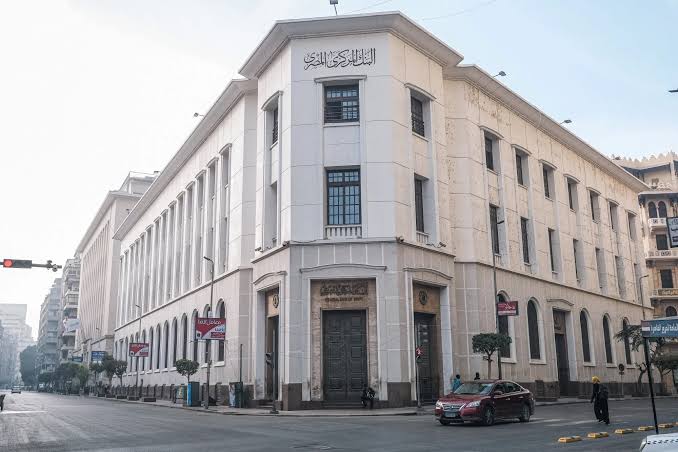
Egypt interest rates will remain unchanged after the Central Bank of Egypt opted for caution amid mixed inflation signals, regional instability and uncertainty surrounding the pace of economic growth.
The bank’s Monetary Policy Committee maintained the overnight deposit rate at 19% and the overnight lending rate at 20%, extending a pause in the country’s monetary easing cycle. The rate on the central bank’s main operation and its discount rate also stood at 19.5%, according to the bank’s published monetary-policy indicators.
The decision reflects the difficult balance facing Egyptian policymakers. Annual urban consumer inflation slowed to 14.3% in June from 14.6% in May, offering evidence that some of the country’s intense price pressures are moderating. However, core inflation, which excludes some volatile items, accelerated to 14.3% from 13.8%.
That divergence gives the central bank limited room to declare victory over inflation. A decline in the headline rate may support the case for lower borrowing costs later, but firmer underlying price pressures suggest that inflation remains broad enough to justify caution.
Economic conditions have also become more complicated. The central bank expects real gross domestic product growth to slow mildly during the second quarter of 2026 because of the effects of regional conflict on economic activity. Nevertheless, it projects average growth of about 5% for the 2025/26 fiscal year.
For investors, companies and households, the decision means Egypt will continue operating with restrictive borrowing costs. High rates may help protect the currency and contain price pressures, but they also raise financing expenses for businesses, consumers and the government.
Egypt Interest Rates Remain at Restrictive Levels
The Monetary Policy Committee’s decision leaves Egypt’s overnight deposit rate at 19% and its lending rate at 20%.
The deposit rate broadly represents the return available to banks when they place overnight funds with the central bank. The lending rate is the cost charged when banks obtain overnight liquidity from the monetary authority.
These benchmarks influence borrowing and savings conditions throughout the economy. Although the rates available to individual customers differ, central bank decisions feed into commercial loan pricing, deposit returns, treasury yields and corporate financing costs.
The July decision was widely anticipated. A Reuters survey of economists had indicated that policymakers were likely to keep rates unchanged as tentative easing in regional tensions provided some relief but did not remove inflation and economic risks.
Before the meeting, economists surveyed by Reuters unanimously expected the deposit and lending rates to remain at 19% and 20%, respectively.
Holding rates allows the central bank to gather more evidence on inflation, economic growth, capital flows and the Egyptian pound before restarting its easing cycle.
The decision also illustrates that a decline in annual headline inflation does not automatically result in an immediate interest-rate cut.
Central banks generally assess whether inflation is falling sustainably, whether underlying pressures are moderating and whether future price shocks could reverse recent gains.
In Egypt’s case, the increase in core inflation complicates the picture. Policymakers must determine whether the June increase represents temporary pressure or evidence that inflation remains deeply embedded in domestic pricing.
Why the Central Bank Chose to Wait
The Central Bank of Egypt said its decision reflected an assessment of inflation developments and the changing economic outlook since the previous policy meeting.
Several factors supported a wait-and-see approach.
First, headline inflation eased only modestly. The decline from 14.6% to 14.3% suggests that price growth is slowing, but inflation remains elevated relative to the central bank’s longer-term objective.
Second, core inflation moved in the opposite direction. The increase to 14.3% indicates that price pressures are not limited to categories that frequently experience sharp fluctuations.
Third, regional uncertainty remains a threat to energy prices, shipping costs, tourism, trade flows and investor sentiment. Egypt is particularly sensitive to changes in the regional environment because of its dependence on imported commodities, the Suez Canal, tourism receipts and international capital.
Fourth, the central bank expects a mild slowdown in economic growth during the second quarter. Reducing rates could support activity, but doing so while underlying inflation remains persistent could create fresh pressure on prices and the currency.
The committee therefore appears to have concluded that the cost of cutting too early was greater than the cost of waiting for additional data.
Background: Why This Story Matters
Egypt has spent several years confronting an unusually difficult combination of inflation, foreign-currency shortages, exchange-rate adjustments, high debt-servicing costs and external shocks.
Those pressures forced the central bank to adopt one of the most restrictive monetary-policy positions among major African economies.
In March 2024, the authorities allowed the Egyptian pound to weaken sharply and raised interest rates as part of a broader effort to restore foreign-exchange liquidity, attract investment and secure expanded international financial support.
The central bank’s overnight deposit rate climbed to 27.25% during that period. The tightening helped make Egyptian local-currency assets more attractive to international investors while attempting to contain inflation created by currency depreciation and supply disruptions.
As inflation began to moderate, policymakers started reducing rates in April 2025. By February 2026, the central bank had lowered the deposit rate to 19% and the lending rate to 20%.
The February reduction amounted to 100 basis points. It followed cumulative easing after rates had been held at exceptionally high levels during the most acute phase of Egypt’s inflation and foreign-exchange crisis.
However, the room for continued reductions narrowed when regional conflict created new risks for oil prices, trade, shipping and the Egyptian pound.
The central bank subsequently paused, keeping the benchmark rates at their existing levels through successive meetings.
That policy history matters because the July decision is not simply a choice between high and low rates. It is part of a broader effort to normalise monetary policy without destabilising inflation expectations or reversing progress in foreign-exchange markets.
Key Details From the Monetary Policy Decision
Deposit Rate Held at 19%
The overnight deposit rate remained at 19%, preserving relatively high returns for banks and investors holding Egyptian pound-denominated assets.
A high deposit rate encourages saving in local currency and may make pound assets more attractive compared with foreign-currency holdings.
This support can be important for a country that has experienced repeated periods of pressure on its currency and foreign-exchange reserves.
However, high rates also influence the cost of credit throughout the financial system. Banks generally price loans by considering their own funding costs, risk and prevailing central bank rates.
As a result, expensive monetary conditions can reduce demand for mortgages, consumer loans, business credit and investment financing.
Lending Rate Remains at 20%
The overnight lending rate was maintained at 20%.
This rate helps set the upper boundary for short-term interbank borrowing costs because banks can obtain liquidity directly from the central bank at that level.
Keeping the lending rate unchanged signals that policymakers are not yet prepared to provide cheaper liquidity to the banking system.
For companies, particularly those that rely heavily on short-term borrowing, the decision may prolong pressure on financing costs.
Small and medium-sized businesses are often especially sensitive because they may have less access to international capital, retained earnings or long-term fixed-rate financing.
Main Operation Rate Stays at 19.5%
The rate applied to the central bank’s main operation remained at 19.5%, while the discount rate also stood at the same level.
Together, the four policy rates provide the framework through which the central bank manages liquidity and influences short-term market rates.
The central bank’s official indicators showed the overnight deposit rate at 19%, the overnight lending rate at 20% and the main operation rate at 19.5%.
Headline Inflation Slows to 14.3%
Annual urban consumer inflation eased to 14.3% in June from 14.6% a month earlier.
The result was better than many analysts had anticipated. A Reuters survey conducted before the data was published produced a median forecast of 15.1%, with estimates ranging from 14.5% to 16.1%.
The softer reading may indicate that some price pressures linked to food, energy or earlier currency movements are becoming less intense.
However, one month of improved data is unlikely to be enough to justify an immediate policy change, particularly when underlying inflation increased.
Core Inflation Rises to 14.3%
Core inflation increased to 14.3% in June from 13.8% in May.
Core measures are closely watched because they seek to provide a clearer indication of persistent inflation by excluding or adjusting for some of the most volatile components.
An increase in core inflation may suggest that businesses continue passing higher labour, transport, import or operating costs to consumers.
It can also indicate that inflation expectations remain elevated, encouraging companies to raise prices in anticipation of future cost increases.
The simultaneous decline in headline inflation and rise in core inflation therefore sent a mixed signal.
The headline reading supports cautious optimism. The core figure argues against rapid monetary easing.
Growth Expected to Average About 5%
The central bank expects Egypt’s real GDP to grow by an average of about 5% during the 2025/26 fiscal year.
That projection suggests that the economy is expanding despite restrictive monetary conditions and external pressure.
However, policymakers also expect a mild deceleration during the second quarter of 2026 because of the effect of regional conflict on economic activity.
The combination of solid full-year growth and weaker near-term momentum gives the central bank another reason to proceed carefully.
A sharp slowdown would strengthen the argument for lower rates. Continued growth, however, allows policymakers to prioritise inflation control without immediately risking a severe contraction.
Inflation Remains the Central Policy Challenge
Inflation is the most important factor shaping Egypt’s interest-rate outlook.
Although annual urban inflation has declined substantially from its earlier peaks, it remains well above the central bank’s medium-term objective.
The Central Bank of Egypt has published an inflation target of 5%, with a tolerance band of two percentage points, on average in the fourth quarter of 2026.
A June inflation rate of 14.3% remains far above that objective.
The gap illustrates why policymakers may be reluctant to accelerate rate cuts, even when the direction of headline inflation appears favourable.
Interest-rate decisions affect inflation with a delay. A rate reduction made in July may take months to influence consumption, credit creation, investment and prices.
The central bank must therefore consider where inflation is likely to be later in 2026 rather than responding only to the latest monthly figure.
Potential risks include increases in administered prices, electricity costs, food prices, transport expenses and imported commodities.
Currency movements also remain critical. A weaker pound raises the local cost of imports, which can quickly feed into prices across an economy that depends on overseas supplies of fuel, machinery, food and industrial inputs.
Regional Conflict Complicates Egypt’s Outlook
Egypt’s monetary-policy challenge cannot be separated from regional geopolitical developments.
Conflict can affect the economy through several channels.
A rise in international oil and gas prices increases the cost of energy imports and may place additional pressure on government spending if authorities seek to limit the impact on consumers.
Disruption to maritime trade can reduce traffic through the Suez Canal, one of Egypt’s most important sources of foreign currency.
Regional instability can also weaken tourism, delay investment decisions, increase insurance costs and make international investors less willing to hold emerging-market assets.
Earlier in 2026, regional conflict contributed to capital outflows from Egyptian pound-denominated government securities and placed pressure on the currency. Reuters reported that the conflict had increased energy costs, disrupted exports and created risks for tourism, remittances and Suez Canal revenue.
Foreign investors are particularly sensitive to the relationship between Egyptian interest rates, inflation and currency risk.
A nominal yield of 19% may appear attractive, but the effective return depends on inflation, exchange-rate movements, taxes and the ability to move funds across borders.
If investors expect the pound to weaken significantly, even a high interest rate may not be enough to compensate for potential currency losses.
By holding rates, the central bank is preserving a relatively wide nominal return while signalling caution over inflation and external risks.
Impact on Egyptian Businesses
The decision has mixed consequences for companies operating in Egypt.
Businesses benefit from greater currency and price stability. Predictable inflation makes it easier to set budgets, negotiate contracts, manage inventories and plan investment.
However, the cost of achieving that stability is expensive credit.
Companies with variable-rate bank loans may continue facing elevated interest payments. Businesses seeking new financing may postpone expansion because projected returns are insufficient to cover borrowing costs.
Capital-intensive industries are particularly exposed. Construction, manufacturing, property development, transport and infrastructure projects often require large amounts of debt before revenue is generated.
High rates can delay projects, reduce profit margins and encourage companies to rely on internal cash rather than external borrowing.
Import-dependent businesses face an additional challenge. They must manage both high financing costs and potential exchange-rate volatility.
Companies that borrow to finance inventories may incur substantial interest expenses while also paying more for imported goods.
Exporters and firms earning foreign currency may be better positioned. Dollar, euro or Gulf currency revenues can provide some protection against local currency weakness and improve the ability to service pound-denominated costs.
What the Decision Means for Banks
Egyptian banks are among the most directly affected institutions.
High policy rates can support interest income because banks earn strong returns on government securities and certain central bank instruments.
Banks may also attract deposits by offering customers comparatively high savings rates.
However, elevated rates create risks.
Borrowers may struggle to repay loans, raising the possibility of deteriorating asset quality. Credit demand may weaken as households and companies avoid expensive financing.
Banks must therefore balance the benefit of higher yields against slower loan growth and increased repayment pressure.
The government’s financing needs are also important. Egyptian banks hold substantial amounts of government debt, making changes in treasury yields and sovereign borrowing conditions significant for their balance sheets.
A gradual reduction in rates could eventually lower yields on new government securities. While that might reduce interest income, it could also create valuation gains on some existing fixed-income holdings and improve the broader credit environment.
For now, the hold preserves the existing structure of returns and risks.
Impact on Consumers and Households
For Egyptian households, unchanged rates offer both advantages and disadvantages.
Savers can continue earning relatively high nominal returns on deposits and savings certificates. This is particularly important for retirees and households that depend on interest income.
However, nominal returns must be compared with inflation. A savings product yielding less than the inflation rate results in a decline in purchasing power, even if the account balance increases.
Borrowers face the opposite problem.
Mortgage, vehicle, personal and business loan costs remain high. Consumers may postpone major purchases or reduce discretionary spending because monthly repayments are expensive.
High borrowing costs can therefore weaken demand in retail, property and consumer durables.
The biggest concern for most households remains the cost of living. Even though the annual inflation rate has slowed, prices are still rising from already elevated levels.
A lower inflation rate does not mean prices are falling. It means prices are increasing more slowly than they were during the comparable period a year earlier.
That distinction matters because household budgets may remain under strain long after inflation begins to moderate.
Impact on Foreign Investors
International investors will assess the decision through the interaction of yields, inflation, currency stability and geopolitical risk.
Egyptian treasury bills and bonds can offer attractive nominal returns compared with assets in lower-rate markets.
Holding the policy rate at 19% supports that yield advantage.
Nevertheless, investors must account for possible currency depreciation. A decline in the pound can erase part or all of the return earned on local-currency securities.
Investors will therefore watch foreign-exchange reserves, portfolio flows, import demand, energy costs and the government’s external financing position.
The pace of future interest-rate cuts will also influence capital flows.
Aggressive easing could reduce the relative appeal of Egyptian assets. A slow and predictable cycle may be more acceptable, especially if accompanied by falling inflation and a stable currency.
Equity investors may view lower rates more positively because cheaper financing can support corporate earnings, investment and consumer spending.
For that reason, the policy outlook can affect bonds and shares differently.
Fixed-income investors may favour prolonged high rates, while equity investors may prefer a gradual easing cycle that stimulates economic activity without triggering fresh currency instability.
Government Finances Remain Under Pressure
High interest rates carry a substantial fiscal cost.
The Egyptian government borrows heavily in domestic markets to finance budget needs and refinance existing obligations.
When yields remain high, the cost of issuing treasury bills and bonds rises. That increases debt-service expenses and can consume funds that might otherwise support infrastructure, health, education or social programmes.
Lower rates would eventually reduce the cost of new domestic borrowing, although the benefit would emerge gradually as existing debt matures and is refinanced.
The central bank cannot, however, cut rates solely to reduce government financing costs.
Its primary monetary-policy responsibility is to maintain price stability and manage macroeconomic risks.
Cutting too quickly could weaken confidence, increase inflation or place pressure on the pound. Those outcomes could ultimately make government finances more difficult by raising import costs and investor risk premiums.
The authorities therefore face a trade-off between short-term debt-service relief and long-term macroeconomic stability.
Egypt’s Growth Outlook Offers Some Support
The projected average growth rate of about 5% for fiscal 2025/26 provides a degree of policy flexibility.
An economy expanding at that pace may be better able to withstand restrictive rates than one experiencing recession or prolonged stagnation.
Growth may be supported by infrastructure investment, tourism, manufacturing, construction, communications, financial services and private consumption.
However, the quality and distribution of growth matter as much as the headline figure.
Businesses may experience different conditions depending on their sector, access to finance and reliance on imported inputs.
Households may also feel little improvement if wage growth fails to keep pace with prices.
The central bank’s expectation of a mild second-quarter slowdown underscores the vulnerability of the recovery to external shocks.
A prolonged regional conflict could weaken activity more severely than currently projected.
By contrast, sustained de-escalation could reduce energy, shipping and investment risks, potentially allowing growth to strengthen and inflation to ease.
Market and Policy Context
Egypt is not alone in facing a difficult monetary-policy transition.
Central banks across emerging markets are attempting to reduce restrictive rates without reigniting inflation or destabilising their currencies.
The process is particularly challenging for countries exposed to commodity imports, external debt and volatile international capital flows.
Egypt’s circumstances are distinctive because of the scale of its earlier inflation shock, the importance of the exchange rate and the economy’s exposure to developments in the Middle East.
Policymakers must also account for global interest rates.
When yields remain high in the United States and other major markets, investors require greater compensation to hold riskier emerging-market assets.
If global rates fall, Egypt may gain more flexibility to reduce its own rates without triggering large capital outflows.
Domestic structural reforms will also influence monetary policy.
Measures that improve competition, increase private investment, expand exports and reduce supply bottlenecks can support growth without creating the same inflationary pressure as demand-driven stimulus.
Improved food production, logistics and energy efficiency could also reduce the economy’s exposure to recurring price shocks.
Why Core Inflation Could Delay Rate Cuts
The rise in core inflation is likely to be one of the most important developments before the next policy meeting.
Headline inflation can be heavily influenced by a small number of volatile categories. A sudden decline in vegetable or poultry prices, for example, may pull the overall index lower even when prices across many other categories continue rising.
Core inflation seeks to provide a clearer view of those broader pressures.
When core inflation accelerates, policymakers may worry that inflation is becoming persistent through wages, rents, services and domestic production costs.
Persistent inflation is harder to reverse because it can change expectations.
Workers may demand higher wages because they anticipate future price increases. Businesses may raise prices pre-emptively because they expect materials, transport or labour to become more expensive.
These decisions can reinforce one another, making inflation more resistant to interest-rate cuts.
The central bank will therefore need evidence that both headline and core inflation are moving lower before adopting a more confident easing path.
What Comes Next
The next steps will depend largely on inflation data, regional developments and the Egyptian pound.
A sustained decline in headline and core inflation would strengthen the argument for a rate cut.
Stable or improving foreign-exchange conditions would also provide policymakers with more flexibility.
If regional tensions continue to ease, pressure on energy prices, shipping and tourism may moderate.
However, renewed conflict, a sharp currency depreciation or an increase in administered prices could delay easing.
Investors should monitor monthly inflation releases rather than relying only on annual comparisons.
Month-on-month price changes can provide an earlier indication of whether inflation is accelerating or losing momentum.
Government decisions on electricity, fuel and other regulated prices will also be important because they can influence both direct household costs and expenses across the wider economy.
The central bank’s communications will be closely examined for changes in language surrounding inflation risks, growth and the timing of future policy adjustments.
Indicators Investors Should Watch
Several indicators may determine the direction of Egypt interest rates during the remainder of 2026.
The first is core inflation. A sustained decline would suggest that underlying price pressure is easing.
The second is the Egyptian pound. Stability would make it easier to reduce rates, while renewed depreciation could produce imported inflation.
The third is foreign investment in local debt. Strong inflows would support liquidity and the currency, while abrupt withdrawals could encourage a more cautious policy stance.
The fourth is economic growth. A sharper-than-expected slowdown could increase pressure for monetary support.
The fifth is regional energy and shipping conditions. Egypt is vulnerable to higher fuel costs and reduced Suez Canal activity.
Finally, investors should monitor progress toward the central bank’s inflation objective. The official target remains significantly below the current inflation rate, suggesting that monetary conditions may stay restrictive for some time.
Expert Analysis
The Central Bank of Egypt’s decision appears to reflect risk management rather than a change in the broader direction of policy.
The easing cycle may not be over, but the conditions required for additional cuts are not yet sufficiently secure.
Headline inflation is moving in a favourable direction, but the improvement is modest and contradicted by the increase in core inflation.
Meanwhile, the economic effect of regional conflict remains uncertain.
Holding rates gives the central bank time to determine whether June’s headline inflation decline marks the start of a durable trend or merely a temporary improvement.
The decision also protects the return available on Egyptian pound assets, which may help preserve investor demand and currency stability.
The cost is prolonged pressure on borrowers and government finances.
That cost may be considered acceptable if it prevents a renewed inflation and currency shock, both of which would be more damaging to households and businesses.
The most likely path appears to be gradual rather than aggressive easing, provided inflation continues to moderate and external conditions remain stable.
Any future rate reduction will need to be measured against the central bank’s credibility, its inflation target and the need to maintain confidence in the pound.
Frequently Asked Questions
What are Egypt’s current interest rates?
The Central Bank of Egypt has maintained its overnight deposit rate at 19% and its overnight lending rate at 20%. The main operation rate and discount rate stand at 19.5%.
Why did Egypt’s central bank keep rates unchanged?
The central bank is balancing a modest decline in headline inflation against rising core inflation, regional uncertainty and risks to economic activity and the currency.
What is Egypt’s current inflation rate?
Annual urban consumer inflation slowed to 14.3% in June 2026 from 14.6% in May. Core inflation increased to 14.3% from 13.8%.
Will Egypt cut interest rates later in 2026?
Future reductions are possible, but they will likely depend on sustained declines in headline and core inflation, currency stability and an improvement in regional conditions.
How do high rates affect Egyptian businesses?
High rates increase the cost of loans and working capital. This can reduce investment, delay expansion and place pressure on companies with large debt obligations.
How do unchanged rates affect consumers?
Savers may continue receiving relatively high deposit returns, while borrowers face expensive mortgages, personal loans and other forms of credit. Consumers also remain exposed to elevated living costs.
What is Egypt’s economic growth forecast?
The Central Bank of Egypt expects average real GDP growth of about 5% during the 2025/26 fiscal year, although it anticipates a mild slowdown in the second quarter of 2026.
Conclusion
Egypt’s decision to hold interest rates reflects the difficult balance between controlling inflation and supporting economic growth.
The decline in annual urban inflation to 14.3% is encouraging, particularly after several years of intense price pressure. However, the increase in core inflation shows that underlying pressures have not disappeared.
Regional instability adds another layer of uncertainty by threatening energy costs, shipping, tourism, capital flows and the Egyptian pound.
For businesses and consumers, the decision means borrowing will remain expensive. For savers and foreign investors, it preserves high nominal returns on pound-denominated assets.
The central bank now has more time to assess whether inflation is moving sustainably toward its target and whether the economy can absorb lower rates without renewed currency or price instability.
A future easing cycle remains possible, but the July decision indicates that policymakers will require stronger evidence before acting. The direction of inflation, the resilience of the pound and developments across the region will determine how quickly Egypt can move from restrictive monetary policy toward lower borrowing costs.
Read Also: Real Estate Markets in the Face of Geopolitical Shock