The dynamics of real estate markets have long been underpinned by a well-established relationship between market liquidity and capital values. Conventional economic theory holds that declining transaction volumes and reduced market liquidity eventually weaken effective demand, placing downward pressure on asset prices. For decades, this relationship has served as a fundamental indicator for investors and market analysts seeking to interpret market trends and identify the various stages of the real estate cycle.
Recent economic and geopolitical developments across the Gulf region, however, have challenged this traditional framework. Shifting global capital flows and evolving international investment strategies have produced a notable divergence between market activity and asset pricing. While several mature real estate markets have witnessed a marked slowdown in transaction volumes and trading liquidity, property values have remained remarkably resilient—and in some cases have continued to appreciate. This emerging pattern cannot be adequately explained by conventional short-term supply-and-demand models alone.
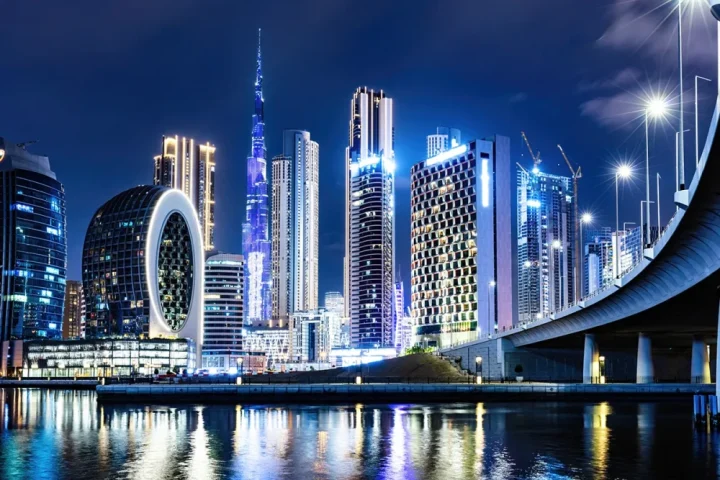
Dubai offers a compelling case study for understanding this structural shift. The emirate combines deep market liquidity, a diversified investor base, institutional maturity, and an increasingly successful ability to attract international capital. More importantly, investment capital is no longer allocated according to fixed geographical preferences. Instead, investors are becoming increasingly selective, directing capital toward markets capable of delivering an optimal balance between capital appreciation, rental income, and pricing efficiency.
Understanding this transformation requires examining three interrelated structural drivers: the widening pricing expectation gap between buyers and sellers, the evolution of the real estate product mix, and the gradual migration of investment portfolios toward income-oriented strategies. Together, these forces portray a market that is not experiencing distress but is instead undergoing a healthy structural rebalancing that is likely to support more sustainable long-term growth.
Official data released by the Dubai Land Department provides valuable insight into this transition. Downtown Dubai, for example, recorded a 45% decline in transaction volume compared with the same period last year. Transaction activity also fell by 52% in Jumeirah Village Circle (JVC) and by 41% in Al Jaddaf. Viewed in isolation, such figures might appear alarming and could easily be interpreted as early signs of a market correction.
The narrative changes considerably, however, when transaction volumes are analyzed alongside pricing data. In Al Jaddaf, the average transaction value increased by 8% to AED 1.45 million, while the average transaction value in Downtown Dubai rose by 9% to AED 3.28 million. Falling transaction volumes accompanied by rising prices present an outcome that sits uneasily with the predictions of classical competitive market theory.
The explanation lies largely in what may be described as the pricing expectation gap. Buyers increasingly face asking prices that exceed either their negotiating capacity or their desired investment returns, while existing owners remain unwilling to discount their assets. Property owners recognize that their holdings continue to generate stable rental income while benefiting from location-specific scarcity that cannot easily be replicated. This is further reinforced by a structural shortage of completed properties offering comparable quality and location, limiting buyers’ bargaining power and reducing the likelihood of significant price concessions.
The resulting equilibrium may best be described as positive market rigidity—a form of price stability supported by scarcity and high replacement costs rather than speculative activity or temporary liquidity inflows. Although this market behaviour may appear unusual to observers who focus primarily on transaction volumes, it arguably represents one of the most durable and fundamentally healthy forms of market stability.
Dubai South offers another illustration of this structural evolution. The area recorded approximately 53% growth in transaction numbers while average prices per square foot increased by around 12%. At the same time, the average overall transaction value declined. On the surface, these indicators appear contradictory: higher transaction volumes, higher unit prices, yet lower average purchase values.
In reality, this reflects a significant shift in demand toward smaller residential units, particularly studios and one-bedroom apartments. Such properties allow developers to command higher prices per square foot through more efficient layouts, superior finishing standards, and attractive locations, while maintaining an overall purchase price that remains accessible to a much wider pool of investors. Strategically, lowering the financial entry threshold broadens the buyer base, which in turn strengthens market liquidity and accelerates transaction activity.
More fundamentally, the market is witnessing a transformation in investment behaviour itself. Investors are increasingly shifting their focus away from short-term capital gains toward sustainable net rental income. Under this new investment paradigm, certain locations have emerged as preferred investment destinations, while districts that until recently symbolised speculative momentum have gradually become less prominent.
Dubai’s real estate market is further supported by several powerful structural fundamentals. Sustained demographic growth continues to underpin long-term housing demand. Stable rental yields are attracting increasing levels of institutional capital, while the emirate’s sophisticated financing ecosystem provides greater flexibility and opens new opportunities for investment.
Taken together, these factors lead to a clear conclusion. Dubai’s real estate market in 2026 should be viewed not as a market under stress, but as one undergoing a mature process of structural transformation. Declining transaction volumes in mature markets should not automatically be interpreted as warning signs of collapse. Rather, they often reflect the natural consequences of widening pricing expectations during periods of elevated valuations. Likewise, the reallocation of capital toward emerging growth districts is not a flight from risk but a rational pursuit of higher risk-adjusted returns within diversified investment portfolios.
Ultimately, Dubai’s property market is no longer driven primarily by speculative momentum or short-term liquidity. Instead, it is increasingly anchored in sustainable cash flows and the intrinsic value of underlying assets. History has repeatedly demonstrated that these are the foundations upon which the world’s most resilient real estate markets are built. It is precisely these fundamentals that justify a measured optimism—one based on evidence rather than sentiment—about the future of a market that continues to evolve and whose long-term potential extends well beyond the horizon of any single market cycle.
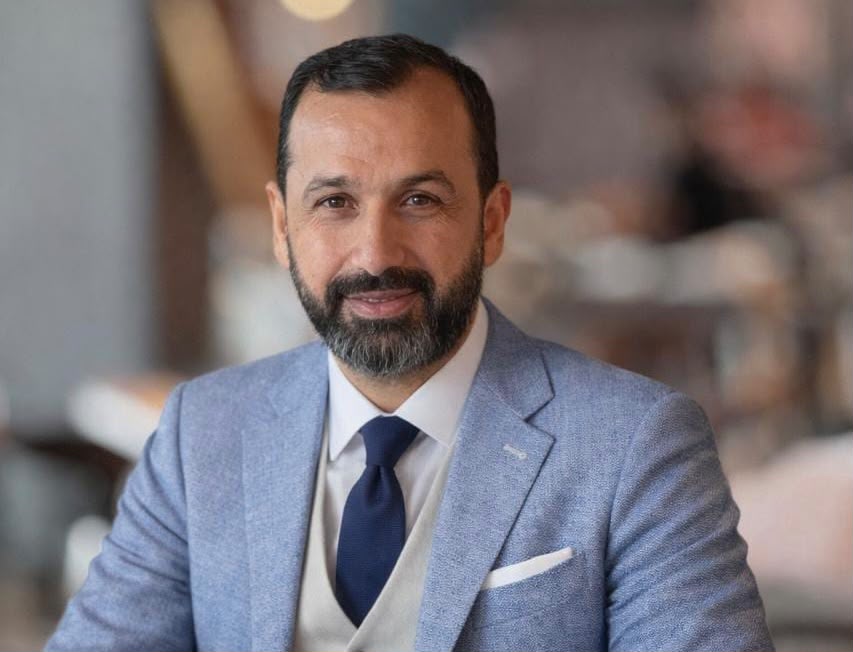
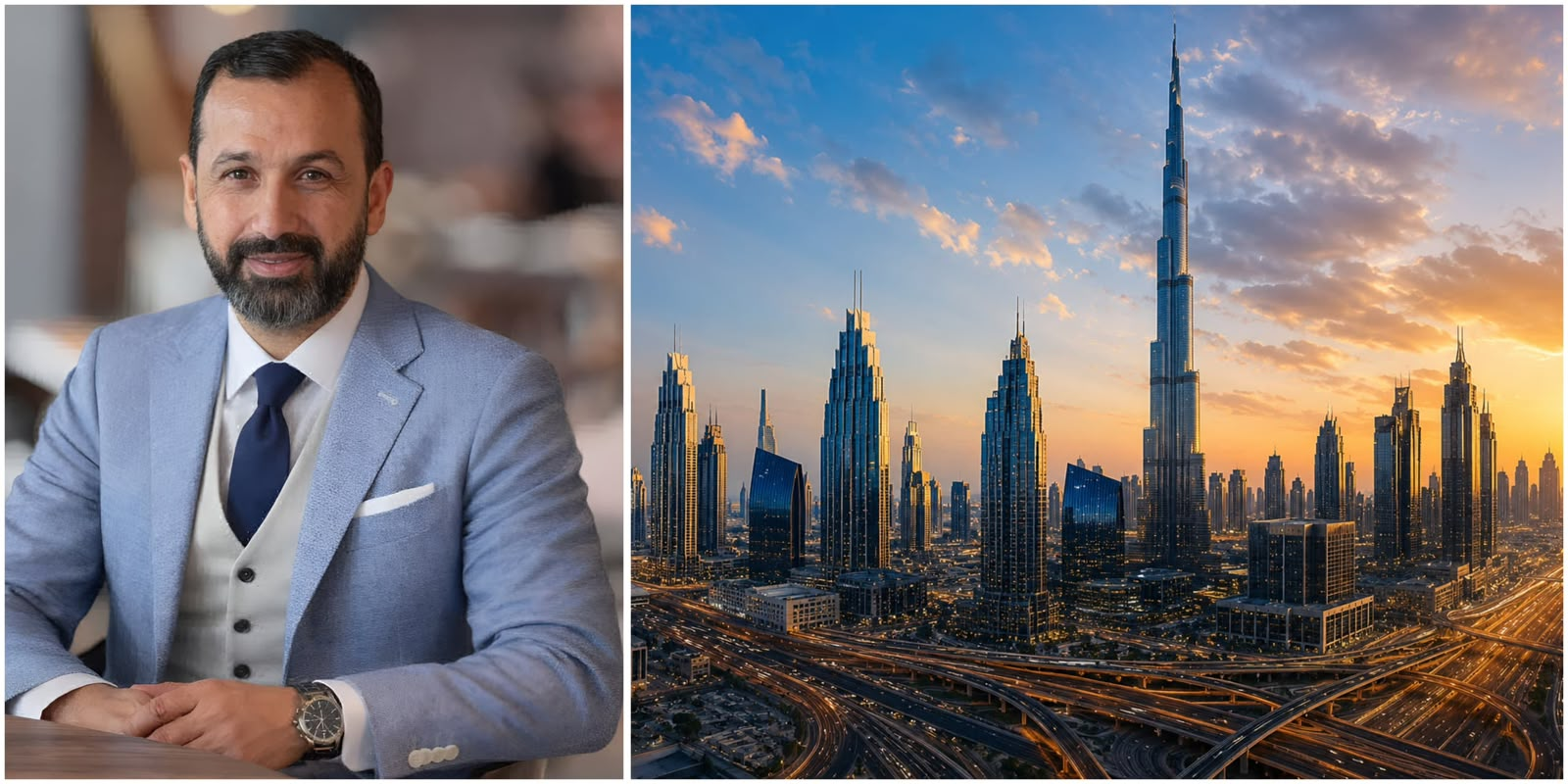
Dr. Fahim Al-Shayea
Economic Writer and Analyst
Specialist in Real Estate and Investment Portfolio Management
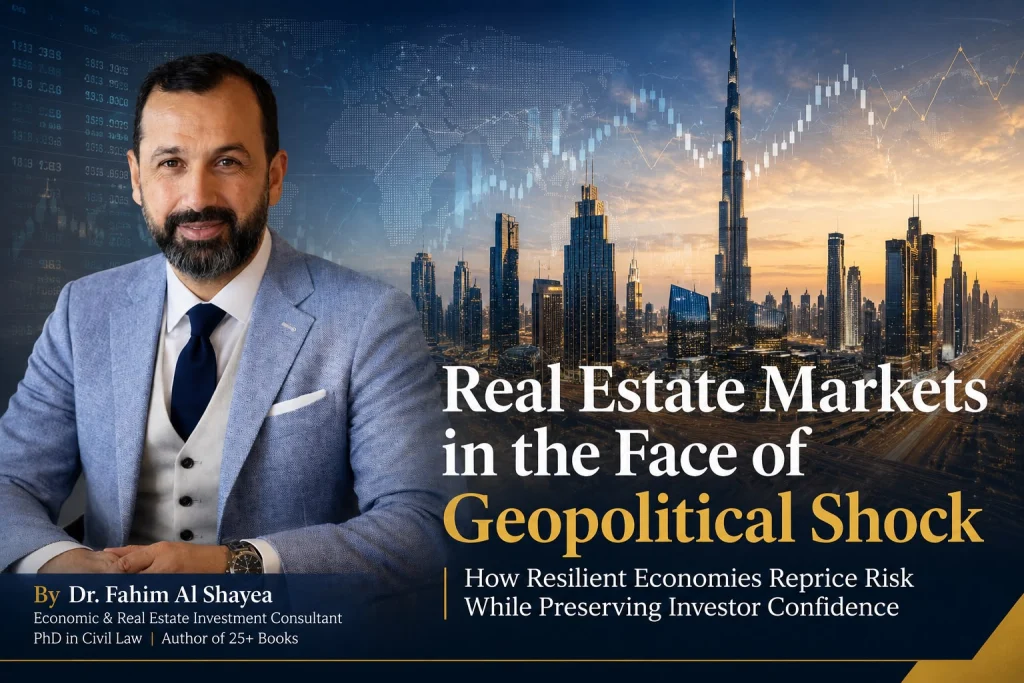
Read Also: Real Estate Markets in the Face of Geopolitical Shock