Live Reporting
Edited by Dr Shahid Siddiqui and Fatema YusufAli
Israel has announced that the Rafah border crossing between Gaza and Egypt will remain closed, and the flow of humanitarian aid into Gaza will be reduced, following tensions over the return of Israeli hostages’ bodies.
According to Israeli media and Reuters, the decision came after Hamas returned only four out of 28 bodies of Israeli hostages on Monday. The Israel Defense Forces (IDF) confirmed the identities of the four — Guy Illouz, Bipin Joshi, Yossi Sharabi, and Daniel Peretz.
The United Nations humanitarian chief has urged Israel to keep Gaza’s crossings open, stressing that access is vital for delivering “desperately needed” aid to civilians. Meanwhile, former UK ambassador Tom Fletcher told the BBC’s Jeremy Bowen that the ceasefire deal must be fully implemented by both sides, emphasizing that Hamas “has got to get the bodies home.”
Families of released hostages are holding a live news conference, sharing emotional reactions to the ongoing situation.
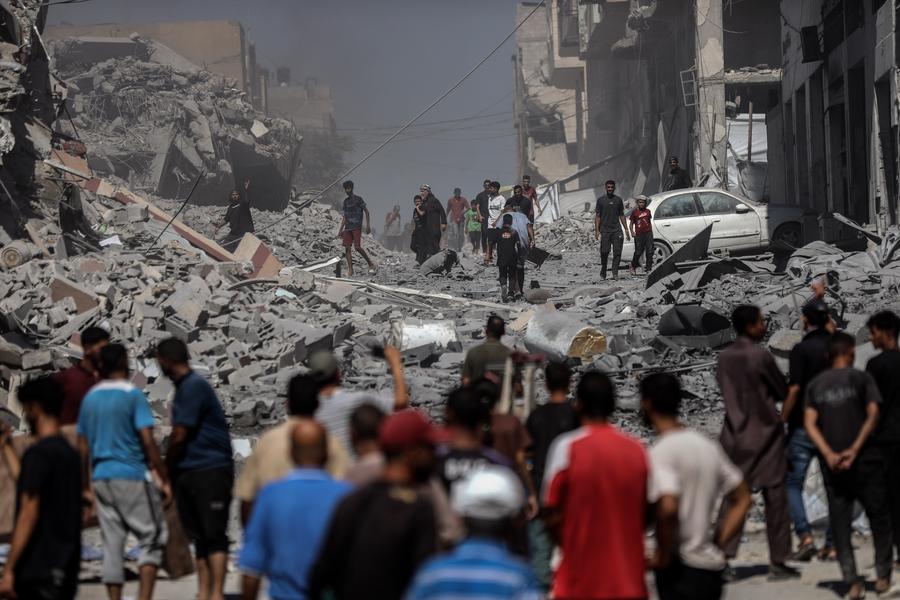
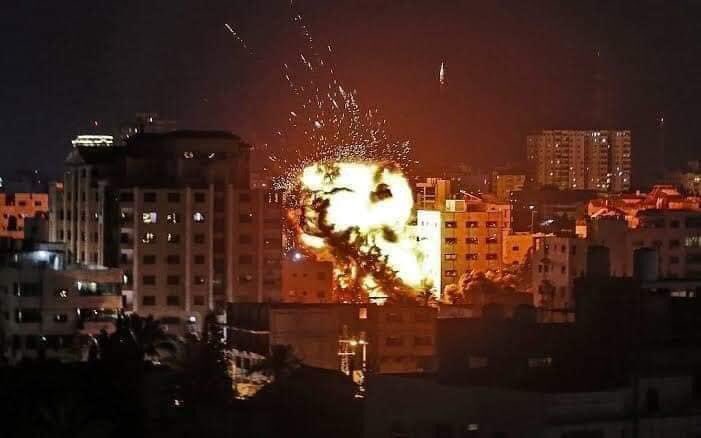
Inside Gaza, the Palestinian Civil Defence reports that seven people were killed in separate incidents following Israeli fire. The Israeli military claims it targeted individuals who had crossed a demarcation line near its withdrawn positions.
Stay tuned for live updates as the situation develops across Gaza and Israel.
21:00 – The voyage had begun, and had begun happily with a soft blue sky, and a calm sea.
The United Nations has confirmed that Israel will scale back humanitarian aid deliveries to Gaza, citing delays by Hamas in returning the bodies of Israeli hostages.
According to UN spokesperson Olga Cherevko, the Israeli military coordination unit, Cogat, has notified the UN of a decision to reduce the number of aid trucks entering Gaza. Cherevko said the UN continues to urge both sides to uphold their obligations under the ceasefire framework and to ensure the safe and timely return of the remaining bodies.
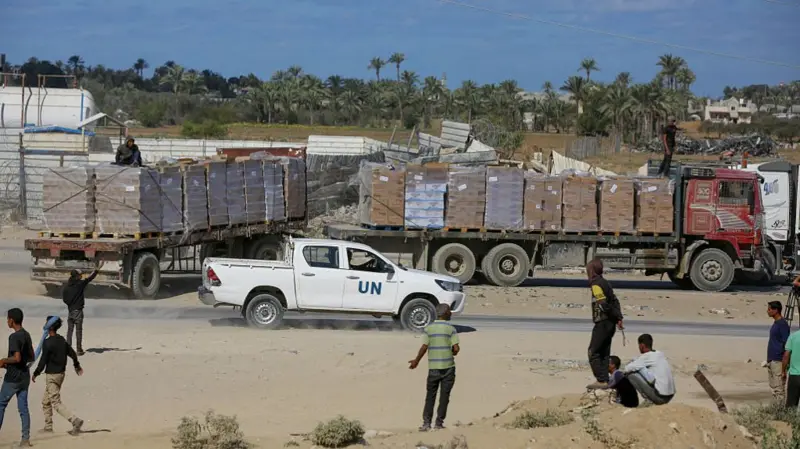
“We are encouraging all parties to fully implement the ceasefire agreements and proceed with the transfer of the bodies,” Cherevko stated, emphasizing that humanitarian operations rely on continued access through the crossings.
Reports from Reuters indicate that Israel will now permit only 300 aid trucks per day to enter Gaza, half of the 600 previously planned. Additionally, fuel and gas shipments will be suspended, except for limited quantities designated for essential humanitarian facilities such as hospitals and water systems.
The announcement follows heightened tensions between Israel and Hamas as efforts to sustain the fragile ceasefire face new pressure. Aid convoys were seen entering Gaza earlier in the day through the Kissufim border crossing, escorted by UN vehicles.