CAIRO/DOHA/RIYADH/ABU DHABI/TEHRAN: Egypt’s decision to revive its proposal for a NATO-style Arab military alliance, in the immediate aftermath of Israel’s strike on Hamas leaders in Qatar, is not merely a tactical move. It is a strategic gamble that could reshape the region’s fragile security architecture, test the coherence of Arab diplomacy, and potentially redraw the balance of power in West Asia.
According to Lebanon’s al-Akhbar, Cairo has pledged to contribute 20,000 troops to the proposed joint force, positioning itself as the natural leader of what President Abdel Fattah el-Sisi describes as “Arab security by Arabs.” The initiative is not new. First floated almost a decade ago, it languished in the face of internal divisions and competing priorities. But today, against the backdrop of an unrelenting Gaza war, rising Israeli assertiveness, and Qatar’s demand for a tougher Arab response, the idea has gained renewed urgency.
Diplomatic sources indicate that Egypt has scaled back relations with Israel to their lowest level since the conflict erupted, restricting contact to humanitarian coordination for Gaza. Washington, worried about losing a critical intermediary, has stepped in to maintain lines of communication. Meanwhile, Cairo has aligned with Saudi Arabia and France in amplifying diplomatic pressure on Tel Aviv. This triangulation underscores Egypt’s delicate balancing act: pushing for Arab unity while preserving its role as a central interlocutor between the West and the Arab world.
The Gulf’s response is equally telling. The United Arab Emirates has signaled its frustration, with officials privately discussing the suspension of the Abraham Accords should Israel proceed with formal annexation of the West Bank. While skepticism remains about whether Israel would announce such a move now, the very fact that suspension is on the table underscores the fragility of the so-called “normalization wave.” Emirati channels with Tel Aviv remain active, but the message is clear: the cost of unilateral Israeli policies is rising.
At the heart of Egypt’s plan is a detailed military blueprint. Proposals envisage contributions proportionate to population and military capacity, with Cairo insisting on retaining supreme command and offering a deputy role to Saudi Arabia or another Gulf partner. Egypt’s 20,000-strong pledge reflects both its willingness to shoulder responsibility and its calculation that such a commitment will accelerate the modernization of its armed forces. In Cairo’s vision, the commander of the joint force would be its army chief of staff or a lieutenant general. Saudi Arabia, as the region’s other heavyweight, is expected to provide the second-largest contribution.
Yet even in its technical details, the initiative reveals fault lines. Diplomats warn that framing the alliance as a de facto Arab declaration of war on Israel could invite escalation. The challenge lies in defining its activation mechanism: when to deploy, against whom, and with what legitimacy. Timing and consensus will be everything.
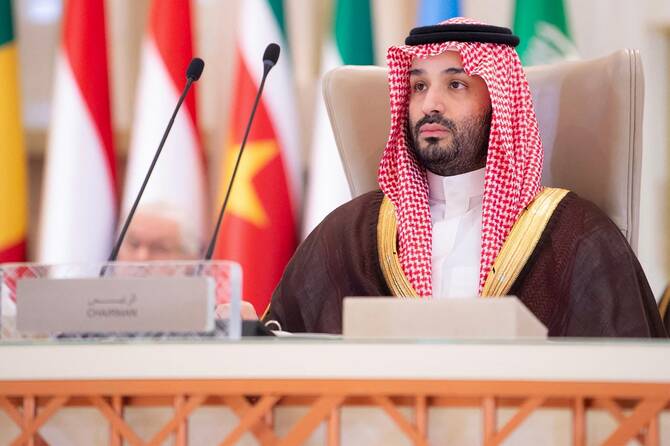
Arab leaders have offered cautious endorsements. President Sisi frames the alliance as a deterrent: “an attack on one Arab state will be considered an attack on all.” Saudi Crown Prince Mohammed bin Salman calls for unity but warns the pact must “serve peace, not escalate wars.” UAE President Sheikh Mohamed bin Zayed stresses interoperability against threats ranging from terrorism to cyberwarfare. Jordan’s King Abdullah II insists the Arab world “cannot rely solely on external powers” and needs its own shield.
The Iranian angle is unavoidable. While Tehran has not officially commented on Cairo’s revived proposal, its new Foreign Ministry spokesman, Esmail Baghaei, has consistently argued that regional security must rest on dialogue and the removal of foreign forces. Analysts in Tehran view any Arab military bloc that excludes Iran as an attempt to encircle its influence in Yemen, Syria, and Lebanon. An Arab NATO could thus harden regional polarization rather than ease it.
What makes Egypt’s push notable is not the novelty of the idea but the seriousness of its timing. Unlike previous attempts, this revival comes amid acute crises: the war in Gaza, Israel’s strike on Qatari soil, threats of West Bank annexation, and intensifying U.S.–Iran rivalries. Each factor amplifies the appeal of collective defense to Arab capitals that, despite their differences, increasingly recognize the risks of disunity.
Still, the obstacles are formidable. Arab states remain divided on whether the force should focus solely on deterrence or actively project power against Israel and its allies. Disputes over financing, headquarters, and command authority are unresolved. And skeptics argue that without a shared political vision, a military alliance risks becoming a symbolic gesture rather than a functional deterrent.
Yet Cairo’s renewed push is the closest the Arab world has come in years to operationalizing the long-discussed dream of a collective defense pact. A high-level summit in Cairo later this year will be the critical test. If consensus is reached, Egypt’s Arab NATO gamble could signal a historic shift: reducing reliance on Western-led coalitions, recalibrating ties with Israel, and redefining the very terms of security in the Middle East.
If it fails, however, it will reaffirm the enduring paradox of Arab politics, grand visions repeatedly thwarted by mistrust, rivalries, and competing interests. Either way, the Doha summit may prove to be a watershed in the Arab world’s quest for strategic autonomy.
– Op-Ed by | Dr. Shahid Siddiqui, follow via X @shahidsiddiqui