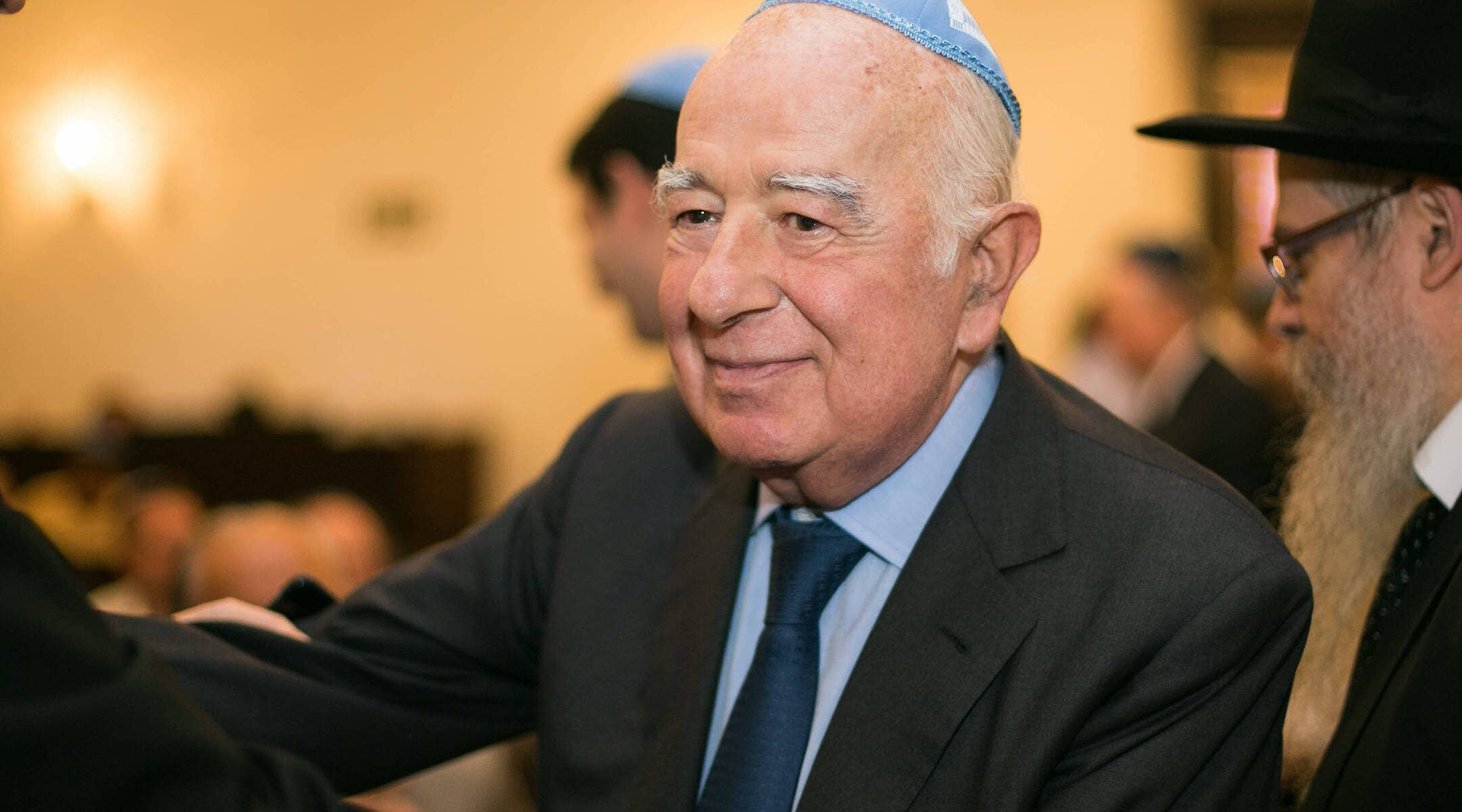
Few names in global banking command the same respect as Joseph Safra. For decades, the Lebanese-Brazilian financier stood at the helm of one of the world’s largest privately owned banking empires, quietly building wealth through conservative banking, long-term relationships, and disciplined expansion.
Unlike many modern billionaires who built fortunes through technology, media, or venture capital, Joseph Safra represented an older tradition of wealth creation rooted in banking, trade finance, and private capital preservation. Through Banco Safra, J. Safra Sarasin, Safra National Bank of New York, and other holdings, he helped transform a family banking tradition dating back to the Ottoman era into a modern international financial group.
At the time of his death in December 2020, Safra was widely recognized as Brazil’s richest banker and among the wealthiest financial figures in the world. Historical billionaire rankings listed him with a net worth of approximately $13.8 billion and a world ranking of 52, although later estimates placed his wealth significantly higher as his business empire expanded.
Who Was Joseph Safra?
Joseph Safra was a Lebanese-Brazilian banker, investor, and businessman who served as chairman of the Safra Group, a privately controlled financial empire operating across North America, Europe, and Latin America.
| Profile Item | Details |
|---|---|
| Full Name | Joseph Safra |
| Born | September 1, 1938 |
| Birthplace | Beirut, Lebanon |
| Died | December 10, 2020 |
| Citizenship | Lebanon, Brazil |
| Industry | Banking and Finance |
| Main Company | Safra Group |
| Main Source of Wealth | Banking |
| Known For | Banco Safra, Global Private Banking |
| Reputation | Richest banker in Brazil |
Throughout his career, Safra became known for discretion, risk management, and a long-term approach to capital allocation. While many billionaire financiers sought publicity, Joseph Safra remained largely focused on expanding the family banking business.
Early Life and Family Background
Joseph Safra was born in Beirut, Lebanon, into a Jewish family with deep roots in banking and commerce.
The Safra family’s financial history stretches back to the nineteenth century in Aleppo, Syria, where family members financed trade routes connecting Europe, the Middle East, and Asia. Long before modern banking systems dominated global finance, the Safra family was already involved in currency exchange, trade finance, and merchant banking.
This centuries-old tradition would become one of the defining foundations of Joseph Safra’s future success.
In 1952, the family relocated to Brazil, joining a growing community of Middle Eastern immigrants who were helping shape the country’s commercial sector.
For Joseph Safra, the move represented not only a geographic shift but also the beginning of a new chapter that would ultimately make Brazil the center of the family’s modern banking empire.
Education and Early Career
Unlike many modern billionaires known for elite university credentials, Joseph Safra entered banking through family experience and practical training.
From a young age, he learned the fundamentals of finance, lending, trade transactions, and customer relationships through direct involvement in family operations.
By the mid-1950s, members of the Safra family were already active in Brazil’s banking industry. Joseph worked alongside his father, Jacob Safra, and his brothers as the family expanded its presence in São Paulo.
This apprenticeship-style education provided him with a deep understanding of risk management and relationship banking that would later define Banco Safra’s business model.
How Joseph Safra Built His Fortune
Joseph Safra built his fortune through banking.
While many wealthy entrepreneurs create value through products or technology, Safra generated wealth by allocating capital, managing deposits, lending prudently, and expanding financial services across multiple markets.
His greatest achievement was transforming Banco Safra into one of Brazil’s leading private banks.
The bank became known for serving high-net-worth clients, businesses, investors, and families seeking personalized financial services.
Safra’s strategy emphasized:
- Conservative lending practices
- Strong liquidity management
- Wealth preservation
- Relationship banking
- Geographic diversification
- Family ownership control
These principles helped the Safra Group weather multiple economic cycles, inflationary periods, financial crises, and changing regulatory environments.
Main Source of Wealth
The overwhelming majority of Joseph Safra’s fortune came from banking and financial services.
| Wealth Source | Company or Asset | Industry | Role in Fortune |
| Banking | Banco Safra | Banking | Core wealth generator |
| Private Banking | J. Safra Sarasin | Wealth Management | International expansion |
| Commercial Banking | Safra National Bank | Banking | U.S. operations |
| Financial Holdings | Safra Group | Finance | Parent holding structure |
| Real Estate | Global property portfolio | Real Estate | Wealth preservation |
| Investments | Various holdings | Investments | Diversification |
Unlike many billionaire fortunes tied to volatile stock prices, Safra’s wealth was rooted in cash-generating banking operations and long-term financial assets.
Business Empire and Major Companies
The Safra Group evolved into a diversified international financial organization.
Its operations stretched across multiple continents and included commercial banking, private banking, investment management, and real estate.
| Company or Asset | Industry | Region | Role in Empire |
| Banco Safra | Banking | Brazil | Flagship bank |
| J. Safra Sarasin | Private Banking | Switzerland & Europe | Wealth management |
| Safra National Bank | Banking | United States | North American operations |
| Safra Group | Financial Holdings | Global | Parent organization |
| Commercial Real Estate | Property | Global | Asset diversification |
| Chiquita | Agriculture | International | Strategic investment |
This diversified structure allowed the family to balance banking revenues with long-term investment holdings.
Net Worth and Wealth Ranking
Joseph Safra consistently ranked among the richest individuals in Latin America.
Historical billionaire rankings estimated his net worth at approximately $13.8 billion, while later estimates before his death in 2020 placed his wealth significantly above $20 billion.
At various points, he was recognized as:
- Brazil’s richest banker
- One of the wealthiest people in Latin America
- One of the richest bankers globally
- A leading figure in international private banking
Net worth estimates for private banking families can vary significantly because much of their wealth is tied to privately held financial institutions, real estate assets, investment portfolios, and family holding companies.
Investment Strategy
Joseph Safra’s investment philosophy differed sharply from many modern billionaire investors.
Focus on Stability
Rather than pursuing speculative opportunities, Safra emphasized capital preservation and sustainable growth.
Long-Term Ownership
The Safra family maintained control of key assets for decades, allowing wealth to compound over multiple generations.
Conservative Risk Management
Banking success often depends on avoiding catastrophic losses rather than chasing extraordinary gains. Safra built a reputation for careful credit analysis and disciplined lending.
Geographic Diversification
The Safra Group expanded across Brazil, Switzerland, the United States, and other markets, reducing dependence on any single economy.
Major Deals and Business Milestones
Building Banco Safra
Banco Safra became one of Brazil’s most respected private banks and the foundation of Joseph Safra’s fortune.
Expanding Into Global Private Banking
The acquisition and development of J. Safra Sarasin strengthened the family’s presence in European wealth management.
Growth of Safra National Bank
Expansion in the United States gave the Safra Group access to one of the world’s largest financial markets.
The Gherkin Acquisition
In 2014, Safra acquired London’s iconic Gherkin skyscraper for more than £700 million, adding a landmark asset to the family’s global real-estate portfolio.
International Real Estate Expansion
The family accumulated a significant portfolio of commercial properties in New York, London, São Paulo, and other major financial centers.
Financial and Ownership Context
The Safra Group remained one of the largest privately controlled banking organizations in the world.
Unlike publicly traded banking giants, the group’s ownership remained concentrated within the Safra family, allowing management to focus on long-term goals rather than quarterly market expectations.
This private ownership structure became one of the defining characteristics of the empire.
Competitive Impact and Industry Influence
Joseph Safra helped shape private banking in Brazil and beyond.
His institutions served corporations, entrepreneurs, investors, and wealthy families while competing with some of the largest international banks.
The Safra Group’s influence extended through:
- Commercial lending
- Wealth management
- Private banking
- International finance
- Real estate investment
- Capital markets
Its success demonstrated that privately owned banking groups could compete effectively with publicly listed financial institutions.
Philanthropy, Public Image and Influence
Although known primarily for business, Joseph Safra supported educational and community initiatives.
Among notable projects was the founding of the Beit Yaacov Jewish school in Brazil.
The broader Safra family has long been associated with charitable activities focused on education, culture, healthcare, and community development.
Safra maintained a relatively low public profile compared with many billionaires, preferring discretion over publicity.
Succession and Family Business Future
Succession planning was a critical issue for a financial empire of Safra’s size.
Joseph Safra and his wife Vicky had four children:
- Jacob J. Safra
- Esther Safra
- Alberto J. Safra
- David J. Safra
Family members gradually assumed leadership responsibilities across different divisions of the group.
Jacob became heavily involved in international operations, while David took a major role in managing Banco Safra in Brazil.
This transition helped ensure continuity after Joseph Safra’s death in 2020.
Business Lessons From Joseph Safra
Protect Capital First
Safra demonstrated that preserving capital is often more important than chasing maximum returns.
Build Trust Over Decades
Banking relationships can last generations. Trust became one of the Safra Group’s most valuable assets.
Think Long Term
The family expanded steadily rather than pursuing rapid growth at any cost.
Diversify Geographically
Operating across multiple countries reduced concentration risk.
Maintain Ownership Control
Private ownership allowed strategic decisions to be made with a long-term perspective.
Key Takeaways
- Joseph Safra was a Lebanese-Brazilian banker and billionaire.
- He led the Safra Group, one of the world’s largest private banking empires.
- Banco Safra became one of Brazil’s leading private banks.
- His family banking roots trace back to Aleppo in the nineteenth century.
- He was widely recognized as Brazil’s richest banker.
- Banking was the primary source of his wealth.
- The Safra Group expanded across Europe, North America, and South America.
- Major assets included Banco Safra, J. Safra Sarasin, and Safra National Bank.
- He invested heavily in international real estate.
- His family remains central to the future of the business empire.
Frequently Asked Questions
Who was Joseph Safra?
Joseph Safra was a Lebanese-Brazilian banker, billionaire businessman, and chairman of the Safra Group.
What was Joseph Safra’s net worth?
Historical estimates placed his wealth at approximately $13.8 billion, while later estimates exceeded $20 billion before his death.
How did Joseph Safra become wealthy?
He built wealth through banking, financial services, private banking, investments, and real estate.
What is Banco Safra?
Banco Safra is one of Brazil’s largest private banks and the cornerstone of the Safra family fortune.
What companies did Joseph Safra own?
His business interests included Banco Safra, J. Safra Sarasin, Safra National Bank, Safra Group, and significant real-estate holdings.
Where was Joseph Safra born?
He was born in Beirut, Lebanon, in 1938.
Was Joseph Safra the richest banker in Brazil?
Yes. He was widely recognized as Brazil’s richest banker during his lifetime.
Who inherited Joseph Safra’s business empire?
Leadership responsibilities transitioned to members of the Safra family, including his sons Jacob, Alberto, and David.
What made Joseph Safra successful?
His success came from conservative banking practices, disciplined risk management, and long-term ownership.
What is Joseph Safra’s legacy?
His legacy is the creation of one of the world’s largest privately owned banking empires and the transformation of the Safra family into a global financial dynasty.
Conclusion
Joseph Safra built one of the most significant banking fortunes of the modern era. From family roots in Middle Eastern trade finance to leadership of a global financial empire, he demonstrated how disciplined banking, patient capital, and long-term ownership can create extraordinary wealth.
The story of Joseph Safra is not merely a billionaire success story. It is the story of a family banking dynasty that spanned continents, generations, and financial eras, leaving a lasting mark on global banking and private wealth management.
Disclaimer: This article is for informational and educational purposes only. Net worth figures, ownership estimates, rankings, and asset values may change over time and may be based on public estimates, market prices, private-company valuations, and available disclosures. This article is not investment advice, financial advice, or a recommendation to buy or sell any security.
Read Also: Alwaleed Bin Talal: Inside the Fortune of Prince Alwaleed Bin Talal Alsaud