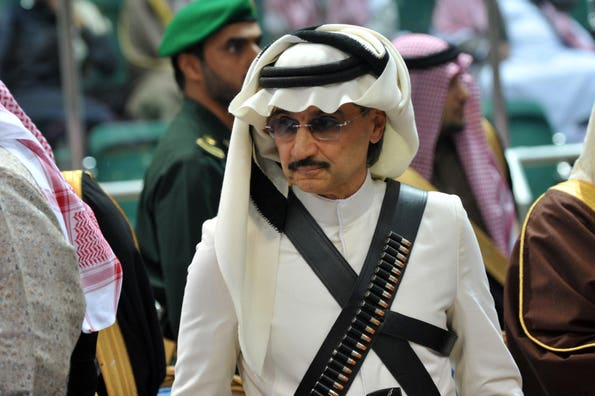
Alwaleed Bin Talal is one of the best-known names in Middle Eastern wealth, a Saudi prince whose investment career turned him into a global financial figure long before Gulf capital became a central force in international markets.
His fortune has moved through banking, hotels, media, technology, entertainment and real estate. At different points, his name has been linked to Citigroup, Apple, News Corporation, Four Seasons, Twitter, Snap, Rotana and Kingdom Holding Company, the Saudi-listed investment group that became the public face of his business empire.
Forbes Middle East listed Prince Alwaleed Bin Talal Alsaud as the richest Arab in its 2026 ranking, with an estimated net worth of $19.9 billion, age 71, and an industry classification of finance and investments. The same ranking noted that Kingdom Holding holds stakes in high-profile companies, including Four Seasons, and that Saudi Arabia’s Public Investment Fund bought a nearly 16.9% stake from him in 2022 for $1.6 billion.
That figure is higher than the older data showing him with an $18 billion fortune, a world rank of 29 and a 2011 net worth of $19.6 billion, which reflects how billionaire valuations can shift sharply over time as listed shares, private assets, currency values and market sentiment change.
Al Waleed is the founder, chief executive officer (CEO) and 95 percent owner of the Kingdom Holding Company, a Saudi conglomerate company.
Who Is Prince Alwaleed Bin Talal Alsaud?
Prince Alwaleed Bin Talal Alsaud is a Saudi Arabian billionaire businessman, investor and member of the House of Saud. He is best known as the founder and long-time chairman of Kingdom Holding Company, a Saudi investment group with interests across finance, hospitality, media, technology and real estate.
| Profile Item | Details |
|---|---|
| Full Name | Prince Alwaleed Bin Talal Alsaud |
| Nationality | Saudi Arabian |
| Country of Citizenship | Saudi Arabia |
| Main Company | Kingdom Holding Company |
| Main Source of Wealth | Investments |
| Estimated Net Worth | $19.9 billion in Forbes Middle East’s 2026 ranking |
| Industry | Finance and investments |
| Known For | Global investing, Kingdom Holding, hotels, banking and technology stakes |
| Public Reputation | One of the most prominent Arab investors of the modern era |
Alwaleed’s wealth story is not a simple inheritance story. His royal background gave him access and visibility, but his business reputation was built around aggressive investment decisions, distressed-asset buying, global brand exposure and long-term holdings in companies that were either undervalued, strategically important or globally scalable.
Early Life and Family Background
Prince Alwaleed was born on March 7, 1955, in Jeddah, Saudi Arabia. His father was Prince Talal bin Abdulaziz Al Saud, and his mother was Mona El Solh. Through his father, Alwaleed is a grandson of King Abdulaziz, the founder of modern Saudi Arabia. Through his mother, he is connected to Lebanon’s political elite, as his maternal grandfather was Riad Al Solh, Lebanon’s first prime minister.
That family background placed him at the intersection of Saudi royal influence and wider Arab political history. It also gave him a regional identity that extended beyond Saudi Arabia into Lebanon and the broader Middle East.
His parents separated when he was young, and he spent part of his childhood in Lebanon. This cross-border upbringing helped shape a businessman who later operated comfortably across Saudi Arabia, the United States, Europe and global financial markets.
Education and Early Career
Alwaleed studied in Lebanon before moving to the United States for higher education. He earned a bachelor’s degree in business administration from Menlo College in California in 1979 and later completed a master’s degree in social science from Syracuse University’s Maxwell School of Citizenship and Public Affairs in 1985.
His business career began after he returned to Saudi Arabia in 1979. He started with relatively modest capital compared with the empire he later built. The early business model combined construction-related opportunities, real estate and equity participation. Rather than simply collecting commissions, he pushed for stakes in projects, a decision that helped him convert advisory and brokerage roles into ownership positions.
That approach became one of the defining patterns of his career: ownership mattered more than fees.
How Alwaleed Bin Talal Built His Fortune
Alwaleed Bin Talal built his fortune by combining Saudi market access with international investment timing. His rise began in the late 1970s and early 1980s, when Saudi Arabia’s oil-driven expansion created opportunities in construction, finance and real estate.
He started with Kingdom Establishment, which later evolved into Kingdom Holding Company. His early success came from construction-related deals and real estate investments. He then moved into banking, buying into underperforming financial institutions and participating in mergers that helped create larger Saudi banking groups.
The major turning point came when he expanded beyond Saudi Arabia. By the late 1980s and early 1990s, he was investing in international companies, especially established brands that were facing pressure but still had long-term value. His investment in Citicorp during a period of financial stress became one of the defining deals of his career.
Alwaleed’s investing style often focused on three ideas:
- Buy into distressed or undervalued global brands.
- Hold assets with long-term pricing power.
- Use Kingdom Holding as a platform for public visibility and institutional scale.
Main Source of Wealth
Alwaleed’s main source of wealth is investments, especially through Kingdom Holding Company and related personal holdings.
| Wealth Source | Company or Asset | Industry | Role in Fortune |
|---|---|---|---|
| Public and private investments | Kingdom Holding Company | Finance and investments | Core investment vehicle |
| Hotels | Four Seasons, historic hotel assets | Hospitality | Long-term luxury asset exposure |
| Banking | Citigroup and earlier banking stakes | Financial services | Major early wealth driver |
| Media and entertainment | Rotana and media investments | Entertainment | Regional influence and diversification |
| Technology | X, xAI, SpaceX-linked exposure, Snap | Technology | Growth-oriented global exposure |
| Real estate | Saudi and international property assets | Real estate | Wealth preservation and prestige assets |
| Sports | Al Hilal stake agreement through Kingdom Holding | Sports and entertainment | Newer Saudi sports-sector exposure |
Kingdom Holding has been central to the fortune. Forbes Middle East reported that in February 2026, Kingdom Holding said the combined value of its investments alongside Prince Alwaleed in SpaceX, including X, xAI and Starlink, had increased to $9.2 billion.
Business Empire and Major Companies
Alwaleed’s business empire has always been broader than one company. Kingdom Holding is the flagship, but his influence extends through hospitality, media, finance, technology and real estate.
| Company or Asset | Industry | Country or Region | Role in Business Empire |
|---|---|---|---|
| Kingdom Holding Company | Investment holding | Saudi Arabia/global | Main listed investment platform |
| Four Seasons exposure | Hospitality | Global | Luxury hotel investment |
| Rotana | Media and entertainment | Middle East | Arabic-language entertainment platform |
| Citigroup stake | Banking | United States/global | Historic global banking investment |
| X / Twitter-related exposure | Technology and social media | United States/global | Growth and media-tech investment |
| xAI / SpaceX-linked exposure | Technology and aerospace | United States/global | High-growth private technology exposure |
| Snap stake | Social media | United States/global | Personal technology investment |
| Al Hilal agreement | Sports | Saudi Arabia | Strategic Saudi sports-sector investment |
In April 2026, Reuters reported that Kingdom Holding Company, owned by Prince Alwaleed, signed a binding agreement to acquire a 70% stake in Saudi Pro League club Al Hilal. The transaction valued Al Hilal’s share capital at 1.4 billion Saudi riyals, or about $373.2 million, and remained subject to conditions and regulatory approvals.
That deal shows how his investment activity has increasingly aligned with Saudi Arabia’s push into sports, entertainment and domestic economic diversification.
Net Worth and Wealth Ranking
Prince Alwaleed’s net worth has changed significantly over time. The older ranking data placed him at $18 billion, with a 2011 net worth of $19.6 billion and a world rank of 29.
Forbes Middle East’s 2026 ranking listed him at $19.9 billion, making him the richest Arab in that list.
Net worth estimates for private business owners can vary because much of their wealth is tied to private companies, family holdings, real estate, debt, listed shares and assets that are not fully disclosed. In Alwaleed’s case, Kingdom Holding’s public market value, private technology holdings, hotel assets and personal investments can all affect estimates.
His wealth is best understood as a portfolio fortune rather than a single-company fortune. It is tied to market prices, private valuations, Saudi-listed assets, global technology holdings and long-term luxury properties.
Investment Strategy
Alwaleed’s investment strategy has often centered on buying recognizable assets at moments when others are cautious.
His historic Citigroup investment reflected confidence in a troubled financial institution with global importance. His hotel investments reflected a belief in luxury brands, trophy properties and long-term travel demand. His media investments showed an early interest in content distribution and regional entertainment. His later technology exposure showed a willingness to hold stakes in companies shaping communication, artificial intelligence, space technology and digital platforms.
Several themes define his approach:
Long-Term Brand Ownership
Alwaleed often favored companies with powerful names. Citigroup, Four Seasons, News Corporation, Apple, Twitter and Snap are not obscure assets. They are brands with global recognition, strategic relevance and deep market reach.
Contrarian Entry Points
Many of his best-known investments came when assets were under pressure or undervalued. This gave him the reputation of an investor willing to move when markets were uncertain.
Diversification Across Sectors
His wealth is not concentrated in one industry. Banking, hotels, media, technology, entertainment, real estate and sports all appear in the wider Kingdom Holding orbit.
Public and Private Exposure
His portfolio combines listed companies, private holdings, trophy assets and strategic partnerships. That makes the fortune more complex than a simple stock-market holding.
Major Deals, Investments and Business Milestones
Building Kingdom Holding Company
Kingdom Holding became the platform that turned Alwaleed from an individual investor into an institutional figure. The company gave his investments a public structure and helped connect Saudi capital with global markets.
It also made his wealth more visible. Unlike many private Gulf fortunes, Alwaleed’s portfolio could be tracked partly through a listed investment company.
The Citigroup Bet
One of Alwaleed’s most famous investments was his move into Citicorp, later Citigroup. The deal helped define his image as a bold global investor. He bought into a major U.S. financial institution during a difficult period and became associated with a strategy of buying strong franchises when market confidence was low.
Hotels and Luxury Hospitality
Alwaleed has long been associated with luxury hotels, especially Four Seasons and major international properties. Hospitality gave his portfolio a mix of prestige, real estate exposure and global consumer demand.
Luxury hotels are not just operating businesses. They are also trophy assets, often located in major cities and tied to long-term land and brand value.
Media and Entertainment
Rotana became one of his most visible Middle Eastern media assets. His media exposure also included international investments, reflecting his interest in both regional content and global platforms.
This part of the portfolio helped extend his influence beyond finance into culture, entertainment and public visibility.
Technology and Social Platforms
Alwaleed’s technology investments have included exposure to Twitter, now X, and later X-related and xAI-linked investments through Kingdom Holding and personal holdings. Forbes Middle East reported that the combined value of investments alongside him in SpaceX, including X, xAI and Starlink, had risen to $9.2 billion by February 2026.
That gives his portfolio exposure to some of the most closely watched private technology companies in the world.
Al Hilal and Saudi Sports
The 2026 agreement for Kingdom Holding to acquire a 70% stake in Al Hilal marked a significant move into Saudi sports. Reuters reported that the deal valued the club’s share capital at 1.4 billion Saudi riyals and supported the Public Investment Fund’s strategy of recycling capital into the local economy.
Sports investment fits the broader Saudi economic shift toward entertainment, tourism, media rights and private-sector participation.
How Alwaleed Bin Talal Fits Into the Arab Business Landscape
Alwaleed Bin Talal occupies a distinctive place in Arab business. Many Gulf fortunes are rooted in energy, construction, state contracts, family conglomerates or banking. His fortune overlaps with some of those themes, but his public identity was built around international investing.
He became a symbol of outward-looking Gulf capital before sovereign wealth funds became dominant global investors. His business style connected Saudi wealth to Wall Street, Silicon Valley, European hotels and Arab media.
In that sense, Alwaleed helped shape the image of the modern Arab investor: globally mobile, brand-conscious, comfortable with public markets and willing to take positions in major Western companies.
His career also reflects the changing nature of Saudi wealth. Earlier decades emphasized oil-linked expansion, real estate and banking. Today, Saudi capital is increasingly active in technology, tourism, sports, entertainment and artificial intelligence. Alwaleed’s portfolio has moved with that transition.
Financial and Ownership Context
Alwaleed’s wealth is tied to both disclosed and less transparent assets. Kingdom Holding provides a listed structure, but not every asset connected to him is simple to value.
Ownership details for private assets are not always fully disclosed. Publicly traded holdings can be valued using market prices, but private investments in technology companies, hotel assets and family-linked holdings require estimates.
The 2022 sale of a nearly 16.9% Kingdom Holding stake to Saudi Arabia’s Public Investment Fund for $1.6 billion was one of the most important ownership developments in recent years.
That transaction connected Kingdom Holding more directly with Saudi Arabia’s sovereign investment ecosystem and highlighted the growing role of PIF in the country’s corporate landscape.
Competitive Impact and Industry Influence
Alwaleed’s influence comes less from running one operating company and more from allocating capital across industries.
In banking, his Citigroup investment gave him a profile in global finance. In hospitality, his hotel holdings connected him to luxury travel and real estate. In media, Rotana gave him regional cultural influence. In technology, his exposure to X, xAI, SpaceX-linked investments and Snap placed him near companies shaping communication and artificial intelligence.
His competitive impact is therefore portfolio-based. He influences markets through ownership, capital, networks and visibility rather than through a single consumer brand.
Philanthropy, Public Image and Influence
Alwaleed is also known for philanthropy. The biographical record notes extensive charitable activity through Alwaleed Philanthropies, including support for humanitarian projects, education, disaster relief, cultural understanding and women’s empowerment initiatives.
His public image is complex. Admirers view him as a pioneering Arab investor who brought Saudi capital onto the global stage. Critics have questioned aspects of valuation, transparency and political context surrounding Saudi business. His profile combines wealth, royal identity, global investing, philanthropy and controversy.
That complexity is part of why he remains one of the most closely watched billionaires in the Arab world.
Controversies, Risks and Challenges
Alwaleed’s career has not been without controversy.
In 2017, he was detained in Saudi Arabia during a wider anti-corruption campaign involving princes, ministers and business figures. He was later released after a settlement, though the full details were not publicly disclosed. The biographical record notes that the Saudi government did not publicly disclose detailed charges or evidence in his case.
He also had a public dispute with Forbes over billionaire-list valuation methodology. The disagreement centered on how his wealth and Kingdom Holding shares should be valued. The matter was eventually settled.
For investors and readers analyzing Alwaleed’s fortune, the key risk factors include:
- Market volatility in listed holdings
- Private-company valuation uncertainty
- Saudi regulatory and political context
- Concentration in Kingdom Holding
- Exposure to technology valuation cycles
- Succession and governance questions common to large family-linked fortunes
Succession and Family Business Future
Succession is an important question for any large private or family-linked fortune. Alwaleed has children, including Prince Khaled and Princess Reem, but the exact long-term succession structure of his business empire is not fully disclosed in public detail.
Kingdom Holding’s public structure provides some institutional continuity, but the future of the broader Alwaleed portfolio will depend on governance, asset sales, family involvement, professional management and Saudi Arabia’s changing investment environment.
The PIF stake in Kingdom Holding also gives the company a more state-linked shareholder structure than it had during earlier phases of Alwaleed’s career.
Why Alwaleed Bin Talal Matters Today
Alwaleed matters because his career sits at the intersection of old and new Saudi capital.
He emerged during the oil-boom era, built wealth through real estate and banking, became globally famous through U.S. and European investments, and now remains relevant through technology, sports and Saudi diversification.
His portfolio tells a wider story about how Gulf wealth has evolved:
- From domestic construction to global capital markets
- From banking and real estate to technology and AI
- From private royal wealth to listed investment platforms
- From trophy hotels to sports and entertainment assets
- From individual investing to closer alignment with sovereign capital
That makes Alwaleed Bin Talal more than a billionaire profile. He is a case study in how Saudi private wealth became global.
Career Timeline
1955 — Born in Jeddah
Prince Alwaleed was born in Jeddah, Saudi Arabia, into the House of Saud and a family with Saudi and Lebanese political connections.
1979 — Graduates From Menlo College
He completed a business administration degree at Menlo College in California and returned to Saudi Arabia to begin his business career.
1980s — Builds Early Real Estate and Banking Interests
He expanded from construction-related business into real estate and Saudi banking investments.
1991 — Makes Major Citicorp Investment
His investment in Citicorp became one of the best-known deals of his career and helped establish his reputation as a global investor.
1990s — Expands Into Hotels, Media and International Stocks
He invested in hospitality, media, banking and technology assets, building a global portfolio.
2000s — Kingdom Holding Becomes a Global Investment Platform
Kingdom Holding became the public face of his investment empire, with exposure to major global brands.
2017 — Detained During Saudi Anti-Corruption Campaign
Alwaleed was detained during a Saudi anti-corruption campaign and later released after a settlement.
2022 — PIF Buys Stake in Kingdom Holding
Saudi Arabia’s Public Investment Fund bought a nearly 16.9% stake in Kingdom Holding from Alwaleed for $1.6 billion.
2026 — Kingdom Holding Signs Al Hilal Deal
Kingdom Holding signed a binding agreement to acquire a 70% stake in Al Hilal, one of Saudi Arabia’s most important football clubs.
Key Takeaways
- Alwaleed Bin Talal is one of Saudi Arabia’s most prominent billionaire investors.
- His fortune is mainly tied to investments, especially through Kingdom Holding Company.
- Forbes Middle East estimated his 2026 net worth at $19.9 billion.
- His older wealth data showed a net worth of $18 billion and a 2011 figure of $19.6 billion.
- His career began with construction, real estate and Saudi banking opportunities.
- His Citigroup investment helped define his global investing reputation.
- Kingdom Holding has exposure to hotels, technology, media, finance and sports.
- The PIF bought a nearly 16.9% stake in Kingdom Holding from him in 2022.
- His portfolio includes exposure to X, xAI, SpaceX-linked assets, Starlink and Snap.
- The 2026 Al Hilal agreement shows his move into Saudi sports and entertainment.
- His fortune is complex because it includes listed shares, private investments and trophy assets.
- His legacy is tied to the globalization of Saudi private capital.
Frequently Asked Questions
Who is Alwaleed Bin Talal?
Alwaleed Bin Talal is a Saudi billionaire businessman, investor and member of the House of Saud. He is the founder and long-time leader of Kingdom Holding Company.
What is Alwaleed Bin Talal’s net worth?
Forbes Middle East listed Alwaleed Bin Talal with an estimated net worth of $19.9 billion in its 2026 ranking. Older ranking data placed his net worth at $18 billion.
How did Alwaleed Bin Talal become a billionaire?
He became a billionaire through investments in banking, real estate, hotels, media, technology and global public companies, with Kingdom Holding Company serving as his main investment platform.
What is Alwaleed Bin Talal’s main source of wealth?
His main source of wealth is investments, especially through Kingdom Holding Company and related personal holdings.
What companies is Alwaleed Bin Talal associated with?
He is associated with Kingdom Holding Company, Four Seasons, Rotana, Citigroup, X, xAI, SpaceX-linked investments, Snap and other global assets.
Is Alwaleed Bin Talal self-made?
Alwaleed comes from the Saudi royal family, but his business fortune was built through investment activity, dealmaking and ownership stakes rather than a single inherited operating company.
What industry made Alwaleed Bin Talal rich?
Finance and investments made him rich, although his wealth spans banking, hospitality, media, technology, entertainment and real estate.
Where is Alwaleed Bin Talal from?
He is from Saudi Arabia and was born in Jeddah.
What is Kingdom Holding Company?
Kingdom Holding Company is a Saudi-listed investment company associated with Alwaleed Bin Talal. It holds investments across several sectors, including hospitality, finance, technology and media.
Why is Alwaleed Bin Talal important in Arab business?
He is important because he helped turn Saudi private wealth into a global investment force, with major stakes in Western companies, luxury hotels, media assets and technology platforms.
Conclusion
Alwaleed Bin Talal remains one of the most influential Arab investors of the modern era. His fortune has moved through Saudi banking, U.S. finance, luxury hotels, media, technology, real estate and now sports, reflecting both his personal investment style and the changing direction of Saudi capital.
His story is not only about royal wealth. It is about timing, ownership, global brand selection, risk tolerance and the ability to place Saudi capital inside some of the world’s most visible companies. With a 2026 estimated fortune of $19.9 billion, Alwaleed Bin Talal continues to stand at the center of Arab wealth, global investing and Saudi Arabia’s expanding business landscape.
Disclaimer: This article is for informational and educational purposes only. Net worth figures, ownership estimates, rankings, and asset values may change over time and may be based on public estimates, market prices, private-company valuations, and available disclosures. This article is not investment advice, financial advice, or a recommendation to buy or sell any security.
Read Also: SABIC Auctions Industrial Assets From Spain Plants