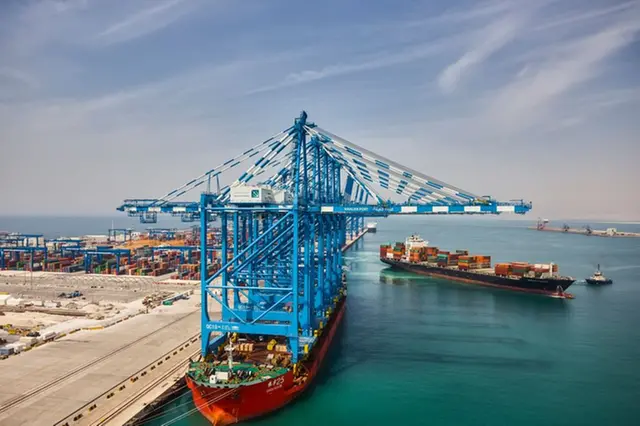
Abu Dhabi-based AD Ports Group has announced its largest acquisition to date, agreeing to purchase Brazilian agribulk terminal operator Corredor Logística e Infraestrutura (CLI) for AED 3.1 billion ($835 million). The landmark transaction not only marks AD Ports’ entry into Latin America but also significantly strengthens its ambitions to become a leading global food logistics provider.
The acquisition reflects a broader strategy by Gulf-based infrastructure and logistics companies to secure critical supply chains, diversify global operations, and strengthen food security links with some of the world’s largest agricultural producers.
If approved by regulators, the deal will give AD Ports access to key Brazilian export infrastructure that handles vast volumes of grains and sugar destined for international markets.
AD Ports Group’s Largest Acquisition
AD Ports Group described the purchase as its biggest acquisition since the company began its international expansion strategy.
The transaction involves the acquisition of CLI from its current shareholders:
- Macquarie Asset Management
- IG4 Capital
Upon completion, CLI’s existing management team is expected to remain in place, ensuring continuity of operations.
The deal is anticipated to close during the second half of 2026, subject to regulatory and antitrust approvals.
Who Is AD Ports Group?
AD Ports Group is one of the Middle East’s fastest-growing logistics and port operators.
The company manages:
- Ports
- Maritime services
- Economic zones
- Logistics operations
- Digital trade solutions
Headquartered in Abu Dhabi, the group plays a central role in the UAE’s strategy to become a global trade and logistics hub.
In recent years, AD Ports has expanded aggressively through acquisitions, partnerships, and international investments across Europe, Africa, Asia, and now Latin America.
Who Is CLI?
Corredor Logística e Infraestrutura, commonly known as CLI, operates critical export infrastructure within Brazil.
The company manages two strategically important agricultural export terminals located at:
- Port of Itaqui
- Port of Santos
These facilities handle significant volumes of:
- Sugar exports
- Grain exports
- Agricultural commodities
Brazil remains one of the world’s largest exporters of agricultural products, making CLI a valuable asset within global supply chains.
Why Brazil Matters to Global Food Trade
Brazil occupies a unique position in international agricultural markets.
The country is a leading exporter of:
- Soybeans
- Corn
- Sugar
- Coffee
- Meat products
Its agricultural output supports food security across multiple regions, including:
- Asia
- Europe
- Africa
- The Middle East
As demand for food continues rising globally, logistics infrastructure connecting producers and consumers becomes increasingly valuable.
Strategic Importance of the Port of Santos
The Port of Santos is Brazil’s largest and busiest port.
It serves as a primary gateway for:
- Agricultural exports
- Industrial products
- Containerized cargo
Because of its scale and connectivity, Santos plays a crucial role in international trade flows.
Access to infrastructure within Santos provides AD Ports with exposure to one of Latin America’s most important maritime hubs.
Strategic Importance of the Port of Itaqui
The Port of Itaqui has become increasingly important for agricultural exports originating from Brazil’s northern and central farming regions.
Advantages include:
- Efficient export routes
- Growing grain volumes
- Reduced transport distances for certain producers
The port has experienced significant growth as Brazil expands agricultural production.
Strengthening Food Logistics
One of the most significant aspects of the AD Ports CLI Acquisition is its focus on food logistics.
Why Food Logistics Matters
Food security has become a strategic priority for many countries, particularly those that import a large portion of their food requirements.
The UAE imports much of its food supply and therefore benefits from stronger connections to global agricultural producers.
Building Integrated Supply Chains
AD Ports plans to leverage CLI’s assets to create direct logistics links between Brazil and the UAE.
These links could strengthen cargo flows into:
- Khalifa Port
- Abu Dhabi Food Hub
Such integration would support more efficient agricultural supply chains between South America and the Gulf region.
Financial Performance Supports the Acquisition
CLI generated strong financial results in 2025.
Reported figures include:
- Revenue: AED 654 million ($178 million)
- EBITDA: AED 360 million ($98 million)
These results demonstrate the attractive margins often associated with infrastructure and port operations.
Why Infrastructure Assets Are Attractive
Port infrastructure businesses often benefit from:
- Long-term demand
- Strategic locations
- Stable cash flows
- High barriers to entry
These characteristics make them appealing investments for long-term growth.
AD Ports’ Broader Expansion Strategy
The CLI acquisition follows several major international transactions completed by AD Ports in recent years.
Notable deals include:
Noatum Acquisition
The company acquired Noatum to expand its European logistics footprint.
Global Feeder Shipping Investment
AD Ports also acquired a majority stake in Global Feeder Shipping to strengthen maritime connectivity.
These investments demonstrate the company’s strategy of building an integrated global logistics network.
Impact on UAE-Brazil Trade Relations
The acquisition could further strengthen commercial ties between:
- United Arab Emirates
- Brazil
Trade between the two countries has expanded steadily over the past decade.
Enhanced logistics infrastructure may support:
- Agricultural trade
- Investment flows
- Supply chain integration
- Food security initiatives
Why Gulf Investors Are Targeting Logistics Assets
Across the Gulf region, governments and state-backed companies increasingly view logistics infrastructure as a strategic asset class.
Key drivers include:
Economic Diversification
Reducing reliance on oil revenues.
Supply Chain Control
Improving resilience against global disruptions.
Trade Expansion
Capturing growth in international commerce.
Food Security
Ensuring stable access to agricultural products.
The AD Ports CLI Acquisition aligns closely with all four objectives.
AD Ports’ Strong Financial Momentum
The acquisition comes as AD Ports continues to report robust financial performance.
The company recently announced:
- Q1 2026 net profit of AED 653 million
- Year-on-year profit growth of 41%
Strong earnings provide additional support for the company’s expansion plans.
Key Takeaways
- AD Ports Group will acquire Brazilian logistics operator CLI for $835 million.
- The deal is the largest acquisition in AD Ports’ history.
- CLI operates major agricultural export terminals at Santos and Itaqui.
- The acquisition marks AD Ports’ entry into Latin America.
- Food logistics and supply chain integration are central motivations behind the transaction.
- Brazil’s position as a leading agricultural exporter enhances the strategic value of the deal.
- Regulatory approvals are still required before completion.
Internal Link Suggestions
Consider linking naturally using anchor text such as:
- AD Ports Group Expansion Strategy
- UAE Food Security Initiatives
- Largest Ports in the World
- Brazil Agricultural Exports
- Khalifa Port Overview
- Global Logistics Industry Trends
- UAE-Brazil Trade Relations
Read Also: List of All Airlines in the World
Outbound Source Suggestions
For additional authority and verification, consider referencing:
- AD Ports Group
- Abu Dhabi Securities Exchange
- Brazilian Ministry of Agriculture
- World Bank Trade Data
- International Maritime Organization
- UN Trade and Development (UNCTAD)
Frequently Asked Questions
What is CLI?
CLI (Corredor Logística e Infraestrutura) is a Brazilian agribulk terminal operator that manages export infrastructure at the Ports of Santos and Itaqui.
How much is AD Ports paying for CLI?
The transaction is valued at AED 3.1 billion, equivalent to approximately $835 million.
Why is this acquisition important?
It provides AD Ports with direct exposure to Brazil’s agricultural export sector and expands its logistics network into Latin America.
What products move through CLI’s terminals?
The terminals primarily handle agricultural commodities such as sugar and grains.
When will the acquisition be completed?
The transaction is expected to close in the second half of 2026, subject to regulatory approvals.
How does the deal support UAE food security?
The acquisition strengthens logistics connections between major agricultural exporters and UAE import infrastructure, helping secure long-term supply chains.
Conclusion
The AD Ports CLI Acquisition represents a major milestone in the UAE logistics giant’s international expansion strategy. By securing a foothold in Brazil’s agricultural export sector, AD Ports is not only entering Latin America for the first time but also strengthening its role within global food supply chains. As food security, trade diversification, and logistics resilience become increasingly important priorities worldwide, the acquisition positions AD Ports at the center of some of the most critical trade flows connecting South America, the Middle East, and global markets.