Overview
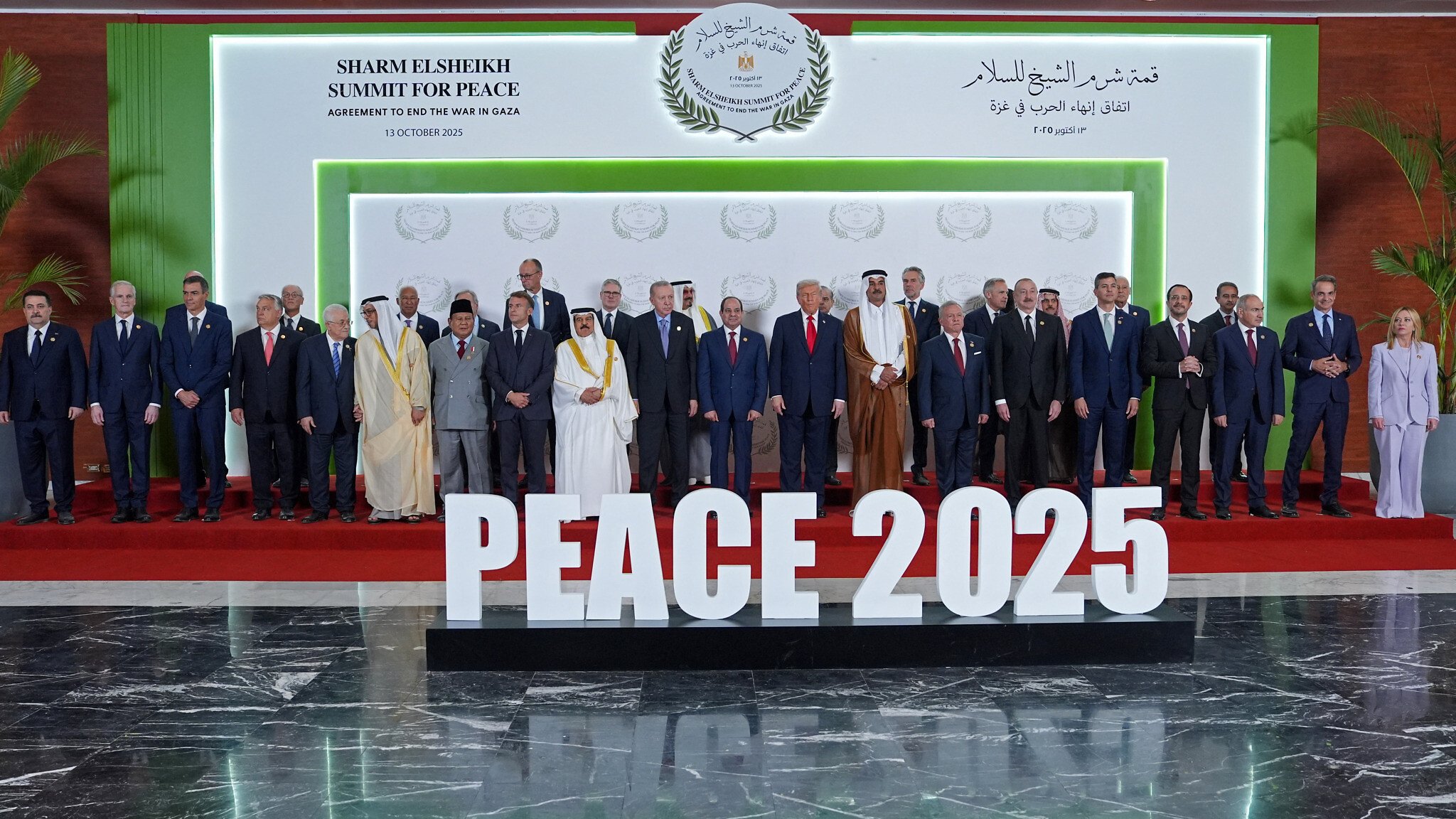
On October 13, 2025, world leaders gathered in Sharm El-Sheikh, Egypt, for a high-profile peace summit inspired largely by Donald J. Trump’s regional strategy. The event, co-chaired by President Abdel Fattah el-Sisi and Trump, drew more than 20 heads of state and government.
The summit marked a turning point in the Middle East peace efforts, especially for Gaza, and reflected Trump’s broader ambition to reshape Arab cooperation through diplomacy and economic reform.
Trump’s Plan and Its Role at the Summit
Trump presented a 20-point peace plan that aims to end the Gaza conflict and establish long-term regional stability.
Key parts of the plan include:
- Ending hostilities and withdrawing Israeli forces from Gaza.
- Releasing hostages and prisoners in the first phase.
- Creating an economic redevelopment zone with governance reforms, excluding Hamas.
- Building a regional partnership between Arab states and the U.S. to rebuild and normalize ties.
At the summit, this plan became the central focus. The Egyptian host statement described it as a joint Egyptian-American initiative to end the Gaza war and achieve a political settlement.
During his address, Trump urged regional leaders to “put old feuds behind us” and work together for peace. His message highlighted cooperation over confrontation and prosperity over division.
Why the Summit Matters for the Arab World
The Sharm El-Sheikh meeting carried strong symbolic and strategic weight for the Arab region.
1. Broad regional participation
Leaders from Jordan, Qatar, Turkey, France, the UK, Germany, and several Gulf nations attended. Their presence showed a rare regional unity.
2. Renewed U.S. influence
By leading the peace agenda, Trump reasserted America’s strategic role in the Arab world. The summit also showcased his use of diplomacy and redevelopment as tools for influence.
3. Linking peace with reconstruction
The plan connected ceasefire talks with Gaza’s economic recovery, making the Arab world an active partner instead of a passive observer.
4. Future Arab-Israeli normalization
Although Israel and Hamas did not attend, the framework opened doors for future normalization and long-term stability.
What Happened at Sharm El-Sheikh
El-Sisi and Trump co-chaired the summit, steering discussions on Gaza’s future and regional cooperation.
Participants signed a declaration endorsing Trump’s peace principles and the goal of rebuilding Gaza. The first phase emphasized hostage exchanges and humanitarian access.
Delegates also discussed Gaza’s reconstruction, oversight mechanisms, and foreign investment. While Israel’s Prime Minister Netanyahu and Hamas were absent, their roles remained central to future negotiations.
Challenges and Criticisms
Despite the optimism, several challenges emerged.
1. Missing key players
Israel’s and Hamas’s absence raised doubts about inclusivity and long-term success.
2. Security and governance concerns
Implementing new leadership structures in Gaza without Hamas will be difficult and could trigger resistance.
3. Unclear funding
Observers questioned how the massive reconstruction projects would be financed and managed.
4. Risk of failure
President El-Sisi called the proposal a “last chance” for peace, warning that any collapse might reignite conflict.
What the Summit Means for the Arab World and the U.S.
For Arab nations, the summit opened a path to shape regional order instead of reacting to external pressures. From the Gulf to North Africa, leaders saw peace and economic stability as interconnected goals.
For the United States, the summit showcased Trump’s intent to redefine American leadership in the Middle East. His focus on economic zones and investment reflects a pragmatic approach—using development as a foundation for peace.
Across Africa, including Kenya, the summit signaled shifting global diplomacy where Middle Eastern peace directly affects trade, investment, and security.
Outlook: What Comes Next
The peace process now moves into its implementation phase.
- Immediate goals: Exchange hostages, reopen crossings, and initiate Israeli withdrawal.
- Next steps: Begin reconstruction, establish governance reforms, and expand regional cooperation.
- Monitoring: International oversight teams will track progress and accountability.
- Success factors: Real peace depends on local support and genuine Palestinian involvement.
- Future implications: The summit’s outcome will shape how the world views U.S. influence in the Arab region.
Conclusion
The Sharm El-Sheikh Summit marked more than a diplomatic gathering—it embodied Trump’s strategy for reshaping the Arab world. By aligning major powers under a peace and redevelopment vision, the summit opened a potential new chapter in Middle Eastern diplomacy.
However, translating promises into results remains the real test. As President El-Sisi stated, “The process has begun, but the hard work starts now.”