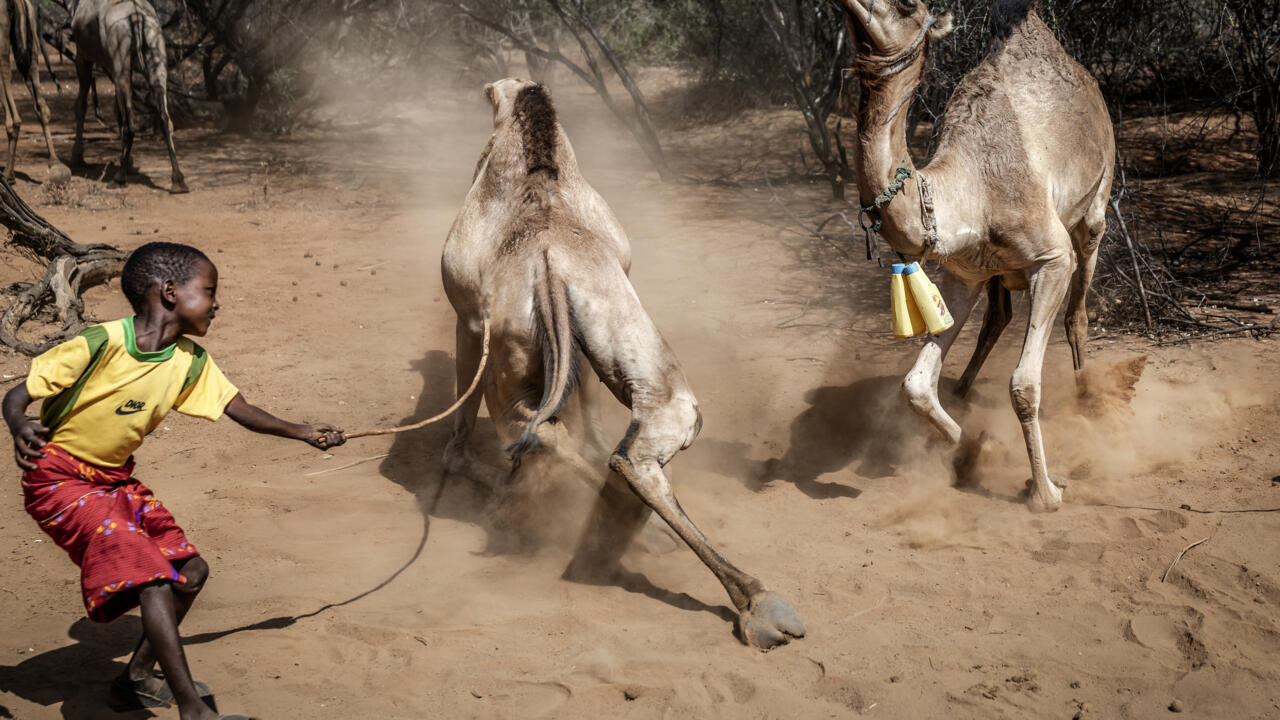
In the arid and semi‑arid lands (ASALs) of northern Kenya, pastoralists are abandoning the traditional cattle herds and embracing camels—an adaptation driven by worsening droughts, shrinking pastures and climate change. Over the last few years, the shift from cows to camels has gathered pace among communities such as the Samburu and the Turkana.
Drought’s Crushing Toll
Kenya’s north has seen successive poor rainy seasons. According to the National Drought Management Authority (NDMA), the dry‐spell that peaked in 2022 took a heavy toll on livestock: cattle die off, pastures shrank and water quantities dropped sharply.
In one striking example, a Samburu herder recounted how he lost nearly all his 30 cattle in a single drought and switched to 20 camels instead.
Cows, which require significant grazing land and regular water, increasingly cannot survive the harsh conditions. Camels, by contrast, tolerate sparse vegetation, longer intervals between watering, and high temperatures—making them far more resilient.
Why Camels?
Several advantages have made camels the preferred livestock in this climate:
- Water and feed efficiency: Camels can survive days without water and feed on shrubs and thorny plants that cattle typically avoid.
- Drought‐resistant productivity: Even during dry spells, camels continue to provide milk—a critical food and income source for households.
- Economic potential: Camel milk commands higher prices in urban Kenyan markets, and there’s growing demand from export channels.
In Samburu County, for example, a small camel may cost around 80,000–100,000 Kenyan shillings (about US $600–770), compared with 20,000–40,000 shillings (US $150–300) for a cow. Yet the camel’s return in milk and survival potential makes the investment worthwhile.
Government and Institutional Response
Recognising the shift in livestock viability, the Kenyan government has launched camel‐restocking programmes in counties like Marsabit County. For instance, 100 camels were distributed to vulnerable households in Kargi as part of a 400‑camel roll‐out plan across four constituencies.
The Kenya Agricultural & Livestock Research Organization (KALRO) is also promoting the Somali breed of camel for milk production, arguing that superior genetics can further boost yields and resilience.
Cultural Shift, Not Just Economic
Traditionally, among pastoral communities like the Samburu and Turkana, cattle hold cultural significance—used in dowries, ceremonies and as a measure of wealth. The move to camels, therefore, represents not only an economic adaptation but a cultural shift too.
One elder explained:
“Cows are too weak in these conditions.”
So he and his family raised camels—and now camels form their core herd even though they still keep a few cows for rituals.
Impact on Food Security and Pastoral Livelihoods
For many families, the shift has immediate benefits: milk supplies, nutrition for children, and a more stable asset base. Research shows that during droughts, households with camels fare far better than those with only cattle.
Camels also relieve pressure on rangelands and water resources, reducing the conflict and competition that arise when cattle herds compete for dwindling grazing.
Challenges Remain
Despite the advantages, the transition is not without obstacles:
- Initial cost: Camels are more expensive upfront than cattle.
- Training and veterinary care: Camels require specialised herding, milking and management techniques, and veterinary services tailored to them are still limited.
- Market access and value chains: While camel milk demand is growing, infrastructure for processing, packaging and transport is less developed.
- Cultural inertia: Some households remain attached to cattle for status and customs, and switching entirely to camels can feel like a loss of tradition.
- Land and water rights: The communal nature of grazing lands, increasing encroachment, and conflicts over water still threaten any livestock system.
What Happens Next?
For Kenya’s arid regions, the move toward camels may herald a broader transformation in pastoral systems. Key future steps include:
- Scaling restocking programmes and improving camel‐breeding infrastructure.
- Developing the camel dairy value chain: processing milk, reaching urban markets, and export opportunities.
- Enhancing herder training, veterinary services and climate‑resilient rangeland management.
- Supporting cultural transitions while preserving pastoral identity.
- Integrating this shift into broader climate‑adaptation and food‑security strategies.
Why This Matters for Climate Adaptation
Kenya’s livestock sector is deeply vulnerable to climate shocks. According to some estimates, droughts in 2022 caused losses of approximately 2.6 million cattle and damage worth 226 billion Kenyan shillings.
The camel transition offers a practical example of adaptation in action—pastoralists changing their livestock portfolio in the face of ecological disruption. It also offers wider lessons for other regions facing similar aridity and heat stress.
Final Thoughts
In northern Kenya’s dry plains, the image of a cow giving milk under a green pasture is fading. In its place, camels—once rare outside Somali herding communities—are becoming central to pastoral livelihood, survival and resilience. The shift reflects both desperation to survive and innovation to thrive.
Pastoral communities such as the Samburu and Turkana are not just rearing camels—they are rethinking how they live, how they relate to their land and how they ensure their children’s future. If they succeed, camels may truly become the “new cows” of Kenya’s arid frontiers—and a symbol of adaptation in a warming climate.