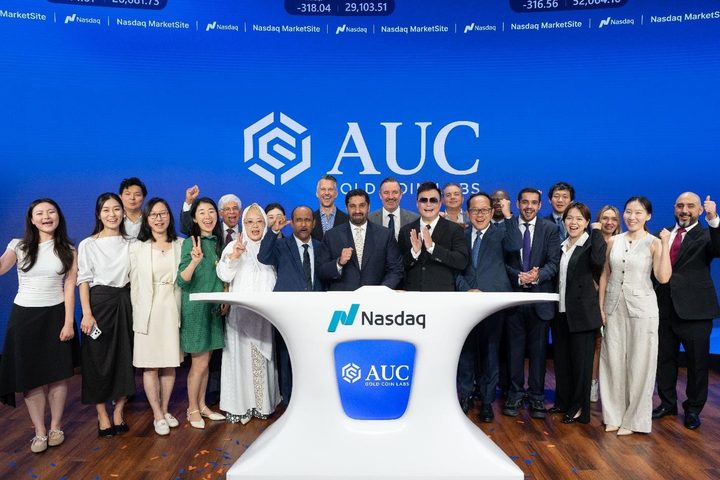
Investcorp fund activity in the Gulf is set to remain focused on family-owned businesses, corporate carve-outs and fast-growing regional companies preparing for their next stage of expansion, as the Bahrain-based alternative asset manager continues deploying capital through its $750 million Golden Horizon Cooperation Fund.
The fund, launched with China Investment Corporation, has become one of Investcorp’s main private equity platforms for growth investments across the GCC and China. According to the latest update from the firm, around half of the fund has already been deployed, with roughly $350 million expected to be invested across three to four additional companies in the Gulf by June 2028.
The strategy reflects a wider shift in Gulf private equity. Regional family businesses are no longer approaching institutional investors only because they need capital. Many are looking for governance support, acquisition capability, cross-border expansion, pre-IPO preparation and professional management structures that can help them compete at a larger scale.
For Investcorp, that creates an opportunity to act as more than a financial investor. The firm is positioning itself as a growth partner for companies that already have strong local roots but need institutional backing to expand across markets, execute mergers and acquisitions, or prepare for a possible public listing.
The fund’s target sectors include consumer, healthcare, transportation and logistics, and business services. These areas align closely with economic diversification plans across the Gulf, where governments are investing heavily in private-sector growth, technology adoption, healthcare capacity, logistics infrastructure and capital-market development.
Why the GCC Remains Central to Investcorp’s Strategy
The Gulf has become one of the most active private capital markets in emerging markets, supported by economic reforms, sovereign wealth activity, capital-market expansion and the growth of founder-led and family-owned businesses. Saudi Arabia, the UAE and other GCC economies are increasingly producing companies that are large enough to attract institutional capital but still have room to scale.
Investcorp’s current GCC strategy is built around that gap. Many family-owned firms in the region have strong market positions, loyal customer bases and sector knowledge, but they may need institutional governance, formal reporting systems, digital transformation, acquisition support and board-level strategic guidance.
That is where private equity can play a role. In many cases, Investcorp becomes the first institutional investor to sit alongside a founding family. The objective is not simply to inject money into the company, but to help it professionalise operations and prepare for a bigger phase of growth.
This approach is particularly relevant in the GCC, where family businesses account for a large share of private-sector activity. Many of these firms are now facing generational transition, succession planning, technology disruption and regional expansion opportunities. Institutional capital can help them move from founder-led structures to professionally managed platforms.
Investcorp has also indicated that it will continue to look at companies with significant exposure to Saudi Arabia. That focus is unsurprising. Saudi Arabia remains the region’s largest economy and one of its most active growth markets, supported by Vision 2030 reforms, rising consumer demand, digital investment and deeper capital markets.
Golden Horizon Fund and the China-GCC Link
The Golden Horizon Cooperation Fund is important because it is not only a GCC private equity vehicle. It is also designed to deepen investment links between the Gulf and China. The fund targets high-growth companies in both regions and is backed by China Investment Corporation, one of the world’s largest sovereign wealth funds.
This China-GCC angle gives the platform a cross-border strategic purpose. Gulf companies increasingly want access to technology, manufacturing, logistics networks and consumer channels connected to Asia. Chinese companies, meanwhile, are looking at the Gulf as a growth region for investment, production, distribution and expansion.
For portfolio companies, this can create practical value. A GCC business backed by the fund may gain access to cross-border networks, strategic partnerships and expansion support. A Chinese company may use Gulf investment links to enter Saudi Arabia, the UAE or wider Middle East markets.
Investcorp’s participation in the Hong Kong listing of Chuangxin Industries through the Golden Horizon platform illustrated this broader strategy. The company’s IPO plans included investment into Saudi Arabia, showing how the platform can connect capital, industrial expansion and market access between China and the Gulf.
In a private equity market where investors increasingly need to offer more than capital, cross-border access is a powerful selling point. It allows Investcorp to position the Golden Horizon fund as both a financial vehicle and a strategic bridge between two important growth regions.
Family Businesses at the Centre of the Deal Pipeline
Family-owned companies remain one of Investcorp’s main targets in the Gulf. The firm has said that more than 60% of its regional investments have been made alongside family businesses, reflecting the structure of the GCC economy and the opportunity to professionalise successful founder-led firms.
These companies are often not short of cash. Instead, they may need help with governance, M&A, reporting, technology investment, regional expansion and IPO readiness. A family business that has grown successfully in one market may want to expand across the GCC but lack the internal systems required to manage a larger platform.
Private equity can help address that problem by introducing board discipline, performance monitoring, acquisition strategy, financial planning and institutional governance. This is particularly important when a company is preparing for a listing, because public markets require transparency, predictable reporting and stronger governance structures.
Investcorp’s model appears to focus on partnership rather than control alone. For family businesses, that can be attractive because it allows founders to retain identity and influence while gaining access to institutional expertise. The challenge for investors is to balance professionalisation with respect for family legacy, culture and decision-making history.
The recent investment in Metra, a UAE-headquartered value-added IT distributor and third-generation family business, fits this theme. Metra’s regional footprint, technology portfolio and Gulf expansion potential make it the type of platform that private equity investors increasingly favour: established, profitable, locally rooted and exposed to long-term digital demand.
Corporate Carve-Outs Create New Private Equity Opportunities
Another important part of Investcorp’s pipeline is corporate carve-outs. Across the GCC, large conglomerates often own non-core business divisions that may no longer fit their long-term strategy. As these groups sharpen their focus, they may choose to sell or spin off such divisions.
For private equity firms, carve-outs can be attractive. A non-core division may already have revenue, customers, staff and operational history, but may perform better as an independent company with focused management and fresh investment. Private equity can provide the capital, governance and strategic support required to unlock that value.
Investcorp expects carve-outs to contribute a meaningful share of its pipeline going forward. This fits a broader global private equity trend, where investors look for assets that can be separated from large groups and repositioned for growth.
In the GCC, the opportunity is particularly relevant because many conglomerates were built over decades across multiple sectors. As markets mature, some groups are choosing to concentrate on core industries, creating openings for investors to acquire divisions that may have stronger prospects outside the parent company.
The challenge is execution. Carve-outs require careful separation of operations, contracts, employees, technology systems, supply chains and financial reporting. They can be complex, but when done well, they can create independent companies with clearer strategies and stronger growth prospects.
From Venture Capital to IPO: Filling the Growth Gap
Investcorp is also looking at homegrown regional companies that have grown beyond venture capital but are not yet large enough for traditional buyout funds. This is one of the most important funding gaps in the Gulf and wider Middle East.
Over the past decade, the region has produced a growing number of technology and digital businesses. Many started with venture capital funding, scaled quickly and built strong customer bases. But as they mature, their capital needs change. They may need larger cheques, governance support, regional expansion strategy and preparation for public markets.
That is where growth equity investors such as Investcorp can step in. These companies may not yet be ready for a full IPO, but they may be too large or too mature for typical early-stage venture capital. Growth equity can help them bridge the gap.
Salla, the Saudi e-commerce enablement platform, is a clear example of this theme. Investcorp led a $130 million pre-IPO investment round in the company, which provides software tools that help merchants build and manage online stores. The investment fits the broader pattern of backing regional companies that have moved past start-up status and are preparing for institutional scale.
TruKKer, a digital freight platform, is another example of Investcorp’s interest in companies that sit at the intersection of technology, logistics and regional scale. These businesses reflect the next phase of Gulf private capital: not just backing early disruption, but helping proven platforms become IPO-ready regional champions.
Healthcare Emerges as a Major Investment Theme
Healthcare is expected to become one of Investcorp’s biggest GCC investment themes under the Golden Horizon strategy. The firm is particularly interested in specialist healthcare providers, including diagnostics, laboratories and focused medical services.
This reflects a wider regional trend. Gulf governments are investing in healthcare systems, while private-sector demand is rising due to population growth, ageing demographics, lifestyle-related diseases, medical tourism ambitions and demand for specialised care. The sector also offers consolidation opportunities because many providers remain fragmented.
For private equity firms, specialist healthcare can be attractive because it combines recurring demand with opportunities for operational improvement. A diagnostics or laboratory platform, for example, can be scaled through acquisitions, technology upgrades, geographic expansion and partnerships with insurers or hospital groups.
Investcorp has indicated that government hospital privatisations may be more suitable for infrastructure platforms, while its private equity strategy is likely to focus on specialist providers that can be scaled and eventually sold or listed.
The opportunity is significant, but healthcare investing requires discipline. Investors must navigate regulation, clinical quality, patient safety, pricing pressure, insurance relationships and talent shortages. A successful healthcare platform must deliver both financial growth and reliable care standards.
Saudi Arabia Remains the Key Growth Market
Although Investcorp is open to investments across the GCC, Saudi exposure is expected to remain a major priority. The kingdom’s size, reform momentum and capital-market development make it central to the region’s private equity story.
Saudi Arabia has been actively encouraging private-sector growth, digital transformation, logistics expansion, healthcare investment and stock-market listings. That creates a strong environment for companies looking to scale and for investors seeking exit routes through Tadawul.
Investcorp has previously taken several companies public in Saudi Arabia, including L’azurde, Theeb Rent a Car, Leejam Sports Company and BinDawood Holding. These listings provide a track record that supports the firm’s pitch to family businesses and growth companies considering an eventual IPO.
For business owners, a private equity partner with listing experience can be valuable. Preparing for an IPO is not only about valuation. It requires governance upgrades, audited financials, management depth, investor relations, compliance, reporting systems and a credible growth story.
Saudi Arabia’s growing investor base and market reforms make IPO preparation a more realistic objective for regional companies than it was a decade ago. That strengthens the case for pre-IPO and growth equity funds.
Why This Matters for GCC Private Equity
Investcorp’s continued deployment through the Golden Horizon fund highlights several important shifts in GCC private equity.
First, the region is moving from passive capital to active ownership. Investors increasingly want to help companies professionalise, expand and prepare for exits.
Second, family businesses are becoming more open to institutional partnerships. This is partly driven by succession planning, competition, technology disruption and the need to scale across borders.
Third, the line between venture capital and private equity is becoming more important. Many regional scale-ups are now too mature for venture funding but still need growth capital before an IPO or strategic sale.
Fourth, sector selection is becoming more disciplined. Consumer, healthcare, logistics, business services and technology-linked platforms are attracting attention because they align with demographic, digital and economic diversification trends.
Finally, exit planning is now central to the investment thesis. Investors are not only buying into companies; they are thinking about how those companies can later be listed, sold to strategic buyers or merged into larger platforms.
Risks and Challenges Ahead
Despite the opportunity, Investcorp’s strategy is not without risk. Private equity investors in the GCC must navigate valuation expectations, family governance dynamics, regulatory differences, market cycles and geopolitical uncertainty.
Family businesses can be attractive, but governance transitions are sensitive. Founders may welcome capital while resisting operational change. Succession issues may complicate decision-making. Professionalisation can take time, especially where informal systems have worked for decades.
Valuation is another challenge. High-quality Gulf assets are increasingly competitive. With sovereign funds, family offices, regional private equity firms and international investors all looking for deals, pricing discipline will matter.
Healthcare and technology also carry sector-specific risks. Healthcare requires regulatory compliance and clinical quality controls. Technology distribution faces margin pressure, vendor concentration and fast-moving product cycles. Logistics businesses may be exposed to fuel costs, regulatory change and competitive pricing.
Still, Investcorp’s long regional experience and global platform may help it manage these challenges. The firm’s ability to combine capital, governance, M&A support and exit planning is central to its value proposition.
Outlook for the Investcorp Fund
The Investcorp fund strategy points to a more mature phase of private equity in the GCC. The next wave of deals is likely to focus on established businesses with strong regional fundamentals rather than early-stage risk alone.
Family-owned companies, healthcare providers, technology distributors, logistics platforms, business services firms and pre-IPO digital companies are likely to remain attractive targets. Saudi Arabia will probably continue to dominate the pipeline, but UAE-based platforms with regional reach will also remain important.
The remaining $350 million expected to be deployed by June 2028 gives Investcorp room to pursue larger growth investments across a concentrated group of companies. That suggests the firm will continue to be selective, focusing on businesses where it can influence governance, expansion and exit readiness.
For the GCC market, the message is clear: private equity is becoming a more strategic partner for companies that want to scale beyond local success. For family firms and homegrown platforms, the right investor can provide more than funding. It can help turn a strong regional business into an institutional company ready for acquisitions, cross-border growth or a public listing.
Conclusion
Investcorp’s $750 million Golden Horizon Cooperation Fund is becoming a key vehicle for the firm’s next phase of GCC dealmaking. With around half the fund already deployed and about $350 million still expected to be invested by June 2028, the platform gives Investcorp significant firepower to back family businesses, carve-outs and growth-stage companies.
The focus on family firms reflects the structure of the Gulf economy, where many successful private companies are now preparing for generational transition, regional expansion and more professional governance. The emphasis on healthcare, logistics, business services and technology-linked platforms also mirrors the region’s broader economic transformation.
For Investcorp, the opportunity lies in helping companies move from local strength to institutional scale. For the GCC, the strategy signals a deeper private equity market where capital, governance, M&A and IPO preparation are increasingly connected.
The Investcorp fund is therefore more than a pool of capital. It is a sign of where Gulf private equity is heading: toward family-business transformation, specialist sector consolidation, China-GCC investment links and the creation of companies ready for regional and public-market growth.
FAQs
What is the Investcorp Golden Horizon Cooperation Fund?
The Investcorp Golden Horizon Cooperation Fund is a $750 million investment platform backed by Investcorp and China Investment Corporation. It targets high-growth companies across the GCC and China, especially in sectors such as consumer, healthcare, transportation and logistics, and business services. The fund is designed to support companies that have strong growth potential and can benefit from institutional capital, governance support, expansion strategy and cross-border opportunities. It also reflects the growing investment relationship between the Gulf and China.
How much of the Investcorp fund has already been deployed?
According to the latest update, around half of the $750 million Golden Horizon fund has already been deployed. Investcorp expects to invest roughly $350 million more across three to four companies in the GCC by June 2028. This suggests a concentrated investment approach rather than a large number of smaller deals. The firm appears focused on businesses where it can provide strategic support, help professionalise operations and prepare companies for expansion, M&A or potential public listings.
Why is Investcorp focusing on GCC family businesses?
Investcorp is focusing on GCC family businesses because many of them are strong, profitable and well-established but need institutional support to scale. These companies may not be capital constrained, but they often need help with governance, professional management, acquisitions, regional expansion and IPO readiness. Family businesses are central to the Gulf economy, and many are now facing succession planning and transformation decisions. Private equity can help them move from founder-led structures to more institutional platforms.
Which sectors is Investcorp targeting in the GCC?
Investcorp is targeting sectors such as consumer, healthcare, transportation and logistics, business services and technology-linked platforms. Healthcare is expected to become a major theme, especially specialist providers such as diagnostics and laboratories. Logistics and transport remain attractive because of the Gulf’s role as a regional trade hub. Business services and technology distribution are also important because companies across the region are investing in digital transformation, cybersecurity, cloud infrastructure, AI and enterprise systems.
Why is Saudi Arabia important to Investcorp’s strategy?
Saudi Arabia is important because it is the GCC’s largest economy and one of the region’s strongest growth markets. The kingdom is investing heavily in private-sector development, technology, logistics, healthcare and capital-market growth. It also offers a more active IPO environment through Tadawul. Investcorp has previously listed portfolio companies in Saudi Arabia, including L’azurde, Theeb, Leejam and BinDawood. That track record supports its strategy of backing companies that may eventually pursue public listings.
What are corporate carve-outs?
Corporate carve-outs happen when a larger company sells or separates a business division that is no longer central to its strategy. For private equity firms, carve-outs can be attractive because the division may already have customers, revenue and operations but may perform better as an independent company. In the GCC, many conglomerates own multiple businesses across different sectors. As they sharpen their focus, non-core divisions may become investment opportunities for firms such as Investcorp.
Why is healthcare attractive to private equity in the GCC?
Healthcare is attractive because demand is rising across the region due to population growth, lifestyle-related diseases, ageing demographics and government efforts to expand healthcare capacity. Specialist healthcare providers such as diagnostics, laboratories and focused medical services can often be scaled through acquisitions, technology upgrades and regional expansion. However, healthcare investing requires careful attention to regulation, clinical quality, patient safety and workforce needs. For private equity, the sector offers growth potential but also requires disciplined execution.
What does pre-IPO investing mean?
Pre-IPO investing refers to investing in a private company before it lists on a stock exchange. Investors usually back companies that have reached a certain scale and may be preparing for a public listing in the future. Pre-IPO capital can help companies improve governance, expand operations, strengthen financial reporting and build market credibility. Investcorp’s investments in companies such as Salla and TruKKer show how growth equity can support regional businesses before they reach the public-market stage.
What does Investcorp bring besides capital?
Investcorp brings governance support, board experience, M&A expertise, regional and global networks, institutional discipline and exit planning. For family businesses and scale-ups, this can be as important as the funding itself. A company preparing for regional expansion or IPO readiness needs stronger reporting, management depth, compliance systems and strategic planning. Investcorp’s role is to help companies become more professional, scalable and attractive to future investors or buyers.
What is the outlook for GCC private equity?
The outlook for GCC private equity remains strong, supported by economic diversification, family-business transformation, sector consolidation, digital growth, healthcare demand and deeper capital markets. However, investors must remain disciplined on valuations, governance and execution risk. The most attractive companies are likely to be those with strong local roots, clear growth potential, capable management and realistic exit paths. Investcorp’s Golden Horizon strategy reflects this shift toward more mature, strategic and institutionally supported private equity in the Gulf.
Read Also: World Cup Top Scorers and the Goals That Made History