How Dr. Hamis Kiggundu’s Leadership Is Reshaping Continental Trade Dynamics
A Vision Rooted in Africa, Bridging to the Gulf
On the outskirts of Kampala, amid Uganda’s undulating farmland and new industrial estates, a quiet transformation is taking shape. The name Ham Agro-Processing Industries now appears on architectural drawings, construction sites, and policy briefings, an emblem of a wider continental ambition: to turn Africa’s agricultural abundance into structured, value-driven wealth.
At the center of this transformation stands Dr. Hamis Kiggundu, an entrepreneur whose work connects two worlds, the fertile soils of East Africa and the sophisticated markets of the Arabian Gulf. His decision to establish a Dubai-based subsidiary of Ham Agro-Processing Industries signaled more than an expansion; it represented a deliberate bridge between regions that, though economically different, share a common vision for food security, industrial diversification, and sustainable growth.
From Domestic Roots to Continental Reach
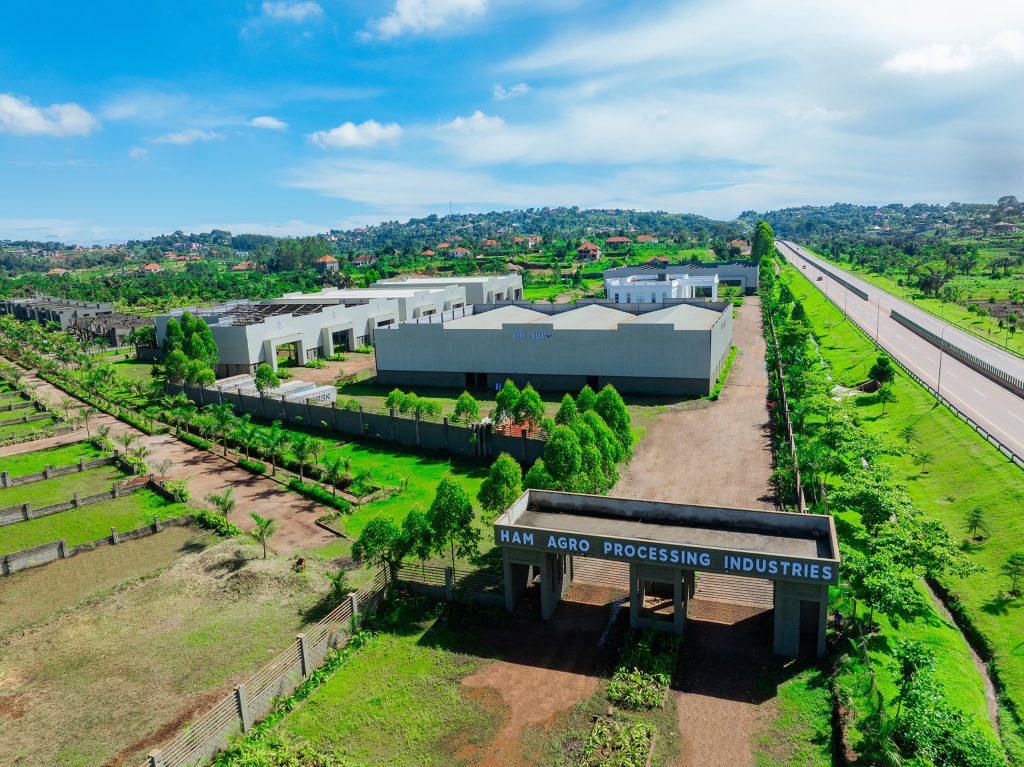
Uganda’s economy has long been anchored in agriculture. Yet for decades, much of its produce left the country as raw material, depriving farmers and the national treasury of added value. Ham Agro-Processing Industries emerged as a practical response to this challenge, an initiative built on the belief that industrialization must begin where production starts.
Dr. Kiggundu’s model divides Uganda into ten integrated agro-processing industrial zones, each tailored to its unique ecological strengths, from the highland ranges of the southwest to the dry grasslands of the northeast. Within these zones, Integrated Agro-Processing Industrial Parks (IAIPs) are being developed to house clusters of small, medium, and large processing units. The infrastructure blueprint is detailed: cold storage, laboratories, paved logistics roads, quality-control centers, packaging facilities, and export offices.
By localizing processing capacity, the initiative seeks to bridge Uganda’s long-standing gap between farm and market—ensuring that farmers participate directly in value creation rather than merely supplying raw commodities. In this respect, Ham Agro-Processing Industries serves both as an enterprise and as a national experiment in structural economic reform.
Leadership Framed by Economic Realism
In conversation and in writing, Dr. Kiggundu frequently invokes two principles; reason and reality—as the compass of his business philosophy. His approach departs from speculative enterprise and instead follows the logic of demand and supply, where every investment must rest on a verifiable market.
This realism underpins his decision to anchor the company’s export operations in the United Arab Emirates. The UAE’s well-developed logistics network, multimodal ports, and global air-freight capacity make it a natural distribution hub for value-added agricultural goods. More importantly, the Gulf’s sustained demand for food imports complements Uganda’s production capacity, forming an economic symmetry of necessity and opportunity.
“The UAE is a desert that needs to be fed,” he once remarked. “Uganda can feed that desert.”
That concise statement captures the logic driving Ham Agro-Processing’s foreign positioning, logistics and marketing hub in Dubai serving as the conduit between East Africa’s producers and the Gulf’s consumers.
The Infrastructure of Transformation
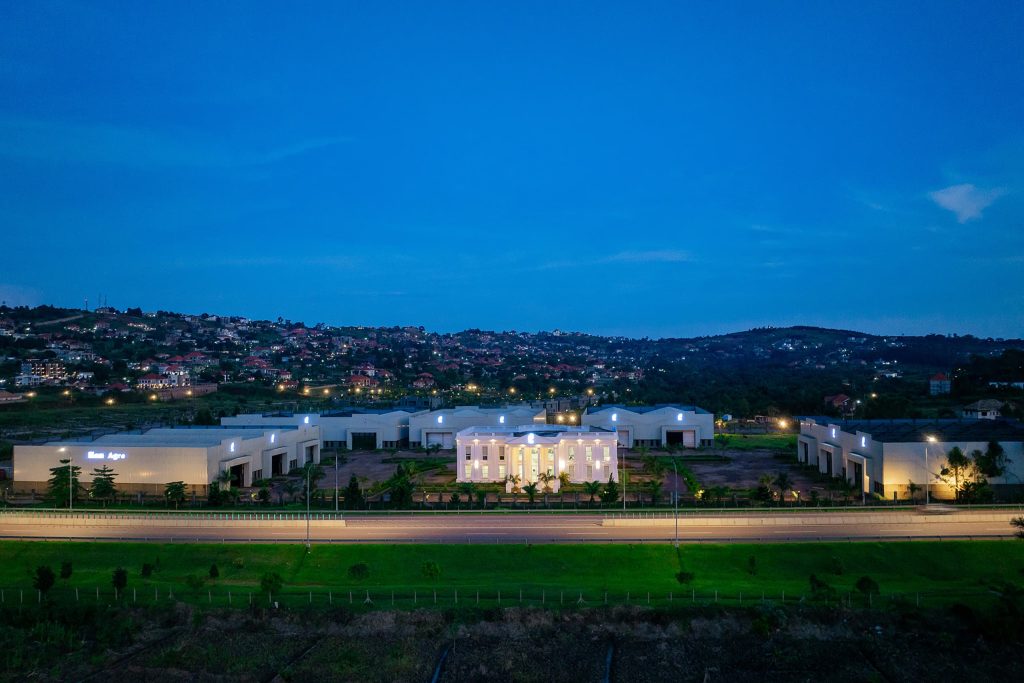

Behind the vision lies a complex financial and engineering plan. Each industrial park requires between USD 156 million and 200 million, combining private equity and public-sector partnership. The pilot site at Akright City, Uganda’s emerging smart township—already represents a private investment exceeding USD 55 million, complemented by expected government participation in infrastructure and machinery procurement.
The parks are designed not merely as factories but as micro-cities of production: paved roads for heavy trucks, 24-hour container yards, laboratories for quality testing, banking and customs offices, water-treatment systems, and energy-efficient power grids. Future ancillary units, packaging, transport, and digital marketing—are planned to grow around the core operations, ensuring that entire value chains are domesticated within the Ugandan economy.
Such an ecosystem carries broader implications. It strengthens rural employment, raises tax revenues, and gradually shifts Uganda’s trade balance toward manufactured exports. By multiplying this model across ten zones, Ham Agro-Processing Industries aims to anchor what economists call “inclusive industrialization,” development that ties national growth to household income.
The UAE Connection: A New Corridor of Trade
The establishment of Ham Agro-Processing Industries LLC in Dubai extends this agenda onto the international stage. From its vantage in the Gulf, the company is developing warehousing, cold-chain logistics, and quality-assurance facilities to handle Uganda’s processed goods for re-export to markets in the Middle East, Asia, and Europe.
The UAE, with its population of nearly ten million and one of the world’s highest import ratios for food, provides a steady demand base. Its world-class transport corridors; Jebel Ali Port, Khalifa Port, and Emirates SkyCargo, position it as a global interchange between producers and consumers. For Uganda, the partnership promises more than export revenue; it creates knowledge exchange in standards, technology, and trade finance.
Economists view this linkage as a prototype for South-South cooperation—a model where emerging economies build complementary strengths rather than depend solely on Western supply chains. By aligning Uganda’s agricultural potential with the Gulf’s logistics power, Ham Agro-Processing articulates a fresh narrative of continental interdependence.
A Broader Ecosystem of Industrial Growth
Dr. Kiggundu’s ventures extend beyond agro-processing. His portfolio includes Hamz Stadium, inaugurated in 2024 by President Yoweri Museveni, a modern facility that doubles as both a sporting and civic landmark. The White House replica in Akright City, his firm’s administrative headquarters, symbolizes architectural ambition fused with national pride. The Ham Palm Villas estate, offering over a thousand luxury residences, represents his experiment in integrating real estate with community planning.
Together, these projects illustrate a recurring motif: building tangible infrastructure as a catalyst for intangible progress. Yet Ham’s signature initiative remains agro-industrialization, where tangible assets meet the fundamentals of economic transformation.
Economic Impact and Social Resonance
Uganda’s tax base remains narrow, with fewer than four million active taxpayers in a nation of nearly fifty million people. Agriculture employs over two-thirds of the population but contributes minimally to direct taxation. The Ham Agro-Processing program addresses this asymmetry by converting subsistence producers into market participants; each sale, wage, and export translating into measurable fiscal growth.
Independent analysts estimate that full implementation of the ten-zone model could create up to 25 million direct and indirect jobs over the next decade. Beyond employment, the initiative promotes import substitution, processing locally grown grains, oil seeds, and fruits that currently arrive in Uganda as finished imports.
This dual orientation, toward both domestic supply and foreign demand, aligns with regional frameworks under the East African Community (EAC) and COMESA, while positioning Uganda for preferential access to European and Gulf markets under existing trade accords.
Institutionalizing Finance: The Forthcoming Ham Agro Bank
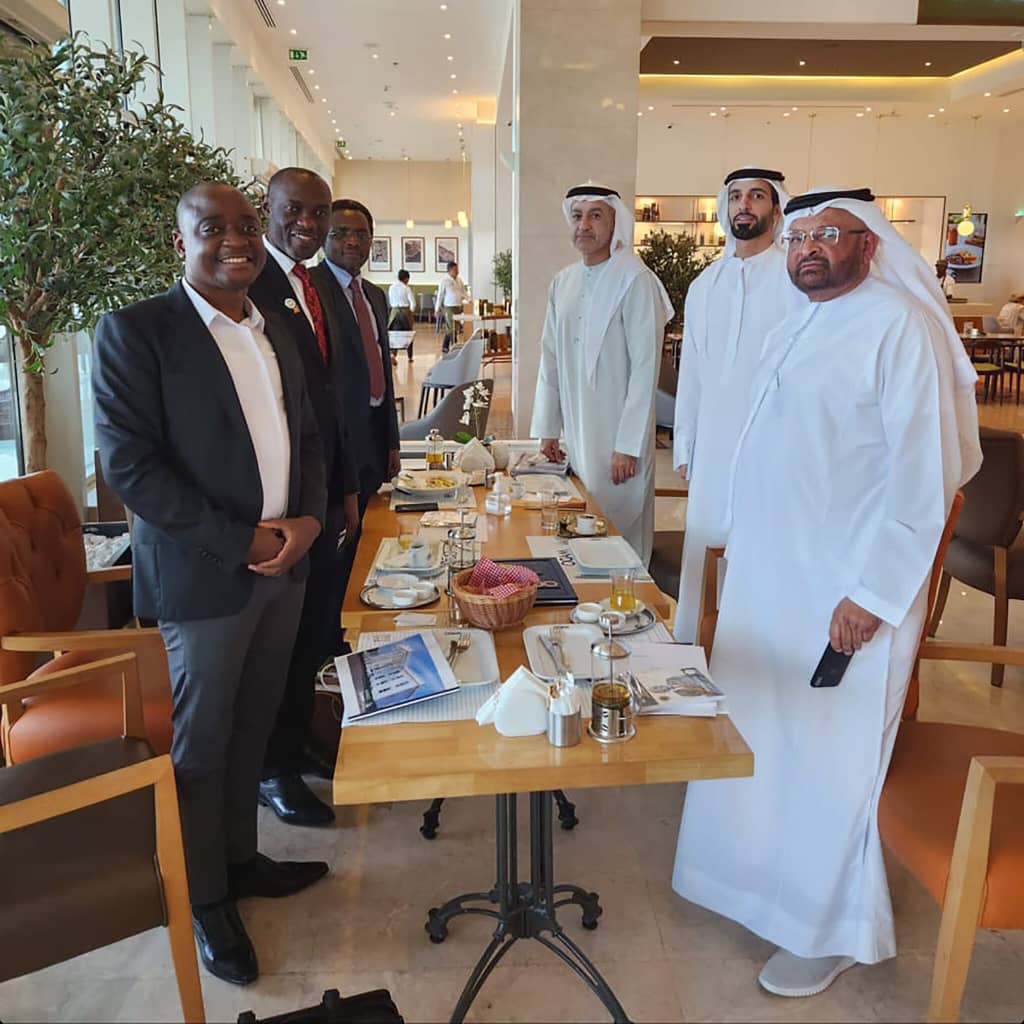
To sustain this ecosystem, the group plans the establishment of Ham Agro Bank, a specialized agricultural financial institution designed to extend credit through produce-backed instruments rather than conventional cash loans. Farmers would access machinery, inputs, and logistics services repayable in kind, a structure intended to bypass high commercial lending rates and short-term banking cycles that have historically constrained agricultural investment in Africa.
Discussions with potential Gulf-based investors signal a growing recognition that food security and agribusiness finance are strategic sectors for both regions. Should the bank materialize, it could serve as a continental prototype for commodity-anchored credit systems.
Challenges and the Road Ahead
The scale of Ham Agro-Processing’s ambition naturally invites scrutiny. Financing such expansive infrastructure requires coordinated public-private partnership, regulatory agility, and sustained political support. Supply-chain logistics across multiple regions, each with varying productivity levels, pose additional challenges.
Yet, viewed through the lens of continental economics, these obstacles mirror those faced by other industrial pioneers in Asia and the Middle East during their early modernization phases. The difference lies in whether Uganda and its partners can maintain momentum long enough for the projects to reach self-sustaining operation.
A Case Study in Visionary Pragmatism

Dr. Hamis Kiggundu’s leadership defies easy categorization. He operates as both industrialist and reformist, merging entrepreneurial drive with policy-level advocacy. His writings and interviews consistently return to a single thesis: that economic independence begins with production and ends with value addition.
Observers note that his initiatives reflect a form of visionary pragmatism, ambitious in scale yet anchored in measurable outcomes. By pursuing agro-industrialization through private initiative rather than waiting for public programs, he exemplifies a rising generation of African entrepreneurs redefining development from within.
“Agro-processing and value addition is my biggest project,” he once said, “aiming to improve the Ugandan economy and provide sustainable income for locals.”
Where Futures Converge
As construction cranes rise across Akright City and planning teams convene in Dubai, Ham Agro-Processing Industries stands as more than a single enterprise. It is a framework, a proof of concept for how African economies can capture greater value from what they already produce, and how Gulf economies can diversify beyond hydrocarbons through mutually beneficial partnerships.
In that convergence lies the enduring relevance of Dr. Hamis Kiggundu’s vision: an Africa that builds its future not in isolation, but through intelligent alignment with the world’s evolving economic centers. If realized, the legacy of Ham Agro-Processing Industries will not be measured solely in factories or exports, but in the quiet redefinition of how nations at the equator and nations by the gulf understand prosperity itself.
“Economic independence begins with production and ends with value addition.”