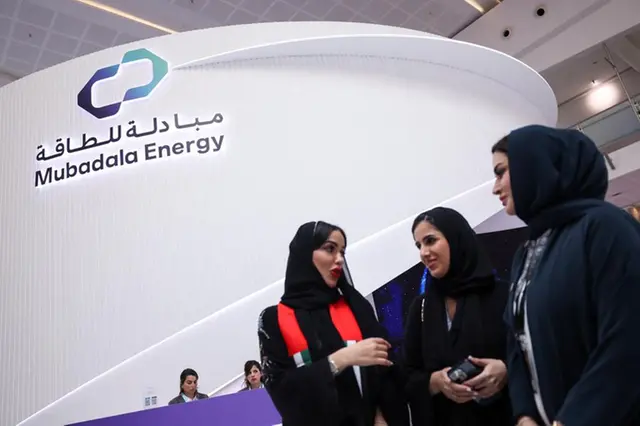
Mubadala Energy has joined a $9.75 billion project financing package supporting construction of the Commonwealth LNG export facility in Louisiana, marking another major international energy investment by Abu Dhabi’s sovereign-backed energy sector.
The financing package supports the development of the Commonwealth LNG terminal through the Caturus energy platform, in which Mubadala Energy holds a 24.1% stake.
The project represents one of the largest recent LNG infrastructure financings tied to the United States export market and reflects continued global demand for long-term liquefied natural gas supply capacity.
The investment consortium includes US-based alternative asset manager Kimmeridge, CPP Investments and several major infrastructure and institutional investors.
The financing allows US energy company Centaur and the Caturus platform to move forward with full construction of the Louisiana-based LNG export facility.
Mubadala Energy Expands Global Gas Investment Strategy
The Commonwealth LNG project highlights Mubadala Energy’s growing focus on international natural gas infrastructure.
The company operates as a wholly owned subsidiary of Mubadala Investment Company, one of the Middle East’s largest sovereign investment groups.
Analysts say Gulf sovereign wealth funds increasingly view LNG as a strategically important transition fuel capable of supporting long-term global energy demand while economies gradually shift toward lower-carbon systems.
Mubadala Energy’s participation also reflects the increasing role of Gulf capital in financing global energy infrastructure beyond traditional oil production.
The company has steadily expanded its international energy portfolio across gas, LNG and energy transition investments in recent years.
Industry observers say the Louisiana project provides Mubadala Energy with long-term exposure to North American LNG exports at a time when global energy security concerns continue driving demand for diversified supply sources.
Commonwealth LNG Project Targets 9.5 Million Tonnes Capacity
The Commonwealth LNG facility is expected to produce approximately 9.5 million tonnes of liquefied natural gas annually once operational.
Construction can now officially proceed after the project secured total commitments of approximately $21.25 billion from debt and equity investors.
That broader financing package combines infrastructure capital, institutional investment and strategic energy sector participation.
According to Mubadala Energy, Phase 1 of the development is projected to generate more than $3 billion in annual export revenue once operations begin around 2030.
The facility will export LNG from Louisiana to international markets including Europe and Asia, regions that continue seeking stable long-term natural gas supply arrangements following years of global energy market volatility.
Analysts say LNG demand remains strong despite the broader energy transition because many economies still rely heavily on natural gas for electricity generation and industrial activity.
Global Energy Companies Lock in Long-Term LNG Supply
The project has already secured long-term offtake agreements with several major global commodity trading and energy companies.
Participants include:
- Glencore
- Mercuria
- Petronas
- Aramco Trading
- EQT
The presence of long-term buyers significantly improves financing confidence because it guarantees future demand for LNG production.
Analysts say securing offtake agreements has become one of the most critical components of LNG infrastructure financing.
Large export terminals require billions of dollars in upfront capital and therefore depend heavily on stable long-term purchase contracts to secure debt financing.
The Commonwealth LNG project appears to have achieved that benchmark successfully.
US LNG Sector Continues Attracting Global Capital
The Mubadala Energy-backed financing also highlights the continued strength of the United States LNG export sector.
Over the past decade, the US has emerged as one of the world’s largest LNG exporters due to abundant shale gas production and rising international demand.
American LNG projects have attracted substantial foreign investment from sovereign wealth funds, infrastructure investors and global commodity traders.
The Russia-Ukraine conflict and broader energy security concerns accelerated European and Asian interest in long-term LNG supply diversification.
As a result, Gulf sovereign investors are increasingly positioning themselves within global gas logistics and export infrastructure rather than limiting exposure solely to crude oil markets.
Analysts say the Commonwealth LNG financing reflects confidence that LNG will remain strategically important well into the next decade despite growing renewable energy investment.
Mubadala Energy Aligns With Abu Dhabi’s Global Investment Strategy
The project also aligns with Abu Dhabi’s broader economic diversification and international investment strategy.
Through Mubadala Investment Company and other sovereign entities, the UAE has increasingly expanded investments into infrastructure, technology, energy transition and global industrial assets.
Energy investments remain central to that strategy.
However, Gulf sovereign funds are now focusing not only on oil production but also on gas infrastructure, petrochemicals, renewables and energy logistics.
Mubadala Energy’s growing LNG exposure suggests Abu Dhabi expects natural gas to remain a major pillar of global energy systems during the transition toward lower-emission economies.
The UAE has also been positioning itself as a global energy investment hub capable of participating in projects across North America, Europe, Asia and Africa.
Institutional Investors Increase LNG Exposure
The financing package included participation from several major institutional investment firms and infrastructure funds.
Other participants included:
- BlackRock
- Ares Management
- EOC Partners
Their involvement reflects broader institutional interest in energy infrastructure capable of generating stable long-term cash flows.
Large LNG projects often appeal to pension funds and infrastructure investors because they combine strategic assets with predictable revenue structures tied to long-term contracts.
Despite increasing ESG pressure around fossil fuel investments, many institutional investors continue backing gas infrastructure projects viewed as transitional energy assets.
LNG Remains Critical in Global Energy Transition
The Commonwealth LNG project arrives during a period of intense debate over the future role of natural gas in global energy systems.
Environmental groups continue pressuring governments and investors to accelerate transitions toward renewable energy.
However, many policymakers and energy companies argue that LNG remains necessary to support energy security and industrial demand while renewable infrastructure scales further.
Natural gas also continues playing a major role in electricity generation, manufacturing and heating across multiple regions.
Analysts expect LNG demand growth to remain strongest in Asia, where industrial expansion and urbanization continue driving energy consumption.
The United States Gulf Coast has therefore become one of the world’s most strategically important LNG export regions.
Why This Matters
Mubadala Energy’s participation in the Commonwealth LNG financing demonstrates how Gulf sovereign-backed investors are expanding aggressively into global natural gas infrastructure.
The project also highlights the continuing importance of LNG within global energy markets despite accelerating renewable energy investment and climate transition policies.
As energy security concerns remain elevated, long-term LNG supply infrastructure continues attracting major international capital.
What Happens Next
Construction on the Commonwealth LNG facility is expected to begin following the final investment decision and financing completion.
Industry analysts will monitor project timelines, export contract execution and future LNG demand trends ahead of the expected operational launch around 2030.
For Mubadala Energy, the investment strengthens its position within global LNG infrastructure as Abu Dhabi continues broadening its international energy portfolio.