New Delhi: Cultural heritage has always been a bridge between the past and the future, but in today’s globalized world, it is increasingly being reimagined as an economic driver and a foundation for sustainable development. This vision took center stage in New Delhi on Thursday, where UNESCO and the Ministry of Tourism, Government of India, convened the Strategic Conclave on World Heritage and Sustainable Tourism: Inspiring Innovative and Inclusive Approaches.
The conclave was more than a policy dialogue. It was an attempt to answer a pressing question: how can India, with one of the richest cultural landscapes in the world, harness heritage tourism without compromising authenticity and sustainability?
More than 60 officials, cultural leaders, and industry experts gathered under one roof to deliberate, share best practices, and explore creative approaches. From the corridors of government to the global experience of UNESCO, the conclave echoed a common ambition to reframe India’s tourism model as one that celebrates tradition, empowers communities, and fuels inclusive growth.
The global context: Tourism as identity and industry
The backdrop to the conclave is the rapid rise of cultural and heritage tourism worldwide. According to UNESCO, heritage tourism was valued at USD 608.8 billion in 2024 and is projected to reach USD 843.5 billion by 2033, while broader cultural tourism is expected to grow from USD 1.2 trillion in 2025 to USD 2.6 trillion by 2035.
For India, this presents both an opportunity and a responsibility. In 2023, cultural tourism contributed nearly 40% of all tourist arrivals, a figure far higher than the global average. This demonstrates the magnetic appeal of India’s monuments, festivals, and traditions. Yet, experts caution that this strength also carries risks: overcrowding, environmental degradation, and commercialization that can strip heritage of its meaning.
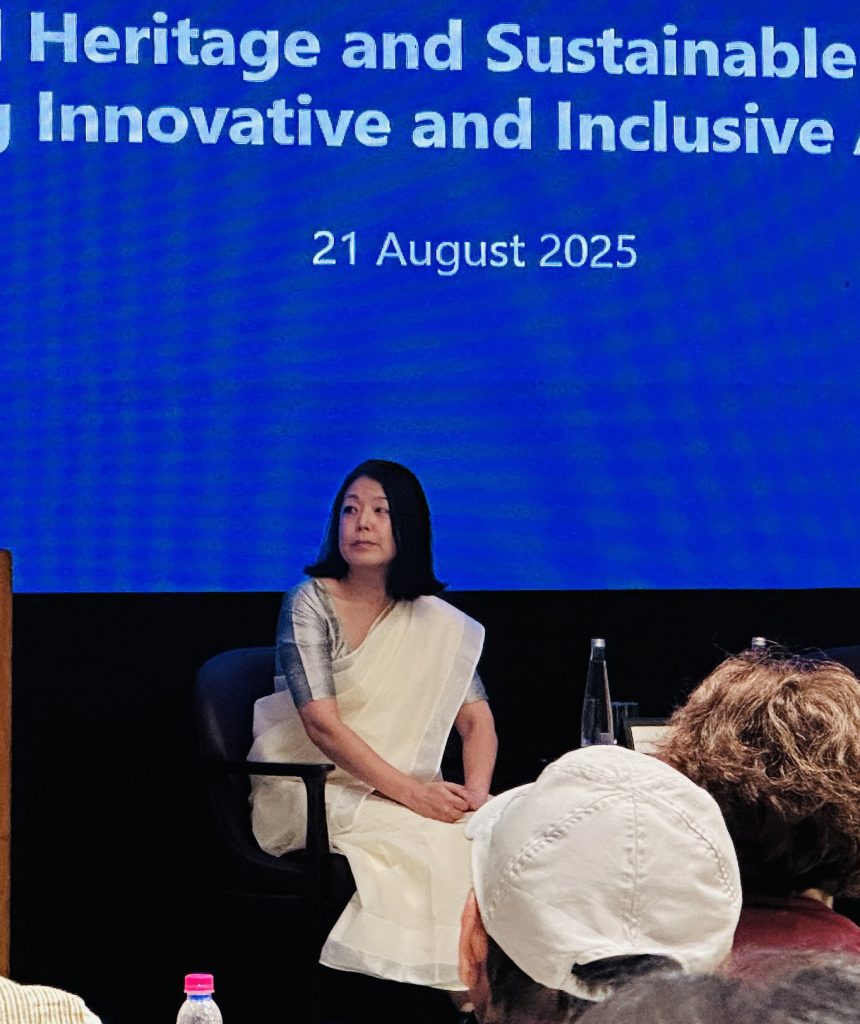
Ms. Junhi Han, Chief of Culture, UNESCO Regional Office for South Asia, captured this tension in her keynote remarks:
“In a world racing towards modernity, our cultural heritage serves as the anchor that connects us to our past, shapes our present, and inspires our future. What is required today is sensible infrastructure and innovative approaches that preserve the site’s aesthetics and integrity. Infrastructure here cannot be slapped on haphazardly; it must be done with utmost care.”
Her words echoed UNESCO’s State of Conservation Reports, which have consistently flagged the dangers of insensitive infrastructure projects — from intrusive highways near monuments to poorly designed tourism facilities that erode both ecosystems and authenticity.
India’s untapped heritage economy
India’s cultural wealth is staggering: 44 UNESCO World Heritage Sites, 62 more on the tentative list, and 3,687 nationally protected monuments under the Archaeological Survey of India (ASI). The latest inscription, the Maratha Military Landscapes of India in 2025 reflects India’s continuing recognition on the world stage.
Yet, beneath these numbers lies a paradox: despite global recognition, many sites remain under-visited or poorly promoted. For example, while the Taj Mahal welcomed over 6.5 million visitors in 2019, sites such as Rani ki Vav in Gujarat or the Great Living Chola Temples receive only a fraction of international attention, despite their world-class heritage value.
This imbalance underscores what experts at the conclave termed India’s “untapped heritage economy.” With France and Italy generating over USD 200 billion annually from cultural tourism, India’s tourism earnings of USD 30 billion in 2019 appear modest in comparison, despite its far larger inventory of heritage.
Recognizing this gap, the Ministry of Tourism has launched several initiatives in recent years. The “Adopt a Heritage” scheme (2017), which encouraged private partners to become “Monument Mitras,” sought to mobilize resources and expertise beyond public budgets. While innovative, the scheme also drew criticism for over-commercialization risks and limited community involvement.
More recently, in 2024, the ministry sanctioned 40 projects worth nearly USD 380 million across 23 states, with 12 focused on cultural heritage destinations. This shift signals a recognition that heritage is not a niche, but a mainstream pillar of India’s tourism growth strategy.
Balancing preservation and development
But numbers alone do not tell the story. The core challenge is philosophical: how to unlock tourism’s potential without compromising heritage integrity. Unlike ordinary attractions, World Heritage Sites are recognized for their Outstanding Universal Value. They demand sensitive, context-driven approaches.
Han emphasized that sustainable tourism requires design thinking, not mass construction. She cited examples where innovation can ensure access without risk: sunken museums, replicas of fragile monuments, and carefully curated visitor facilities.
“Museums, interpretation centres, souvenir shops, and cafés,” she noted, “not only educate and engage visitors but also generate local livelihoods.”
The conclave drew inspiration from global case studies:
• AlUla (Saudi Arabia), where heritage preservation and modern design coexist.
• Lascaux IV International Centre for Cave Art (France), a replica that protects fragile caves while giving visitors a near-authentic experience.
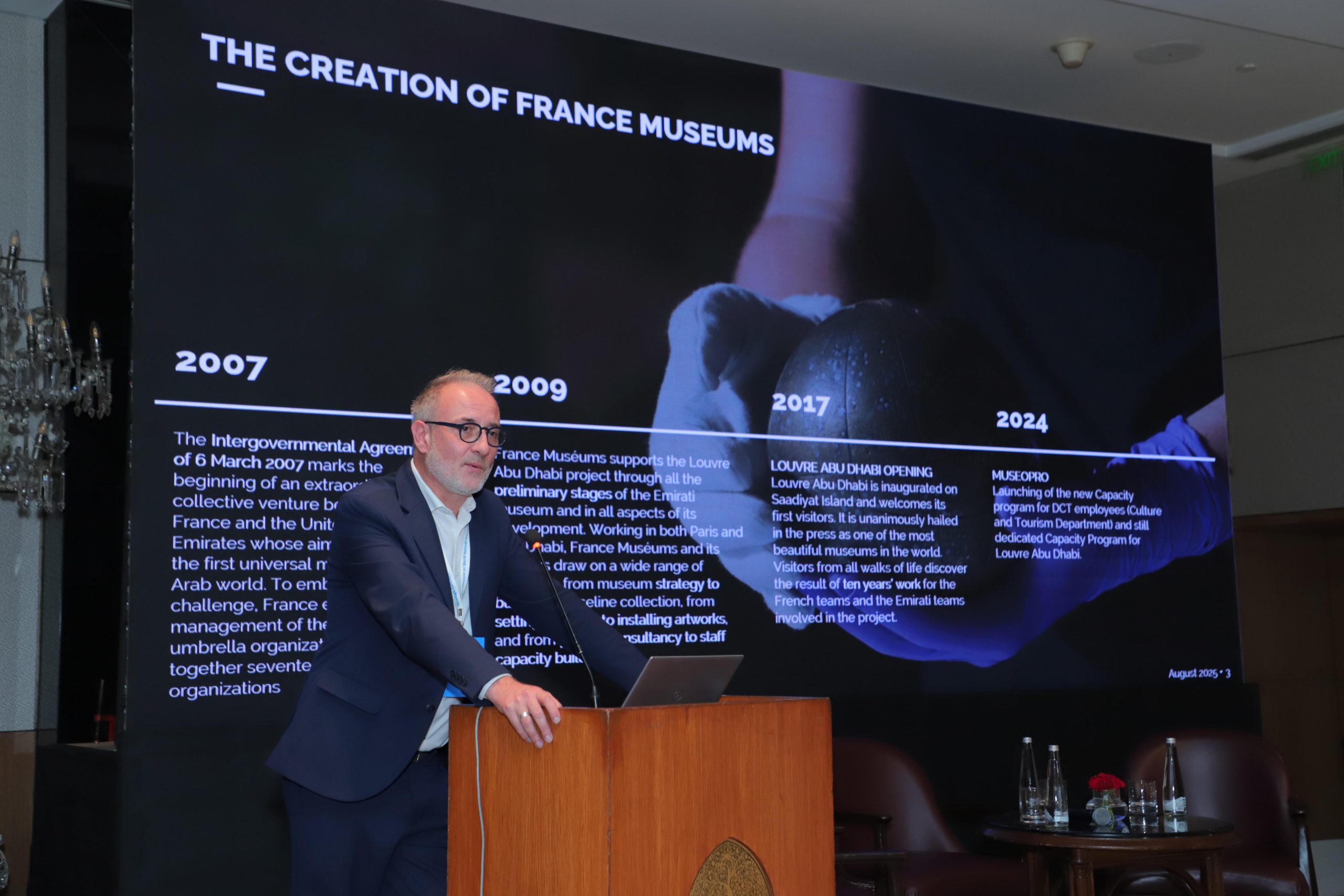
• The Louvre Museum (France) and City Palace Museum (Jaipur), where strategic tourism initiatives transformed visitor engagement.
Indian examples also stood out. The Humayun’s Tomb Museum in Delhi demonstrated the impact of heritage-linked storytelling, while Bodhgaya and Rajon ki Baoli highlighted how community-led efforts, supported by the Bodhgaya Temple Management Committee and the World Monuments Fund India, can sustain both preservation and livelihoods.
Voices from India: A policy perspective
From India’s side, Shri Suman Billa, Additional Secretary and Director General, Ministry of Tourism, outlined the need for financial autonomy at heritage sites:
“We must create a framework of economic and financial autonomy for our heritage assets, so they can be maintained sustainably and deliver long-term benefits.”
This reflects a broader recognition that traditional funding models — heavily dependent on government budgets and ticket sales are inadequate for the scale of conservation required. Instead, public–private partnerships, revenue reinvestment, and community-driven models must play a central role.
Closing the conclave, Ms. Mugdha Sinha, Managing Director, India Tourism Development Corporation (ITDC), highlighted the importance of peer learning and replication.
“Sustainable tourism today is less about construction and more about smart ideas that create value while preserving heritage,” she said.
She also emphasized the convergence of tradition, talent, trade, technology, and tourism — the five Ts — as articulated by Prime Minister Narendra Modi.
Learning from the past, preparing for the future
India’s heritage-tourism dilemma is not new. Over the decades, the country has oscillated between underutilization and overexploitation. Sites like the Ajanta-Ellora caves, once neglected, now face pressures of footfall management, while lesser-known treasures languish in obscurity.
Globally, lessons abound. Cities like Venice and Barcelona have grappled with over-tourism, leading to restrictions and protests. Conversely, Japan’s heritage towns and South Korea’s palace complexes have pioneered controlled access and digital innovation to balance conservation with engagement.
For India, the road ahead lies in embracing technology, inclusivity, and community ownership. Digital ticketing, virtual reality tours, and AI-driven crowd management can reduce physical pressure. Equally, ensuring accessibility for all — a theme strongly emphasized at the conclave — can make tourism more inclusive without compromising preservation.
The conclave’s central message was clear: India stands at a crossroads. With one of the richest cultural endowments in the world, the country has the chance to redefine heritage tourism — not as mass consumption, but as sustainable celebration.
As Ms. Han concluded: “By choosing responsible and sustainable tourism, we can protect our cultural treasures, support local communities, and care for the environment. Together, we can turn untapped potential into a lasting legacy.”
The roadmap is ambitious. It will require political will, financial innovation, and cultural sensitivity. But if realized, it could not only transform India’s tourism industry but also set a global benchmark for heritage-led sustainable development.