The Attack and Immediate Response
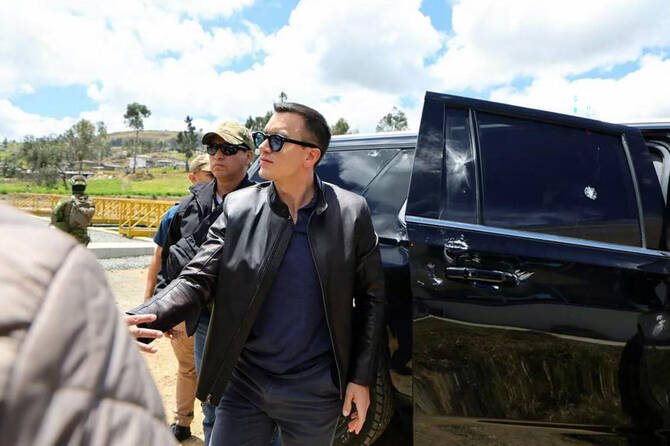
On October 7, 2025, Ecuador’s President Daniel Noboa escaped unharmed after protesters ambushed his motorcade in the southern province of Cañar. Around 500 demonstrators, reportedly from the national Indigenous organization CONAIE, threw rocks and bricks at the convoy as it traveled to El Tambo, where the president planned to inaugurate a new water treatment plant. Environment Minister Inés Manzano confirmed that the president’s vehicle displayed signs of bullet damage, indicating shots had been fired during the attack.
Authorities immediately launched an investigation and detained five suspects. They now face charges of terrorism and attempted assassination, which carry potential sentences of up to 30 years in prison.
President Noboa condemned the attack, stating that Ecuador would not tolerate such actions. He reaffirmed his commitment to his administration’s agenda and emphasized that the law would apply equally to all citizens, regardless of their status or affiliations.
Diesel Subsidy Cuts Spark Widespread Protests
The attack occurred amid nationwide protests over the government’s recent decision to remove subsidies on diesel fuel. This policy change triggered a significant increase in fuel prices, sparking demonstrations in multiple provinces. CONAIE accused the government of ignoring Indigenous communities’ concerns while using excessive force against peaceful protestors.
The government declared a state of emergency in several provinces, including Cañar, and deployed additional security forces to maintain order. President Noboa also announced plans for a nationwide referendum to decide whether Ecuador should allow U.S. military assistance in combating the rising violence linked to drug trafficking.
Part 2: Historical Context and Ongoing Tensions
The attack on Noboa’s motorcade was not an isolated incident. Earlier in September, another protest targeted his convoy with Molotov cocktails, resulting in one civilian death and the temporary hostage-taking of 17 soldiers. These incidents highlight the increasing volatility in Ecuador’s political environment and the difficulties the government faces in maintaining public order.
International human rights organizations have expressed concern over the government’s handling of the protests. The United Nations called for an independent investigation into both the protests and the treatment of detainees to ensure accountability.
Economic Impacts of the Protests
The diesel subsidy removal has had immediate economic consequences. Transportation costs have risen, affecting both consumers and businesses. Farmers in rural areas, in particular, report challenges in transporting crops to markets due to higher fuel costs.
In response, the government has reallocated some funds from the subsidy savings to support these farmers. However, critics question the effectiveness and transparency of these measures, raising doubts about their ability to address the deeper economic challenges.
Security Measures and Public Reactions
The government’s deployment of additional security forces and plans for a U.S. military assistance referendum have generated mixed reactions. Supporters praise the actions as necessary to restore order, while critics argue they represent an overreach that could worsen tensions.
President Noboa’s administration faces the delicate task of balancing security with citizens’ rights to protest. The coming weeks are likely to determine whether dialogue and negotiation can resolve the crisis peacefully or if unrest will continue to escalate.
Looking Ahead: Challenges for Ecuador
The attack on Noboa’s motorcade underscores the deep-seated grievances within Ecuadorian society. Beyond the protests, economic pressures and social inequality amplify frustrations. Political divisions and distrust between Indigenous groups and the government exacerbate tensions.
For lasting stability, experts emphasize the need for inclusive dialogue and comprehensive reforms. Measures that address both immediate security concerns and long-term economic inequalities will play a critical role in shaping Ecuador’s future.
As the government navigates this complex situation, public confidence will hinge on transparency, fairness, and the ability to implement effective reforms. How the administration responds now could define the trajectory of Ecuador’s democratic institutions and political stability.
Conclusion
The motorcade attack against President Noboa serves as a stark reminder of the challenges Ecuador faces in reconciling political, economic, and social tensions. While the president remains unharmed, the protests signal deeper unrest that requires immediate attention. Inclusive governance, constructive dialogue, and equitable economic measures are essential to prevent further escalation and restore trust in the government.