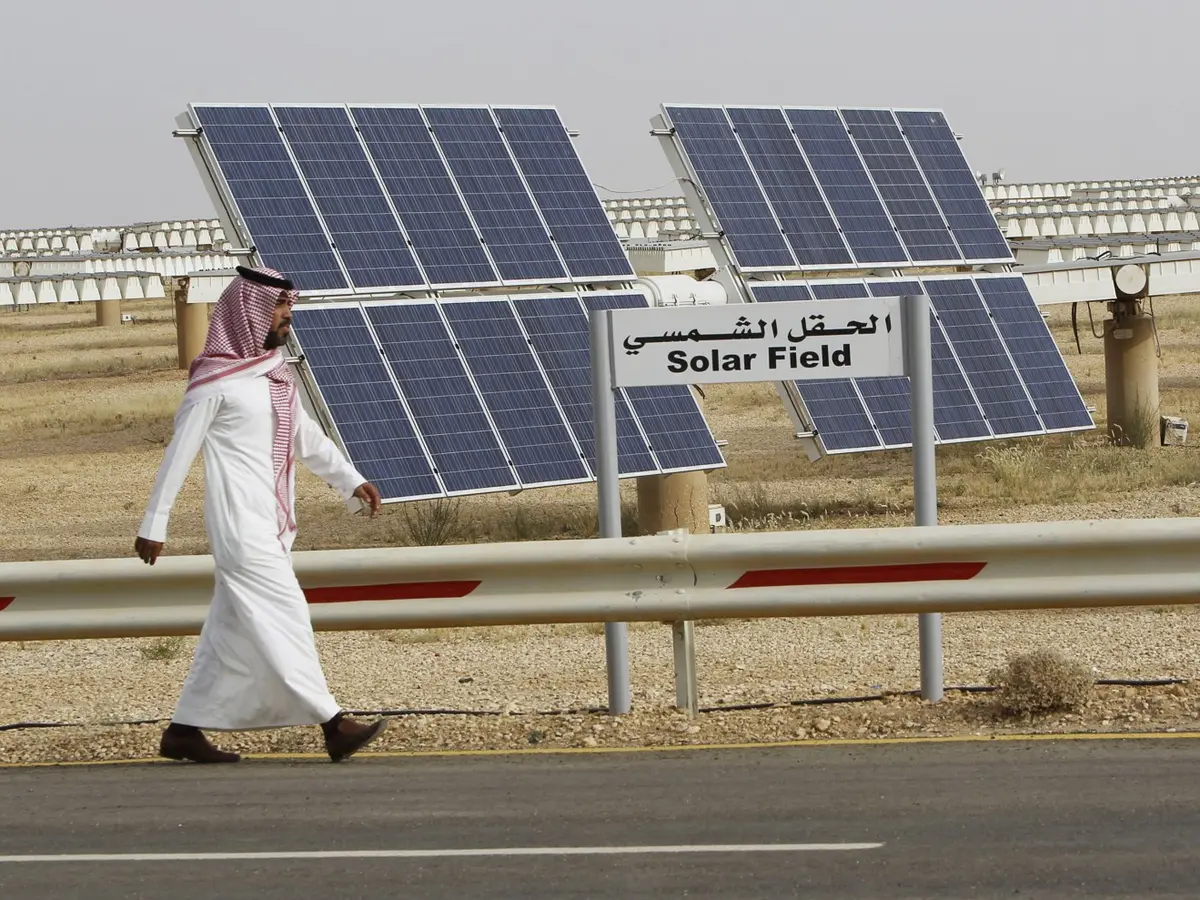
The Gulf Cooperation Council (GCC), with its abundant renewable energy resources and strategic geopolitical location, stands poised to capture billions in climate-aligned foreign direct investment (FDI). Despite this significant opportunity, the region currently holds a modest share of global green FDI. A recent report by Strategy& Middle East reveals that while the global flow of green FDI surged past $1 trillion between 2020 and 2024, just $24 billion of that sum landed in Saudi Arabia, the UAE, and Oman.
The report highlights that although the GCC region is home to some of the world’s cheapest solar energy production costs, green FDI inflows to the region have remained relatively low. This gap represents both a challenge and an opportunity to turn the GCC into a leading player in sustainable finance and clean technology.
The GCC’s Green FDI Landscape
From 2020 to 2024, the GCC countries—Saudi Arabia, the UAE, and Oman—were involved in 29 outbound and 10 inbound green FDI deals, accounting for the bulk of large-scale green investment activities in the region. However, this represents only 2% of global green FDI, a significant discrepancy given the region’s advantages in renewable energy and sustainability efforts.
The report outlines that hydrogen, renewable power, and batteries were the primary sectors attracting investment, making up 80% of global green FDI. Saudi Arabia, for instance, received $12.6 billion in green investments, with Oman following at $8.9 billion, largely from projects in green ammonia and green steel.
Despite these strides, much of the GCC’s green investment is currently outbound, with the region looking to invest in clean-tech ecosystems abroad. This underscores the need for the GCC to attract more inbound green FDI to meet its ambitious net-zero goals.
Strategic Recommendations for GCC to Capture Climate Capital
The Strategy& report suggests several strategic moves to enable the GCC to harness more climate capital and position itself as a global hub for green investment:
- Enacting Landmark Policy: The region can take inspiration from the U.S. Inflation Reduction Act (IRA) and EU Green Deal, by introducing manufacturing laws that promote clean energy and enforceable environmental standards. This could drive long-term climate investments.
- Investment De-risking: To attract more green capital, GCC nations should offer long-term offtake agreements, green bonds, and dedicated funds aimed at clean infrastructure projects. These mechanisms can increase investor confidence in the region’s green markets.
- Green Industrial Development: Empowering industries like green hydrogen and low-carbon materials can position the GCC as a leader in sustainable industrial growth. This will require low-cost clean energy and access to skilled labor, both of which the region already has in abundance.
- Strategic Outbound Investment: GCC nations should use their outbound investments in global clean-tech ecosystems to bring back knowledge, capabilities, and co-investment into their own sustainable projects, creating a circular flow of green innovation.
GCC’s Green Advantage
Several GCC countries have already made notable strides in the green economy:
- Saudi Arabia’s Green Financing Framework, along with a $1.7 billion sovereign green bond issuance, demonstrates a commitment to green infrastructure and sustainable financing.
- Oman has moved forward with its green hydrogen offtake agreement, marking a significant step in the region’s transition to clean energy.
- The UAE is positioning itself as a leader in sustainable finance through its Sustainable Finance Framework, further solidifying its role in the green energy transition.
As global climate risks continue to reshape investment trends, the GCC’s natural advantages in clean energy make it an attractive hub for future green investments. However, this potential will only be fully realized through bold policy decisions, regulatory clarity, and a strategic focus on green industries.
The Path Forward
Despite the challenges, the GCC’s green investment momentum continues to build. As climate-conscious capital remains a priority for investors globally, GCC nations have a unique opportunity to take the lead in green energy, sustainable industries, and climate-resilient infrastructure.
The region’s ability to capture a greater share of global green FDI depends on scaling its current green initiatives, improving its policy framework, and leveraging its renewable energy resources. As international capital increasingly flows into sustainability-linked opportunities, the GCC is well-positioned to emerge as a central player in the global green economy.
Key Takeaways
- The GCC has the potential to capture billions in climate-aligned investments due to its renewable energy resources and low-cost clean energy production.
- Saudi Arabia, UAE, and Oman have made strides but still attract only 2% of global green FDI.
- Policy shifts and investment de-risking are key strategies for scaling green investment in the region.
- The GCC’s growing green industrial capacity can be leveraged to attract more sustainable capital and create long-term climate-resilient projects.