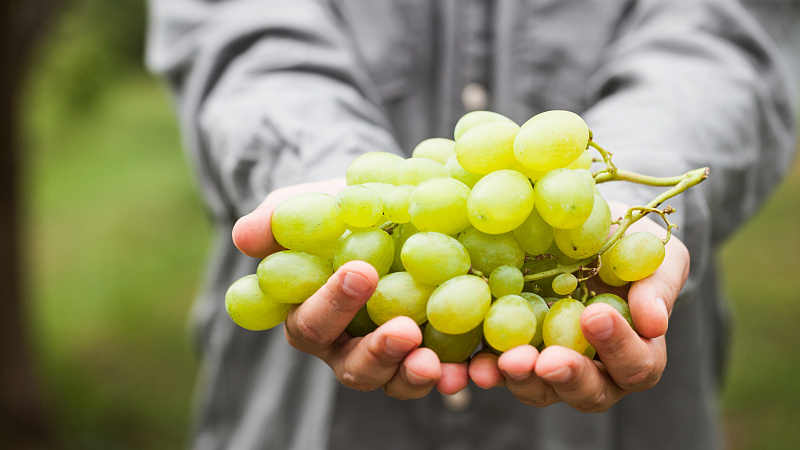
Qassim grape cultivation plays a vital role in Saudi Arabia’s agricultural landscape, contributing 30,000 tonnes of grapes each season. The central region of Qassim is not only a leader in grape production but also ranks among the Kingdom’s top producers of dates, figs, berries, and wheat. Additionally, it supports a variety of livestock, making the region an agricultural powerhouse.
Thanks to fertile soil and a favorable climate, Qassim farms yield high-quality produce year after year. The Saudi Press Agency reports that grape farming is most active in Uyun Al-Jiwa, Al-Badayea, and Al-Mithnab governorates. These areas specialize in a wide range of grape varieties, including green and red Thompson seedless, Black Magic, and Halwani. This diversity not only enriches the local market but also enhances the region’s export offerings.
Municipal and government authorities continue to strengthen the sector. Mohammed bin Mubarak Al-Majali, mayor of Qassim, confirmed the municipality’s dedication to hosting seasonal agricultural festivals. These events serve multiple purposes: they showcase regional produce, empower farming families, and stimulate both economic and tourism activities. Through collaboration with local municipalities such as Al-Qawara and other government entities, the festivals help position Qassim as a symbol of agricultural excellence.
The Grape Festival, now in full swing in Uyun Al-Jiwa, has attracted large crowds. Visitors are drawn to the abundance of grape-based products, which stand as a testament to the region’s farming success. Local families actively participate in organizing and selling at these events, enhancing their income and community involvement.
Salman Al-Suwaina, director-general of the Ministry of Environment, Water and Agriculture’s Qassim branch, described Qassim grape cultivation as a promising pillar of the region’s economy. He emphasized the increasing local and international demand for value-added grape products like juice, molasses, raisins, and vinegar. This demand provides farmers with new income streams and strengthens the case for agricultural investment.
Moreover, the government offers technical support and advisory services to help farmers improve productivity. This initiative aligns with Saudi Vision 2030’s broader goals of food security, economic diversification, and rural empowerment. As grape farming expands, Qassim’s role in the Kingdom’s agricultural future becomes even more pronounced.
The region’s ability to sustain large-scale Qassim grape cultivation, alongside other crops, proves that strategic planning, local participation, and government support can transform agriculture into a thriving economic sector. With expanding production and rising export potential, Qassim is setting the standard for Saudi agricultural development.