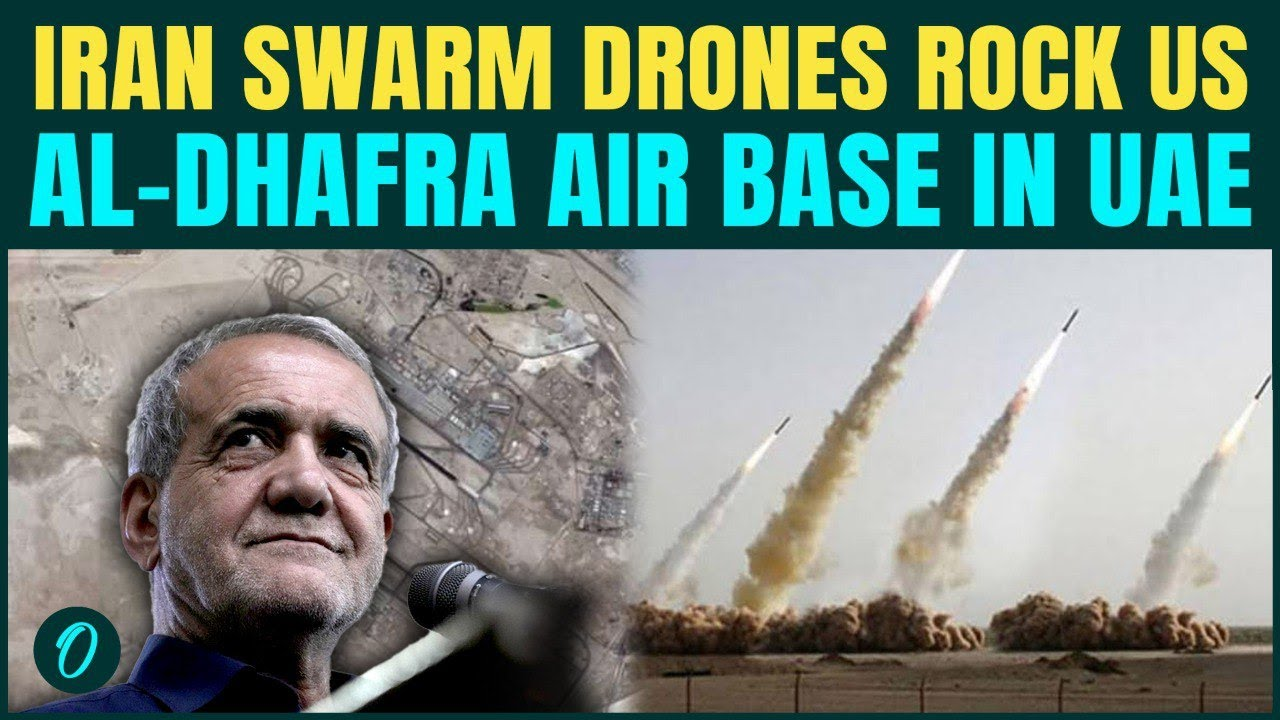
Iran Targets US Forces in a move that sharpens the risk of a broader Gulf conflict, with the Islamic Revolutionary Guard Corps saying it launched missiles and drones at the US-used Al-Dhafra airbase in the United Arab Emirates. The claim, carried by Iranian news agencies, signals a widening of hostilities beyond Israel to US military assets across the region.
US and Emirati officials had not immediately detailed the extent of any damage or casualties. Even so, the allegation alone rattles a region that anchors global energy flows and hosts some of Washington’s most critical military infrastructure in the Middle East.
Iran Targets US Forces at Al-Dhafra
The IRGC said it fired 10 missiles along with an unspecified number of drones toward Al-Dhafra, a key base that supports US air operations and missile defense in the Gulf. The base has previously hosted F-35s and Patriot systems, underscoring its strategic value.
If confirmed, the strike would mark one of the most direct Iranian actions against US forces in the UAE. In past crises, Tehran often relied on proxies or indirect pressure. This time, the messaging suggests a more overt posture.
Washington has historically responded forcefully to attacks on its personnel. Therefore, the next steps from the Pentagon will determine whether this episode becomes a contained exchange or a catalyst for further escalation.
Markets Watch the Strait of Hormuz
Energy traders quickly shifted focus to the Strait of Hormuz, the narrow chokepoint through which roughly a fifth of global oil shipments pass. Any perception of sustained conflict in the Gulf typically lifts crude prices and increases shipping insurance costs.
For African economies, the implications are immediate. Oil-importing nations such as Kenya, Ghana and Morocco would face higher fuel bills if volatility persists. Meanwhile, exporters like Nigeria and Angola could see short-term revenue gains, albeit amid heightened geopolitical risk.
Financial markets often react before military facts are fully verified. Consequently, even limited damage at Al-Dhafra could trigger broader economic ripples.
Gulf Allies Under Pressure
The UAE has cultivated a delicate balance between security partnerships with Washington and pragmatic regional diplomacy. A confirmed strike on its soil would test that equilibrium.
Gulf Cooperation Council members may now accelerate coordination on air defense and intelligence sharing. At the same time, they will likely press for de-escalation to protect trade corridors and investor confidence.
Iran’s Strategic Signaling
The phrase “Iran Targets US Forces” carries strategic weight beyond the battlefield. Tehran may be aiming to deter further US involvement by demonstrating reach. Alternatively, it could be responding to prior strikes it attributes to Washington and its allies.
Iran’s military doctrine often blends symbolic messaging with calibrated force. However, direct attacks on US facilities risk miscalculation. In 2020, Iran’s missile strike on Iraq’s Ain al-Asad base injured US personnel and prompted a tense standoff, though both sides ultimately stepped back.
Whether this episode follows a similar pattern depends on damage assessments and political calculus in Washington and Tehran.
Diplomatic Channels Narrow
Regional diplomats are likely working behind the scenes to prevent uncontrolled escalation. European powers, China and Gulf states all have economic incentives to keep the conflict contained.
Still, public rhetoric has hardened. Once leaders commit to overt strikes, domestic political pressures can limit room for compromise.
Why This Matters
Iran Targets US Forces represents a potential inflection point in the Gulf security architecture. Direct confrontation between Tehran and US assets in the UAE raises the risk premium across energy, shipping and defense sectors.
For emerging markets, including much of Africa, sustained instability in the Gulf translates into higher fuel costs, currency pressure and trade disruption.
What Happens Next
The Pentagon is expected to provide damage assessments and clarify any casualties. Investors will track oil futures and shipping routes for early signals of disruption.
If both sides calibrate responses, the clash may remain contained. If retaliation follows, however, the Gulf could enter a more volatile phase with global consequences.