The Pakistan Navy has carried out one of its largest-ever narcotics operations, intercepting a vessel carrying drugs worth nearly $1 billion in the Arabian Sea. This mission, conducted earlier in the week, highlights Pakistan’s growing efforts to curb international drug trafficking through major maritime routes connecting South Asia, the Middle East, and Africa.
Officials said the seizure was a massive blow to transnational crime networks. The drugs—mainly heroin, crystal meth, and hashish—were being smuggled by a powerful international syndicate with suspected links to organized groups in Afghanistan and Iran.
Major Operation in International Waters
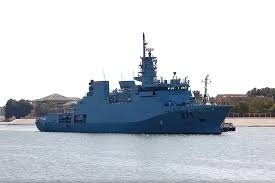
According to the Directorate of Public Relations (Navy), the operation began after intelligence teams spotted suspicious activity within Pakistan’s maritime zone. The Navy quickly deployed a Pakistan Naval Ship (PNS) along with Maritime Security Agency (MSA) assets to track the target vessel.
After hours of pursuit and close monitoring, the Navy’s special task force boarded the ship. During the inspection, officers uncovered several hidden compartments packed with waterproof bags filled with drugs. The narcotics were confiscated immediately, and the crew was detained for investigation.
“This operation shows our firm commitment to securing the seas and fighting illegal trafficking,” said Rear Admiral Faisal Raza, a Navy spokesperson. “It stands among the biggest drug busts in Pakistan’s history and reflects our constant vigilance.”
Details of the Seized Narcotics
Preliminary assessments revealed that the vessel carried 2.5 tons of heroin, 1.2 tons of crystal meth, and 800 kilograms of hashish. The total street value is estimated at around $970 million, though authorities are still verifying the exact figures.
Drug experts explained that heroin from Afghanistan’s poppy fields often travels through Pakistan’s coast before heading to Africa, Europe, and the Middle East. The Arabian Sea is one of the busiest narcotics routes due to its size and limited surveillance coverage.
A Regional Hub for Drug Trafficking
The Makran coast, stretching from Karachi to Gwadar, has long been a smuggling corridor. Its rugged terrain and hidden coves make it ideal for traffickers transporting drugs, arms, and other contraband.
Analysts believe tighter land borders have forced cartels to turn to sea routes. “Sea-based smuggling is safer and more profitable,” said Dr. Amir Hussain, a maritime security expert in Karachi. “Ships can move large amounts in one trip, and ocean surveillance remains limited.”
To counter this, Pakistan’s Navy has boosted its patrols and increased cooperation with regional partners. It participates regularly in Combined Maritime Forces (CMF) operations—an alliance of 39 nations working to ensure safe navigation and fight smuggling, piracy, and terrorism at sea.
Cooperation with International Agencies
The successful operation drew international praise. The United Nations Office on Drugs and Crime (UNODC) and maritime partners from Oman, the UAE, and the United States lauded Pakistan’s contribution to the global anti-narcotics fight.
According to Commodore Ahmed Bilal, Director General of the Pakistan Maritime Security Agency (PMSA), intelligence sharing was key. “Our coordination with allies and real-time information exchange made this interception possible,” he said.
The seized narcotics and detained crew have been handed to the Anti-Narcotics Force (ANF). Investigators are now tracing the financial networks and identifying those funding and managing the operation.
A Pattern of Successful Operations
This bust follows a string of recent victories against drug traffickers. In June 2025, the Navy intercepted a dhow carrying 1.6 tons of narcotics near Gwadar. In February 2025, another vessel carrying drugs worth $200 million was stopped in the northern Arabian Sea.
These consistent successes show the impact of upgraded surveillance systems, better inter-agency coordination, and closer ties with global partners.
“The Arabian Sea used to be a haven for smugglers,” said Captain Saeed Khan, a former naval officer. “But Pakistan’s vigilance has narrowed their routes and weakened their networks.”
Global and Economic Implications
The international drug trade generates hundreds of billions of dollars annually. A large portion funds terrorism and organized crime. By intercepting these shipments, Pakistan not only prevents narcotics from reaching markets but also cuts off financial lifelines to extremist groups.
“This mission saves lives by keeping drugs off the streets,” said Dr. Hussain. “It also boosts Pakistan’s reputation as a responsible global player committed to law enforcement.”
Economically, large drug seizures protect domestic stability. Fewer narcotics entering local markets mean lower addiction rates, reduced healthcare strain, and fewer crimes related to substance abuse.
Strengthening Maritime Security
Pakistan has made maritime security a key national priority. The Navy recently upgraded its radar systems, added satellite tracking, and deployed unmanned aerial vehicles (UAVs) for deep-sea surveillance.
The operation used both radar and aerial reconnaissance to monitor the suspect vessel. This mission also reflects the Navy’s “Drug-Free Maritime Domain” strategy under the Regional Maritime Security Patrol (RMSP) initiative, launched in 2018. Through RMSP, the Navy conducts continuous patrols in international waters to deter smuggling and illegal trade.
Support from Leadership
Admiral Naveed Ashraf, Pakistan’s Chief of Naval Staff, congratulated officers for the successful mission.
“The Pakistan Navy remains committed to countering all forms of maritime crime,” he said. “Our dedication to law and order at sea reflects Pakistan’s resolve for peace and stability in the Indian Ocean region.”
He also emphasized Pakistan’s readiness to cooperate globally against trafficking, piracy, and illegal fishing—issues that threaten maritime safety and the region’s economy.
Future Challenges and Strategy
Despite the success, challenges remain. The vastness of the Arabian Sea makes full surveillance difficult. Smugglers are constantly adapting, using high-speed boats and encrypted communication to evade detection.
To counter these threats, Pakistan aims to enhance real-time satellite tracking, expand cooperation under the Combined Maritime Forces, and train specialized counter-smuggling units. Investments in advanced radar, night-vision drones, and AI-based monitoring are also planned.
“Continuous innovation is essential,” said Commodore Bilal. “We must stay ahead of traffickers who constantly change tactics.”
Impact on Regional Security
The massive seizure strengthens Pakistan’s image as a regional leader in maritime security. Neighboring countries like Iran, Oman, and India are also increasing patrol coordination. Joint naval exercises and intelligence-sharing frameworks are being expanded to create a safer Indian Ocean corridor.
According to defense analyst Farah Qureshi, “This operation sends a strong message to criminal networks. The Arabian Sea is no longer safe for smugglers.”
The operation also aligns with global counter-narcotics goals under the UNODC’s Regional Programme for South Asia, which encourages stronger cooperation among coastal nations.
Conclusion
The Pakistan Navy’s $1 billion drug seizure in the Arabian Sea marks a landmark victory in the nation’s fight against maritime crime. By intercepting one of the world’s largest narcotics shipments, Pakistan has demonstrated world-class intelligence, precision, and regional cooperation.
As the Navy continues to upgrade its surveillance systems and expand global partnerships, Pakistan’s role in safeguarding regional waters grows stronger. This successful operation not only disrupts global drug trafficking networks but also reinforces Pakistan’s status as a reliable guardian of maritime security.
The message is clear — the Arabian Sea is no longer a safe route for smugglers.