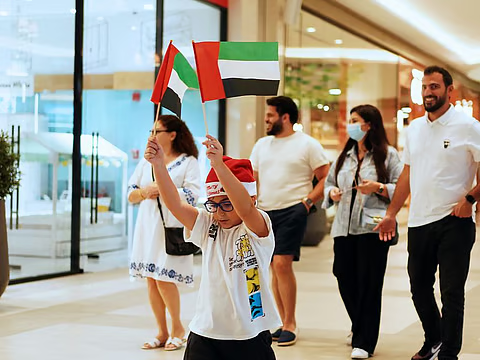
As residents across the UAE prepare for indoor celebrations and family gatherings during the National Day break, health specialists are warning about a recurring trend — a significant UAE holiday flu surge that typically follows extended weekends. Clinics often report a 30–40% rise in patient visits after long breaks, especially during the peak cold and flu period from mid-October to February.
Why Flu and Colds Spike After Holidays
Dr. Jawad Elhaout, Consultant Internal Medicine at Medcare Medical Centre Arjan, explained that infection spikes are expected because people interact closely with others who may be carrying viruses without knowing it. He noted that gatherings create opportunities for viruses to spread before symptoms appear, particularly in indoor settings with minimal ventilation. Cooler weather also keeps people inside longer, increasing transmission risk.
Winter Conditions Increase Viral Activity
According to Dr. Amjad Shareef Mohammed, a Pulmonary Medicine specialist at Burjeel Specialty Hospital in Sharjah, viral infections naturally rise during the winter months. With National Day activities, family meals, indoor meet-ups and shared spaces become ideal environments for viruses to move from one person to another. Poor ventilation worsens the situation by allowing particles to build up in the air.
Children contribute significantly to transmission due to close contact at school, while travel during long weekends introduces new flu strains into the country. Dr. Amjad added that cool, dry winter air weakens nasal defences, making it easier for respiratory viruses to survive and infect.
Who Faces the Greatest Risk?
Dr. Elhaout highlighted that older adults and individuals with chronic health issues remain the most vulnerable. Although most children recover quickly, those born premature or with existing lung problems face a higher risk of complications.
Dr. Amjad added that these groups are particularly susceptible:
- Children under 5
- The elderly
- People with asthma
- Patients with COPD or interstitial lung disease
- Pregnant women
- Individuals with weakened immune systems
When Symptoms Usually Begin
Doctors report that clinics typically see an increase in cases three to four days after the long weekend, which matches the usual incubation period of respiratory viruses.
How to Celebrate Safely
Health experts stress that gatherings do not have to be cancelled — they simply need to be handled with more caution.
Dr. Elhaout urged anyone experiencing flu-like symptoms to stay home and avoid meeting others. He also recommended practicing good hygiene, covering coughs and sneezes and ensuring that rooms remain well-ventilated.
Dr. Amjad added that virus transmission can be greatly reduced by:
- Avoiding overcrowded spaces
- Improving indoor airflow
- Wearing masks when necessary
- Frequent handwashing
- Using hand sanitiser
- Avoiding shared items
Smaller gatherings are encouraged, and those who feel unwell should avoid social events. Dr. Amjad also emphasised the importance of seasonal flu vaccination, especially for high-risk groups, noting that it plays a vital role during the winter infection surge.