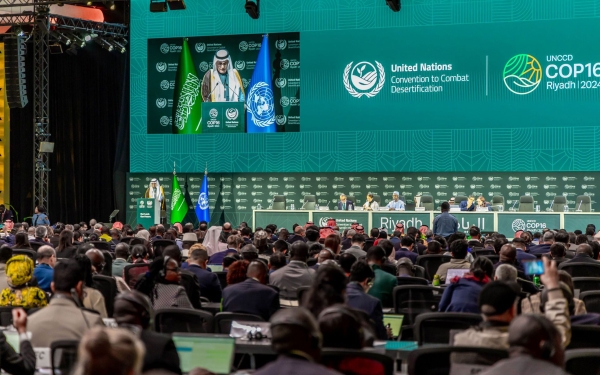
The COP16 Riyadh conference marked a historic milestone as the sixteenth Conference of the Parties to the United Nations Convention to Combat Desertification (UNCCD). Held in Riyadh, Saudi Arabia, from December 2–13, 2024, it brought together 197 countries to confront global challenges of desertification, drought, and land degradation. This was the first time the UNCCD convened in the Middle East and North Africa (MENA) region, underscoring the Kingdom’s pivotal role in advancing environmental sustainability.
Spanning 400,000 m², COP16 Riyadh combined high-level dialogues, forums, and global initiatives with a strong focus on restoring soil fertility, rehabilitating ecosystems, and building resilience against drought. The introduction of the Green Zone offered a dedicated space for innovation, scientific exchange, and sustainability solutions.
Objectives of COP16 Riyadh
The conference aimed to accelerate global cooperation on land and climate issues. Its core objectives included:
- Restoring soil fertility and productivity.
- Strengthening global and regional drought resilience.
- Supporting capacity-building for drought response.
- Advancing ecosystem rehabilitation.
- Reinforcing international efforts to reverse soil degradation.
These objectives align with Saudi Vision 2030 and broader UN climate goals, reinforcing the role of sustainable land management in ensuring food security, biodiversity protection, and climate adaptation.
Events and Key Initiatives
Riyadh Global Drought Resilience Partnership
Saudi Arabia launched the Riyadh Global Drought Resilience Partnership to consolidate international action against drought. The initiative promotes early warning systems, risk management, and global cooperation, ensuring drought challenges are addressed proactively and systematically.
One Water Summit
A flagship event of COP16 Riyadh, the One Water Summit focused on global water scarcity and governance. Inaugurated on December 3, 2024, by Crown Prince Mohammed Bin Salman, the summit was co-chaired by French President Emmanuel Macron, Kazakh President Kassym-Jomart Tokayev, and World Bank President Ajay Banga. Discussions emphasized sustainable water use, equitable access, and global collaboration to safeguard water resources.
Saudi Green Initiative (SGI) Forum
The SGI Forum showcased Saudi Arabia’s environmental leadership. It gathered policymakers, experts, and business leaders to review progress in energy transition, afforestation, and emission reduction. The forum provided a space for knowledge exchange, best practices, and future planning under the Kingdom’s green agenda.
Second International Forum on Afforestation Technologies
Held in the Green Zone, this forum explored innovative afforestation technologies and global reforestation projects. It featured panel discussions, scientific research presentations, and lessons learned from international experiences, reinforcing the role of afforestation in combating desertification and climate change.
Conclusion
The COP16 Riyadh conference reinforced Saudi Arabia’s role as a leader in global sustainability and climate action. By hosting 197 nations and launching initiatives such as the Riyadh Global Drought Resilience Partnership and the One Water Summit, the event provided a platform for collaboration to restore land, combat desertification, and secure water resources. Through the integration of the Saudi Green Initiative and the Green Zone, COP16 Riyadh became a cornerstone for international partnerships addressing the interconnected challenges of land, water, and climate resilience.