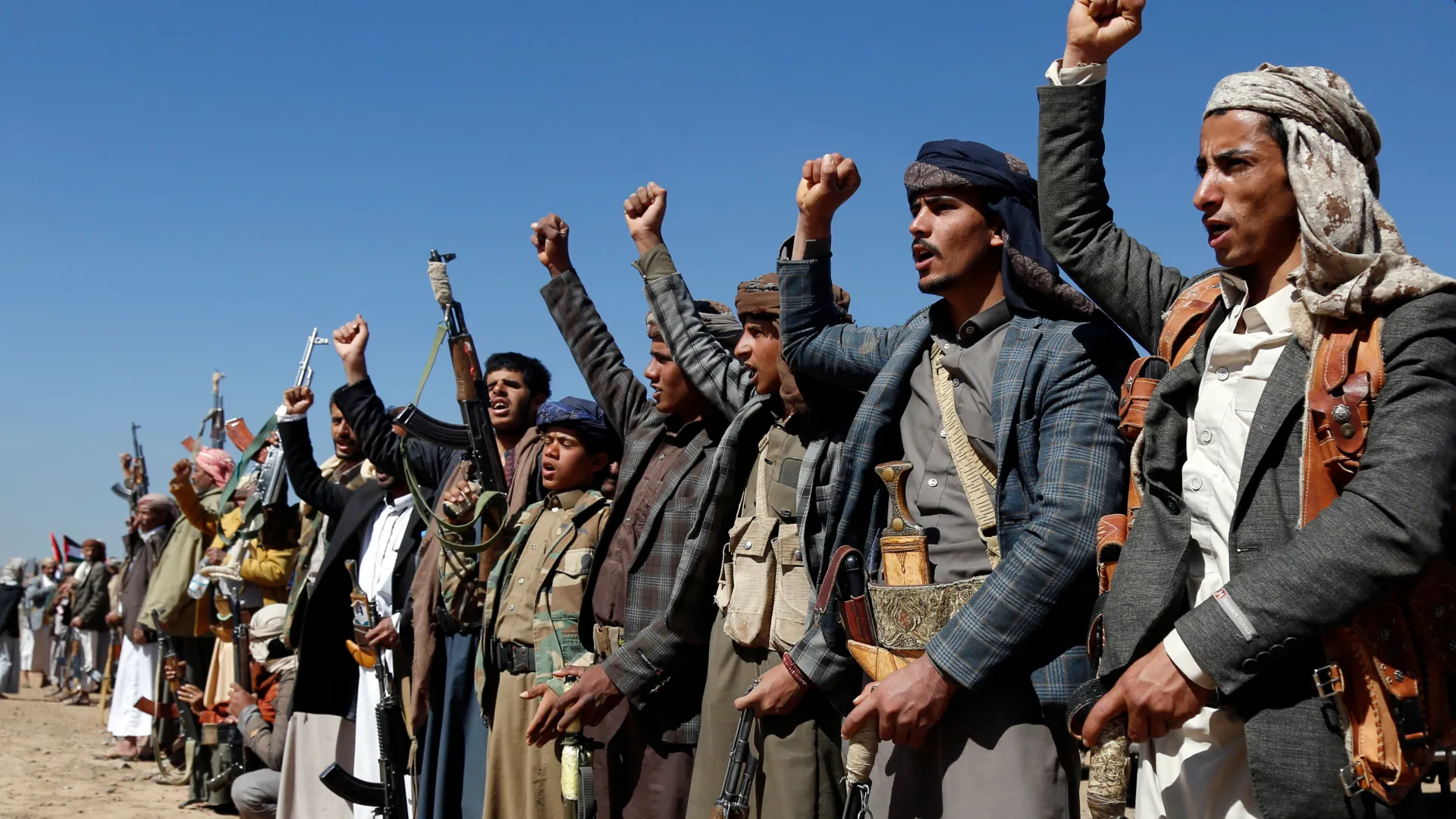
The Houthis—known formally as Ansar Allah—have transformed from a small Zaydi revivalist movement in Yemen’s rugged north into one of the Middle East’s most disruptive forces. Born in the 1990s under the leadership of Hussein Badreddin al-Houthi, the group began as a campaign to defend a centuries-old religious tradition from Saudi-backed Salafi expansion. Today, they control Yemen’s capital Sanaa, command a hardened military force, and shape global headlines through drone warfare, Red Sea shipping disruptions, and direct confrontation with regional and Western powers.
Their journey—from obscure mountain rebels to global disruptors—has been marked by war, alliances of convenience, foreign backing, and the relentless will to survive.
Seeds of Rebellion
The Houthi story begins in Saada governorate, a poor, mountainous region along Yemen’s northern border with Saudi Arabia. In the 1990s, as Salafi schools spread across the area, Hussein al-Houthi rallied tribes under Zaydi Shia identity, reviving a heritage once tied to Yemen’s imams. His sermons railed against U.S. imperialism, Israeli policies, and Saudi influence, messages that struck a chord with marginalized northern Yemenis.
The movement was not just theological; it was political survival in a country increasingly dominated by outsiders’ agendas.
Six Wars in Saada
In 2004, clashes with President Ali Abdullah Saleh’s government ignited the first of six brutal wars in Saada. Hussein was killed, but his death only gave the movement its enduring name—the Houthis. Between 2004 and 2010, government offensives failed to crush them. Instead, the Houthis evolved into a seasoned guerrilla army, entrenching themselves in their stronghold and building alliances with disillusioned tribes.
By the dawn of the Arab Spring in 2011, the Houthis were no longer local rebels; they were an insurgent force ready to step into Yemen’s power vacuum.
The Arab Spring and the March on Sanaa
The 2011 uprising that ousted Saleh left Yemen fractured. His successor, Abdrabbuh Mansur Hadi, led a weak transitional government that never consolidated control. The Houthis seized the opportunity, pushing southward with growing strength.
In a stunning twist, they allied with remnants of Saleh’s loyalists—men they had fought for years—and in September 2014 captured Sanaa. This victory cemented their place as Yemen’s most powerful non-state actor and set the stage for a regional war.
Saudi Arabia Strikes Back
In March 2015, alarmed by the Houthis’ rise, a Saudi-led coalition launched a massive military campaign to restore Hadi’s government. What Riyadh expected to be a short war became a grinding stalemate.
Backed by Iranian political and military support, the Houthis resisted aerial bombardment, blockade, and proxy ground offensives. Their uneasy alliance with Saleh collapsed in 2017, ending with his death, but the group emerged stronger, consolidating power in the north.
The war devastated Yemen. Millions were displaced, famine became endemic, and the United Nations labeled the conflict the world’s worst humanitarian crisis.
Expanding the Battlefield
Unable to uproot the Houthis from Yemen, Saudi Arabia and its allies found themselves on the receiving end of a new kind of warfare. The Houthis rolled out long-range missiles and drones, striking airports, oil facilities, and even the UAE.
Their attacks forced global powers to reckon with the group not as local insurgents, but as a regional threat with transnational reach.
A New Front: The Red Sea
In late 2023, war in Gaza shifted the Middle East’s balance again. The Houthis positioned themselves as defenders of Palestinians, joining Iran’s self-styled “Axis of Resistance”. They began targeting commercial shipping in the Red Sea, one of the world’s busiest maritime arteries.
What began as symbolic defiance escalated into a global trade crisis. Shipping giants rerouted around Africa, raising costs and disrupting supply chains. The U.S. and U.K. launched repeated strikes in Yemen in 2024, but the Houthis endured, embedding themselves deeper into a narrative of resistance against Western power.
2025: A Movement at a Crossroads
By 2025, the Houthis control northern Yemen and rule over millions. They function as both government and militia: collecting taxes, running ministries, and simultaneously launching cross-border missile barrages.
Their confrontation with Israel intensified dramatically on 30 August 2025, when an Israeli airstrike in Sanaa killed the Houthi prime minister and several senior officials—one of the most significant blows to the group’s leadership since its inception.
The strike underscored the Houthis’ transformation: no longer merely Yemen’s rebels, they are a central player in the Middle East’s conflict matrix.
Future Scenarios
Analysts sketch three possible futures for the Houthis:
- Consolidation of Power – The Houthis negotiate recognition as Yemen’s northern government, leveraging talks with Saudi Arabia and the U.N. to secure legitimacy.
- Regional Expansion – They deepen ties with Iran, cementing their role as a regional proxy akin to Hezbollah, projecting influence across the Red Sea and Gulf.
- Escalation and Retaliation – Their actions provoke broader Western or Israeli military campaigns, risking an escalation that could engulf the Arabian Peninsula.
Each path carries risks—for Yemen, the region, and global stability.
From Saada to the World Stage
The Houthis’ rise is a story of local grievances colliding with global geopolitics. Born out of marginalization in Yemen’s mountains, they survived six wars, toppled a government, and withstood a Saudi-led coalition. Now, they disrupt shipping lanes and absorb direct strikes from world powers.
The group embodies a broader truth about today’s Middle East: small movements, given time, external backing, and resilience, can reshape global trade and security landscapes.
In 2025, the question is not whether the Houthis matter—they clearly do. The question is how the world will adapt to a force that has redefined the meaning of insurgency in the modern era.