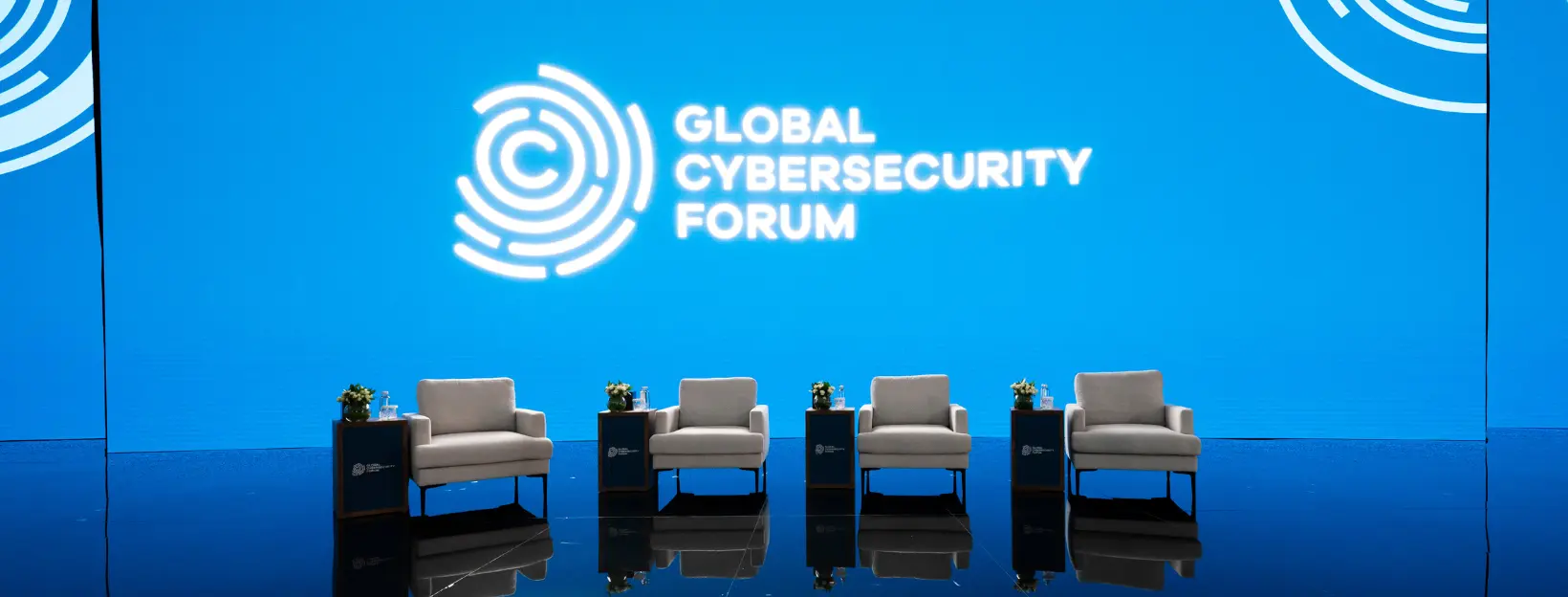
The Global Cybersecurity Forum opened with a strong call for unity. Leaders warned that the world must work together to secure infrastructure and defend against fast-growing cyber threats. Governments and the private sector were urged to cooperate more closely, develop international agreements, and build resilience.
Macky Sall, former president of Senegal, explained that cybersecurity crosses all borders. He argued that global action requires both nations and Big Tech to work hand in hand. He praised Saudi Arabia for creating the forum in 2020 and for investing heavily in security, counter-terrorism, and digital capacity building.
Now in its fifth year, the forum continues to drive global dialogue. On the first day, it launched the Global Initiative for Capacity Building in Cyberspace. This program will deliver training, cyber drills, and policy support worldwide. It also focuses on international simulations and expert-led workshops to strengthen global resilience. As a result, policymakers, law enforcement, and cyber diplomats will gain the skills they need to respond faster to threats.
Saudi Arabia’s National Cybersecurity Authority, the Saudi Information Technology Co., and the GCF will lead implementation. They will work with UN agencies such as the UN Development Program, the UN Office on Drugs and Crime, and the International Telecommunication Union. Interpol will also participate. This structure ensures a wide network of partners and access to essential expertise.
Jurgen Stock, former secretary-general of Interpol, praised the initiative. He called the forum a vital global platform to confront cybercrime. According to him, digital threats are rising, and artificial intelligence will only increase risks. Therefore, no nation or company can act in isolation. Stock highlighted Saudi Arabia’s partnerships with regulators, telecom operators, and IT security firms. He stressed that cooperation with law enforcement closes security gaps more quickly.
The urgency became even clearer with new statistics. The GCF 2024 Cybersecurity Workforce Report showed a shortage of 2.8 million cybersecurity professionals worldwide. In addition, 43 percent of information security executives reported major skills gaps. These numbers highlight the immediate need for joint action, stronger training, and large-scale investment.
Panel discussions also revealed the complexity of the challenge. Croatia’s former president, Kolinda Grabar-Kitarovic, called for tougher rules on artificial intelligence and better information sharing. Sall urged nations to reduce the digital divide between rich and poor countries. Former US cyber director Chris Inglis added that digital infrastructure should not only protect security but also deliver real benefits for citizens.
Throughout the event, speakers emphasized three shared goals. First, future-proofing international agreements to withstand rapid technological change. Second, closing the digital gap between nations. Third, fostering collaboration that produces measurable improvements in security. In addition, they highlighted that partnerships must remain strong and inclusive to respond effectively to evolving cyber threats.
The Global Cybersecurity Forum is now recognized as a central platform for shaping global action. By uniting governments, international bodies, and private industry, it strengthens the collective fight against cybercrime. The forum’s discussions reflect a growing recognition that cybersecurity demands immediate action. Threats are multiplying daily, yet with sustained cooperation, innovation can thrive while societies remain protected.
READ: Ukraine Escalates Drone Strikes on Russian Oil Refineries