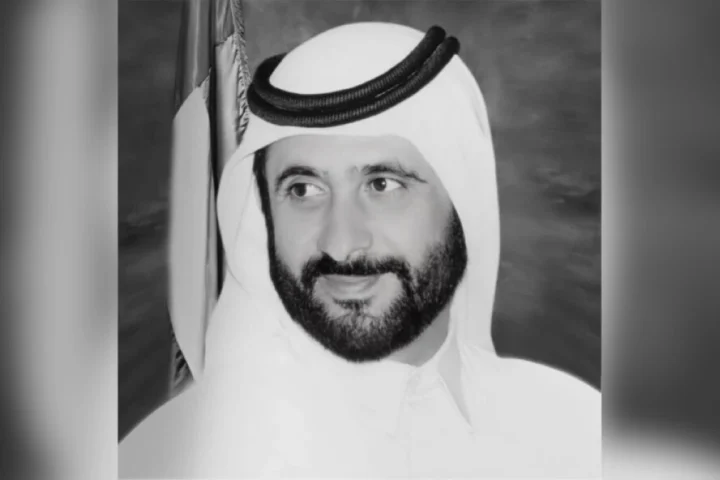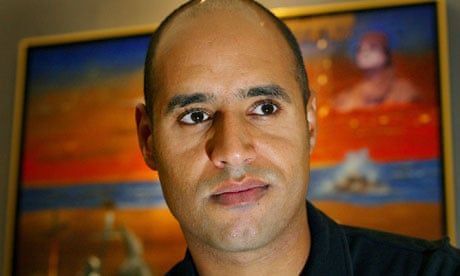
Saif al-Islam Gaddafi, the son of the long-time Libyan dictator Muammar Gaddafi, has died at 53 in Zintan, a town in western Libya where he had spent much of his post-rebellion years in captivity. His death marks the end of a tumultuous journey from a promising political heir to a controversial figure involved in war crimes. His passing was confirmed by family sources, his lawyer Khaled el-Zaydi, and Libyan media outlets on February 3, 2026. The circumstances surrounding his death remain unclear, though initial reports suggest he was killed in a shooting.
Rise to Power and Early Life
Born on December 2, 1999, Saif al-Islam Gaddafi was seen as the heir apparent to his father, Muammar Gaddafi, who ruled Libya for over 40 years. Educated in the United Kingdom at the London School of Economics, Saif al-Islam was considered a reformist, often serving as a diplomat and engaging with the West on Libya’s international relations, including negotiations for the country’s weapons of mass destruction disarmament. He played a role in Libya’s bid to reintegrate into the international community by securing compensation for victims of the Lockerbie bombing.
However, his early promise quickly transformed into authoritarian tendencies when the Arab Spring of 2011 reached Libya. During the uprising, Saif al-Islam shifted his allegiance towards his father’s government, taking a central role in orchestrating the brutal crackdown against protestors, for which he would later face charges of war crimes.
2011 Uprising and Subsequent Captivity
In 2011, as protests against his father’s regime grew into an all-out rebellion, Saif al-Islam was thrust into the role of the family’s defender. His defiant speeches to the media only fueled resentment, with him threatening rivers of blood as the government clamped down on the opposition. His involvement in this violent suppression led to the International Criminal Court (ICC) issuing a warrant for his arrest on charges of murder and persecution.
When his father was overthrown and killed by rebels in October 2011, Saif al-Islam fled Tripoli but was captured by the Abu Bakr Sadik Brigade while attempting to escape to Niger. He was taken to Zintan, where he was held in captivity for several years. Despite being held in solitary confinement for much of his detention, he was granted access to television and some books. His years in prison marked a sharp contrast to the luxurious life he had enjoyed before the revolution, which included hunting with falcons and mingling with British society.
War Crimes Trial and Political Comeback Attempt
In 2015, Saif al-Islam was sentenced to death in absentia by a Libyan court for his role in the 2011 crackdown. However, in 2017, he was released from captivity by the militia that had held him, following an amnesty law passed by the Libyan government.
After his release, Saif al-Islam attempted a political comeback, announcing his candidacy for Libya’s presidential elections in 2021. His campaign was controversial and faced significant opposition, especially from those who had suffered under his father’s rule. He tried to appeal his 2015 conviction, but his efforts were blocked by rival armed groups, leading to further political chaos and the collapse of the election process.
In an interview with The New York Times Magazine in 2021, Saif al-Islam described his political strategy, saying, “You need to come back slowly, slowly. Like a striptease. You need to play with their minds a little.” His efforts to re-enter Libya’s political scene were viewed by many as a push to restore the Gaddafi family’s former influence.
The Legacy of Saif al-Islam Gaddafi
Saif al-Islam’s death brings a final chapter to a legacy filled with contradictions. While once viewed as a potential reformer who could lead Libya into a more Western-friendly era, his actions during the 2011 revolution and his political ambitions since then painted him as a symbol of his father’s brutal regime. His political comeback attempt, though unsuccessful, showed the enduring influence of the Gaddafi family in the country’s complex political landscape.
His death has sparked reactions from across the political spectrum, including from prominent figures like World Athletics President Sebastian Coe and former Libyan opposition leaders. Kenyan President William Ruto also expressed his condolences, acknowledging Saif al-Islam’s impact on Libya’s history.
Conclusion
Saif al-Islam Gaddafi’s death marks the end of a controversial and tumultuous chapter in Libyan history. From his role as the heir apparent to his father’s regime to his years spent in captivity and failed political comeback, Saif al-Islam’s life has been defined by conflict, ambition, and the long shadow of his father’s rule. His death leaves Libya to continue grappling with its post-Gaddafi challenges, with the Gaddafi legacy still an open wound in the nation’s political fabric.