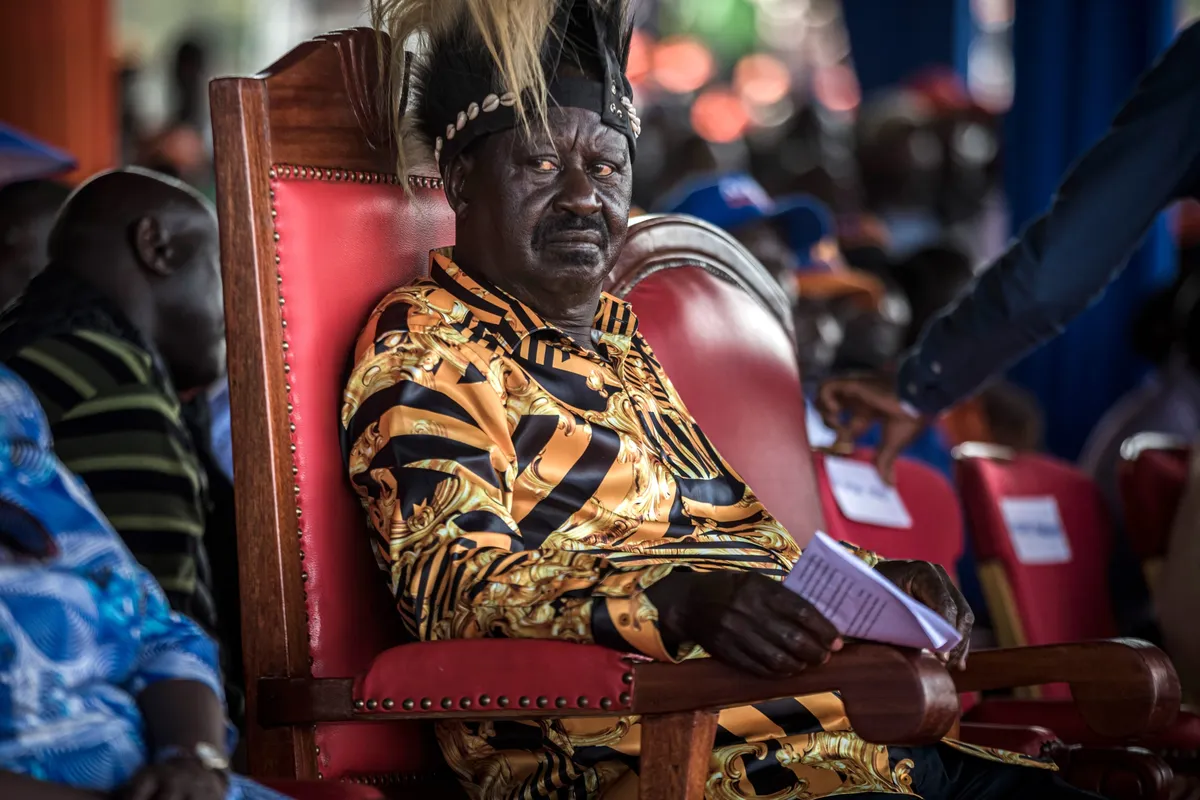
Kenyan veteran politician Raila Odinga, widely revered as “Baba” and a champion for democratic reforms, has passed away at the age of 80. Odinga, who had been undergoing treatment in Kochi, India, succumbed to a cardiac arrest while on a morning walk on October 15, 2025. He collapsed during his walk and was rushed to Devamatha Hospital in Koothattukulam, where doctors pronounced him dead at 9:52 AM Indian Standard Time.
Raila Odinga’s Final Moments
Odinga had traveled to India for treatment, accompanied by his daughter Rosemary Odinga, who was undergoing Ayurvedic care for her eyesight at Sreedhareeyam Hospital. His visit to the country followed a series of medical treatments he had been seeking for his health concerns. Sadly, during a morning walk at the Devamatha Ayurvedic Research Center in Koothattukulam, Odinga suffered a fatal cardiac arrest. Indian authorities have informed the Foreigners Regional Registration Office (FRRO), and preparations for his repatriation are currently underway.
A Political Legacy That Shaped Kenya’s Democracy
Odinga, a figure synonymous with electoral reform and multiracial democracy, played an instrumental role in Kenya’s political landscape. He was appointed Prime Minister of Kenya from 2008 to 2013 under a power-sharing agreement with then-President Mwai Kibaki. His involvement in the 2007-2008 post-election violence and subsequent efforts to broker peace were pivotal moments in Kenya’s democratic history.
Despite his five unsuccessful presidential bids in 1997, 2007, 2013, 2017, and 2022, Odinga remained a steadfast leader, committed to shaping the political future of Kenya. His attempts at the presidency were marked by his relentless pursuit of electoral justice, often alleging electoral fraud in the process.
The “Baba” of Kenya: A Symbol of Opposition
Known as “Baba” (Father) by his supporters, Odinga was a staunch critic of Kenya’s political establishment. He led the Orange Democratic Movement (ODM), a party he founded and championed, and was a leading figure in the Azimio la Umoja coalition. His tireless efforts for democracy and reforms made him a significant force in Kenyan politics, despite the various challenges he faced in his quest for the presidency. His long political career, spanning several decades, was marked by his role in pushing for multi-party democracy and devolution—a cause he believed would ensure equitable distribution of resources across the country.
Health Struggles and Medical Journey
Odinga’s medical journey has been a focal point in recent years. He had faced health challenges, including eye surgery and other treatments, but remained active in politics until his passing. His daughter Rosemary’s recovery of partial eyesight in India was another major milestone for the Odinga family, with the treatment at Sreedhareeyam Hospital being a source of hope for many.
Odinga’s Political and Personal Impact
Beyond his political career, Odinga was a family man. He is survived by his wife, Ida Odinga, and their children, including his late son Fidel Odinga, who passed away in 2015. Odinga’s legacy also includes his unwavering commitment to the causes of the poor and marginalized, both through his party leadership and personal advocacy. His influence on Kenya’s governance system remains unparalleled, and his vision for a democratic and fair Kenya has left an indelible mark on the country’s political landscape.
Raila Odinga’s Influence on Kenya’s Political Landscape
- 1997-2022 Presidential Campaigns: Despite losing the presidency in five attempts, Odinga’s bids have been a defining feature of Kenyan political life. His 2007 election loss to Mwai Kibaki led to intense post-election violence, but his leadership in peace talks and his subsequent appointment as Prime Minister marked a pivotal moment in Kenya’s political evolution.
- The Building Bridges Initiative (BBI): In 2018, Odinga’s handshake with President Uhuru Kenyatta led to the Building Bridges Initiative (BBI), an attempt to amend Kenya’s constitution and address political divisions. Though unsuccessful, the initiative was a significant political experiment for national unity.
- ODM and Azimio la Umoja: Throughout his career, Odinga remained the heart and soul of the Orange Democratic Movement (ODM) and later the Azimio la Umoja Coalition, a powerful political alliance that fought for reforms and inclusion.
- Raila’s Global Recognition: Odinga’s stature extended beyond Kenyan borders, with his involvement in various international diplomatic efforts such as the African Union‘s mediation of the Ivorian crisis in 2010. He also received international accolades for his work in promoting democracy, peace, and governance.
Odinga’s Untold Struggles and Personal Challenges
Odinga’s career was also marked by personal sacrifices, particularly during the 1982 coup attempt, when he was imprisoned for several years under the Moi regime. His detentions, struggles for multi-party democracy, and efforts to end Kenya’s single-party rule defined him as an iconic leader of the opposition. His ability to remain resilient despite facing political persecution won him admiration across the world.
Global Reactions to Odinga’s Death
The news of Raila Odinga’s death has sent shockwaves through Kenya, Africa, and the international community. Prominent politicians, leaders, and citizens across the globe have paid tribute to Odinga’s legacy, acknowledging his leadership, vision, and commitment to the betterment of Kenya. International leaders have expressed their condolences, acknowledging the immense contribution Odinga made to Kenya’s democracy and peace efforts.
His funeral arrangements and state memorial service are expected to attract widespread attention, with leaders from across Africa and the world paying their respects. In Kenya, thousands of his supporters are expected to gather to mourn the passing of the political giant.
Conclusion: A Nation Mourns
The death of Raila Odinga marks the end of an era in Kenyan politics. He was not only a father of political reform but also a symbol of perseverance in the fight for a better, more inclusive society. Despite his personal losses and electoral disappointments, Odinga’s legacy will endure, with his vision for a united and democratic Kenya continuing to influence the nation’s political future. His passing is a tragic loss, but his legacy of service, dedication to democracy, and fight for justice will live on in the hearts of all Kenyans and those who admired his work.
As Kenya reflects on Odinga’s journey and contributions, his memory will serve as a reminder of the tremendous sacrifices made in the pursuit of a better nation.