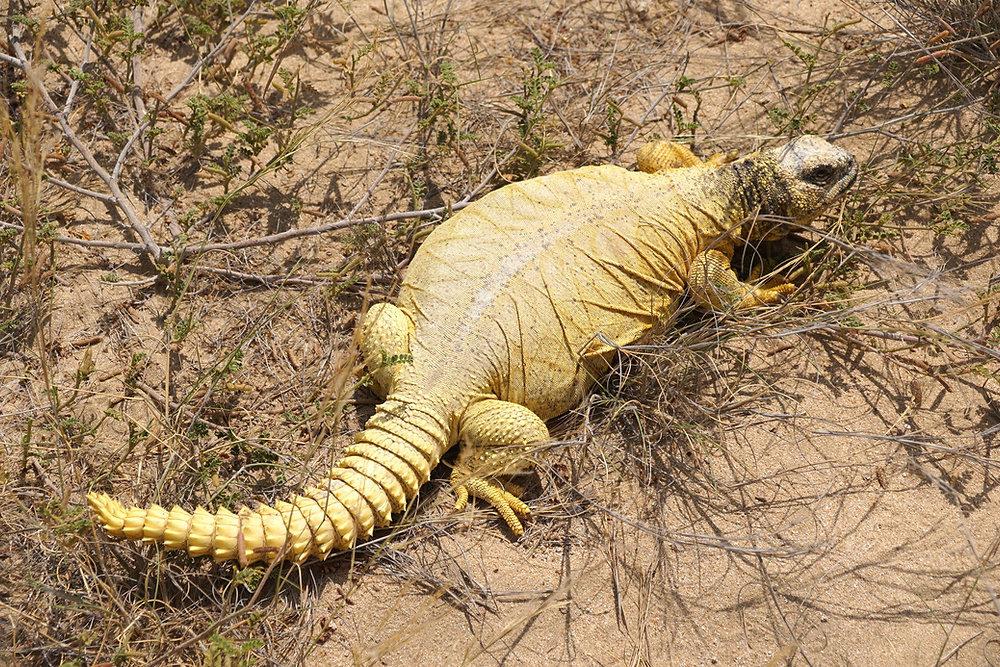
Arabian Spiny-Tailed Lizard: Desert Ecosystem Guardian
The Arabian spiny-tailed lizard is a keystone species in Saudi Arabia’s fragile desert ecosystem. Known locally as dhub, this robust reptile embodies both ecological balance and cultural heritage across the Arabian Peninsula.
Ecological Role of the Arabian Spiny-Tailed Lizard
The Arabian spiny-tailed lizard (Uromastyx aegyptius microlepis) belongs to the Agamidae family and thrives in harsh desert environments spanning Saudi Arabia, Jordan, Iraq, Egypt, Syria, and Iran. With lengths reaching up to 85cm, its sandy coloration allows it to blend perfectly into arid surroundings. Despite extreme heat and limited water, the lizard remains active during the day and adapts through seasonal hibernation.
Its foraging behavior directly supports desert regeneration. By grazing selectively on native desert plants like ramth and sa’dan, the dhub avoids overconsumption and instead promotes plant regrowth. These feeding patterns also help stabilize soil, reduce erosion, and prevent desertification—a pressing challenge for Gulf nations facing climate change and land degradation.
Burrows and Symbiotic Habitats
The Arabian spiny-tailed lizard constructs deep burrows—sometimes reaching two meters below the surface. These burrows serve as microhabitats for other species such as scorpions, which gain shelter while offering protection to the dhub from predators. The lizard’s preference for digging around shrub root systems naturally reinforces these shelters and further strengthens the surrounding vegetation.
Such symbiotic behavior exemplifies how this reptile supports biodiversity beyond its immediate needs, making it essential for long-term ecological stability.
Adaptation to Harsh Conditions
Being ectothermic, the dhub uses sunlight to regulate its body temperature. It hibernates during the cooler months and resumes activity when the desert warms to around 35°C. During this phase, it emerges from its burrow and basks in the sun to regain body heat. This thermoregulatory behavior enables it to thrive under Saudi Arabia’s extreme climate.
Historically, the dhub played a role in Bedouin cuisine. Its meat, particularly the tail known as Al-’akrah, was regarded as a spring delicacy. However, studies have revealed alarmingly high cholesterol content—over 561mg per 100g—making it unsuitable for individuals with heart conditions. Despite this, illegal hunting persisted, causing population declines outside protected areas.
Conservation and Legal Protection
The Arabian spiny-tailed lizard has benefited from targeted conservation efforts led by the National Center for Wildlife Development (NCWD) and Saudi Arabia’s environmental security forces. Offenders now face fines of up to SAR 3,000 (approximately $800) for illegal hunting.
Protected areas report stable or increasing dhub populations, thanks to habitat monitoring, stricter enforcement of wildlife laws, and awareness campaigns directed at communities with traditional ties to dhub hunting. Educational outreach via social media and partnerships with royal nature reserves further reinforce these efforts.
Regional and International Partnerships
Saudi Arabia collaborates with global organizations like the International Union for Conservation of Nature (IUCN) to assess species health, monitor trade, and enforce anti-poaching regulations. These measures not only aim to protect the Arabian spiny-tailed lizard but also serve as a model for broader desert wildlife conservation across the Middle East.
A Symbol of Resilience and Culture
Beyond its biological significance, the dhub holds a deep place in Arab folklore, poetry, and oral traditions. It symbolizes endurance, adaptation, and survival—qualities that resonate with desert communities. This cultural symbolism reinforces the argument for protecting the species not just for ecological reasons but as part of Saudi Arabia’s natural heritage.
If future generations are to witness this resilient desert guardian, science, policy, and community cooperation must continue working hand in hand. The Arabian spiny-tailed lizard is not just another reptile; it is a vital partner in preserving the ecological equilibrium of one of the world’s harshest but most beautiful habitats.