Steady Growth in Early 2025
In the first quarter of 2025, the Gulf Cooperation Council (GCC) economies grew 3%, with a combined GDP of $588.1 billion, up from $570.9 billion in Q1 2024. This reflects resilience amid regional and global economic pressures.
Diversification Beyond Oil
Non-oil sectors drove most of this growth, particularly logistics, tourism, and technology. The logistics sector attracted significant investment, including a $5 billion partnership between Blackstone and Abu Dhabi’s Lunate, aimed at developing warehouses and distribution hubs across the Gulf.
Updated Economic Forecasts
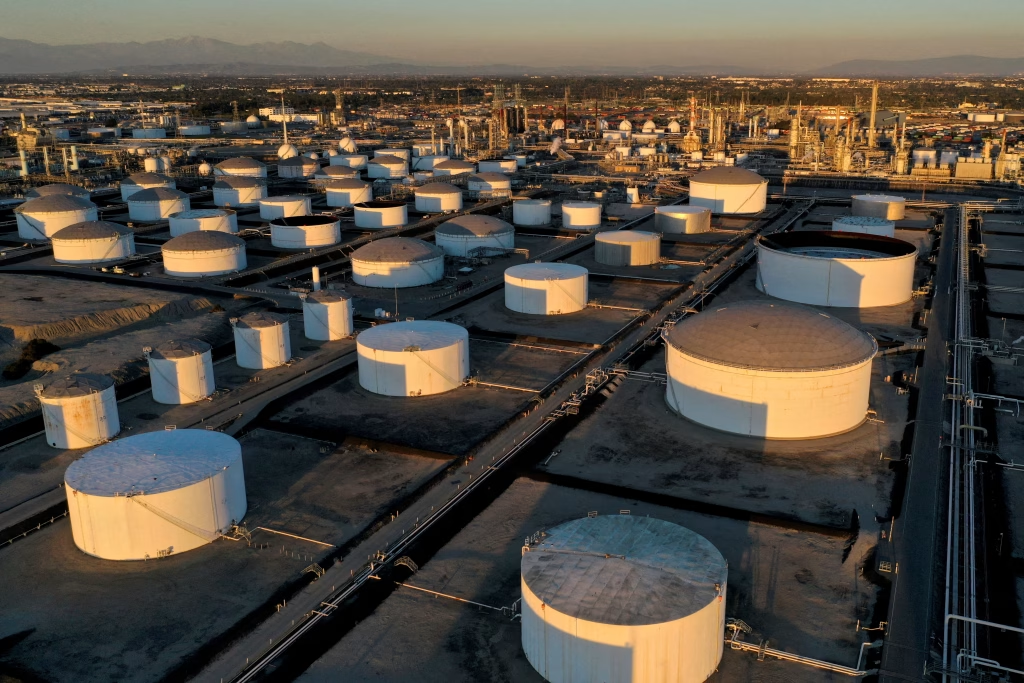
The World Bank revised the MENAAP region’s 2025 GDP growth to 2.8%, up from 2.6% projected in April, citing faster easing of oil production cuts and expansion in non-oil sectors.
Concerns for 2026
Forecasts for 2026 are more cautious. Countries like Iran and Libya face contraction, with Iran’s economy expected to shrink 2.8% due to geopolitical tensions and reduced oil production, affecting regional trade links.
Regional Instability
Despite growth, regional conflicts in Syria, Yemen, Lebanon, the West Bank, Gaza, and Afghanistan continue to strain economies, disrupt trade, and increase security costs.
Focus on Economic Diversification
GCC countries are expanding non-oil sectors. Saudi Arabia’s Riyadh Season 2025, valued at £2.4 billion, promotes tourism, culture, and entertainment to stimulate spending and job creation.
IMF Forecast and Policy Support
The IMF raised Saudi Arabia’s 2025 GDP forecast to 3.5%, boosted by government-led projects and OPEC+’s planned phase-out of production cuts. These measures strengthen economic stability and resilience.
Investments in Technology and Infrastructure
GCC governments continue investing in digital infrastructure, renewable energy, and smart city initiatives. These efforts aim to reduce oil dependency while sustaining growth amid global uncertainty.
Conclusion
The first quarter of 2025 shows that GCC economies are adapting to global pressures through diversification, strategic investments, and supportive policies. Future growth depends on balancing oil revenue with non-oil development and regional stability.