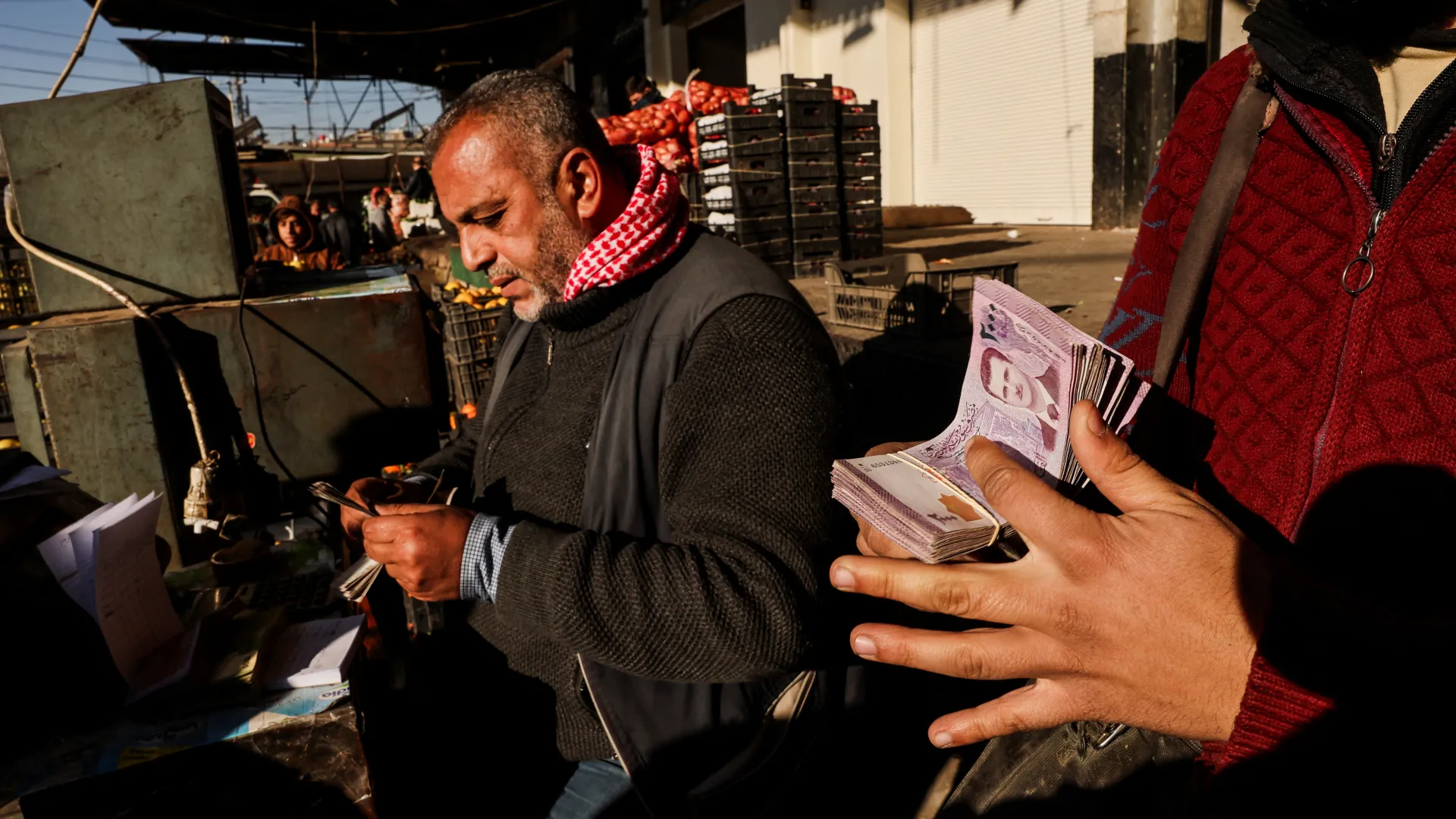
Syria is pursuing an ambitious economic transformation as President Ahmed al-Sharaa seeks to rebuild the country after years of war, sanctions and economic isolation. The government is targeting a much larger economy while pushing reforms designed to attract investment and strengthen trade with neighboring countries.
The economic agenda comes as Syria attempts to reconnect with regional and international markets and rebuild infrastructure damaged during years of conflict. Al-Sharaa presented his vision at the Arab Media Summit in Dubai, highlighting the scale of the opportunity and the challenges facing the country.
Syria economy reforms focus on reconstruction
The government’s economic strategy is centered on rebuilding essential infrastructure while creating conditions for private-sector investment.
Syria needs major investment in roads, electricity, water networks, telecommunications, ports and other infrastructure. The scale of reconstruction means that economic recovery will depend heavily on domestic reforms as well as regional and international capital.
The Syrian Development Fund was established to support reconstruction and development projects, while the government has also created institutions aimed at coordinating economic development and investment.
Al-Sharaa targets a $200 billion economy
Al-Sharaa’s long-term economic vision is particularly ambitious given the condition of the Syrian economy following years of conflict.
The proposed expansion would require sustained investment, stronger institutions, improved infrastructure and greater integration with regional markets. Reaching such a target would also depend on Syria maintaining political and economic stability.
The government is therefore seeking to move beyond emergency reconstruction toward a broader economic model capable of generating jobs, increasing production and attracting private investment.
Regional trade becomes a key priority
Regional trade is expected to play an important role in Syria’s economic recovery.
The country’s geographic position gives it potential connections to markets in Türkiye, Iraq, Jordan, Lebanon and the wider Gulf region. Restoring transport corridors and simplifying trade procedures could help Syrian businesses reconnect with regional supply chains.
Greater trade integration could also support agriculture, manufacturing, logistics, construction and other sectors that have suffered from years of disruption.
Investment is central to Syria’s economic strategy
Attracting investors will be crucial if Syria is to finance reconstruction on the scale required.
The government has signaled a shift toward a more market-oriented economic environment, including measures intended to reduce bureaucratic barriers and encourage private-sector participation.
For investors, however, economic opportunity will need to be accompanied by predictable regulations, functioning financial institutions, reliable infrastructure and greater confidence in the country’s political and security environment.
Energy remains a major challenge
Energy is one of the biggest obstacles to Syria’s economic recovery.
The country remains heavily dependent on energy imports, while damage to infrastructure and problems affecting refinery operations have contributed to supply pressures. Recent fuel price increases have also triggered protests in several parts of the country, highlighting the difficulty of implementing economic reforms while households face severe financial pressure.
The government will therefore need to balance reforms aimed at improving the economy with measures that prevent rising costs from placing additional pressure on households and businesses.
Syria faces major economic risks
Despite the government’s ambitious plans, the road toward a $200 billion economy is likely to be difficult.
Syria continues to face infrastructure shortages, limited investment capacity, weak purchasing power and the long-term effects of conflict. Around 90% of Syrians are estimated to live below the poverty line, according to recent reporting, underscoring the scale of the social challenge facing the government.
Recent fuel-price protests also demonstrate how quickly economic measures can generate public opposition when living costs rise.
What the reforms could mean for Syria
If successfully implemented, Syria economy reforms could gradually reshape the country’s economic landscape.
A stronger private sector, improved infrastructure and expanded regional trade could create employment and increase production. Reconstruction could also generate opportunities in construction, energy, transport, telecommunications, agriculture and manufacturing.
However, achieving the government’s long-term economic ambitions will require more than investment announcements. Sustainable growth will depend on institutional reforms, economic stability, reliable public services and greater confidence among businesses and investors.
Syria’s economic recovery enters a critical phase
President Ahmed al-Sharaa’s economic agenda represents one of the most ambitious attempts to rebuild Syria since the fall of Bashar al-Assad.
The goal of developing a $200 billion economy reflects the scale of the government’s aspirations. But the immediate challenges remain substantial, particularly energy shortages, poverty, infrastructure damage and public pressure over rising prices.
The success of Syria economy reforms will ultimately depend on whether the government can translate its reconstruction and trade ambitions into stable economic growth that improves living standards for ordinary Syrians.