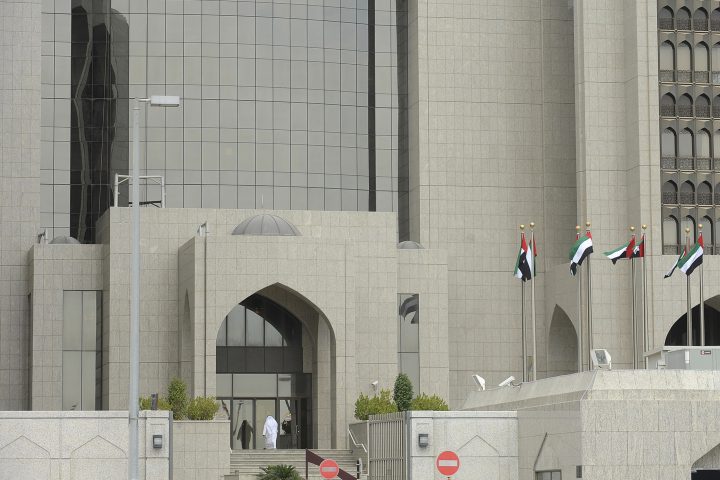
The best financial advisors in the UAE operate within one of the world’s rapidly expanding wealth-management markets, serving residents, expatriates, entrepreneurs, executives, families and institutional clients.
The country’s advisory sector is particularly concentrated in Dubai and Abu Dhabi. The Dubai International Financial Centre reported 592 wealth and asset-management firms by the first half of 2026, up 35% year over year, while the total number of regulated firms in DIFC exceeded 1,100.
That rapid expansion gives investors considerable choice, but it also makes selecting an adviser more complicated.
A financial adviser may provide investment planning, retirement planning, wealth structuring, portfolio advice, insurance-related planning, succession planning or broader financial guidance. Some firms also manage client assets, while others primarily recommend investments or arrange transactions.
There is therefore no single adviser that is automatically best for everyone. The firms below stand out because of factors such as regulatory authorization, UAE presence, breadth of advisory capabilities, accessibility and established wealth-management operations.
1. AES Financial Services
AES Financial Services is one of the more established independent financial advisory businesses operating from Dubai International Financial Centre.
The company has been licensed by the Dubai Financial Services Authority since June 27, 2016 and is authorized to conduct financial services for retail clients. Its permissions include advising on financial products, arranging investment transactions, arranging custody and advising on credit.
That retail authorization makes AES particularly relevant to individuals and families rather than exclusively to large institutional investors.
The firm’s advisory model focuses heavily on comprehensive financial planning rather than simply selling individual investment products. This can include investment strategy, retirement planning, portfolio construction and longer-term wealth management.
AES chief executive Sam Instone has also publicly emphasized evaluating financial progress in the context of a client’s broader life and objectives rather than judging success solely by investment-market returns.
Best suited for: individuals and families looking for independent financial planning and investment advice within the DIFC regulatory framework.
2. St. James’s Place Middle East
St. James’s Place Middle East is the UAE operation of the UK-based wealth-management group and provides financial advice to residents through its DIFC business.
The DFSA register shows that St. James’s Place Middle East has been licensed since May 29, 2023 and is authorized to provide services to retail clients.
Its permissions include advising on a broad range of financial products, including shares, funds, bonds, deposits and certain long-term insurance products. It can also arrange investment transactions and custody services.
Its international background may make it particularly relevant for expatriates dealing with assets, retirement plans or financial obligations across more than one country.
As with any advisory firm, prospective clients should review the exact cost structure and ensure they understand all product and ongoing advisory charges before investing.
Best suited for: expatriates, professionals and families seeking structured long-term financial and wealth planning.
3. Julius Baer Middle East
For high-net-worth and ultra-high-net-worth clients, Julius Baer Middle East is one of the UAE’s longest-established regulated private-wealth businesses.
The firm received its DIFC licence in September 2004, making it one of the earliest financial institutions authorized by the DFSA.
Its regulatory permissions include advising on financial products, arranging investments, arranging custody, advising on credit and providing trust services. It also operates an Islamic finance window.
Julius Baer’s offering is more private-banking-oriented than that of a typical independent financial planner. Services can extend beyond basic investment advice to portfolio structuring, wealth planning, financing and family wealth considerations.
This generally makes it most relevant to clients with substantial investable assets.
Best suited for: high-net-worth and ultra-high-net-worth individuals requiring private banking and sophisticated wealth-management services.
4. ASK Wealth Advisors DIFC
ASK Wealth Advisors is another regulated wealth advisory firm operating from the Dubai International Financial Centre.
Its DIFC entity was licensed by the DFSA in November 2024 and is authorized to advise on financial products and arrange investment transactions.
The firm’s permissions encompass instruments including shares, bonds, investment funds, structured products and certain long-term insurance arrangements.
ASK is particularly associated with wealth management for affluent families and entrepreneurs, including clients with connections to India and the wider international investment community.
Its UAE presence adds another option for families seeking cross-border wealth advisory services within DIFC.
Best suited for: high-net-worth families, entrepreneurs and investors seeking cross-border private-wealth advice.
5. Geojit Private Wealth DIFC
Geojit Private Wealth DIFC is one of the newer additions to Dubai’s regulated private-wealth sector.
The company received its DFSA licence on February 12, 2026. Its permissions are broad and include advising on financial products, managing assets, arranging custody, arranging investments and advising on credit.
Unlike a business restricted primarily to investment introductions, Geojit’s authorization to manage assets gives it scope to provide more comprehensive portfolio-management services.
Its international and South Asian connections may make it especially relevant for expatriate families whose assets and financial plans extend between the UAE, India and other jurisdictions.
Best suited for: affluent expatriates and families seeking investment advice combined with discretionary portfolio-management capabilities.
6. Copernicus Wealth Management Middle East
Copernicus Wealth Management Middle East, trading as Copernicus Wealth, operates from DIFC and is another relatively recent entrant to the UAE wealth-management market.
The company obtained its DFSA licence in September 2025.
Its authorization includes advising on financial products, managing assets, arranging investments, arranging custody and advising on credit.
The breadth of those permissions allows the firm to work across several areas of wealth management rather than simply acting as an investment intermediary.
Copernicus may appeal to internationally mobile clients who want portfolio management and financial advice within a single regulated relationship.
Best suited for: international investors and high-net-worth clients seeking broad advisory and portfolio-management services.
7. ABK Wealth Management
ABK Wealth Management operates through ABK Capital DIFC and offers another regulated private-wealth option in Dubai.
The business was licensed by the DFSA in May 2025.
Its permissions include advising on financial products, managing assets, arranging investment transactions, arranging custody and providing custody for certain investments.
The ability to combine investment advice, portfolio management and custody services can be useful for affluent clients looking to consolidate parts of their financial affairs.
Its comparatively recent DIFC entry means investors should distinguish between the wider financial group’s history and the operating history of the specific DIFC entity.
Best suited for: affluent investors seeking integrated wealth-management and investment services.
8. Standard Chartered Private Bank
Standard Chartered has a substantial presence in the UAE and is among the international banks available to clients looking for private banking and wealth-management services.
The bank appears on the DFSA’s register of authorized firms within DIFC.
For appropriate clients, private-bank advisory relationships can combine investments with banking, lending, wealth structuring and international financial services.
This model may be particularly useful for business owners and internationally mobile families that already maintain financial relationships across several countries.
Private-bank eligibility requirements can be significantly higher than those of retail financial-planning firms, however.
Best suited for: internationally mobile high-net-worth clients wanting banking and investment advice under one relationship.
9. UBS
UBS is another global wealth-management institution with a regulated presence in the Dubai International Financial Centre.
Current DFSA records show UBS AG among authorized firms, with senior authorized personnel registered in Dubai during 2026.
UBS is primarily relevant to wealthier investors rather than people seeking basic budgeting or entry-level financial planning.
Its global platform can provide investment advisory, private banking and wealth-management capabilities for clients with international portfolios.
For families whose assets span several jurisdictions, access to global investment research and cross-border wealth expertise can be an important consideration.
Best suited for: high-net-worth and ultra-high-net-worth investors with international assets and complex wealth-management requirements.
10. Emirates NBD Wealth Management
Emirates NBD is one of the UAE’s largest domestic banking groups and offers investment and wealth-management services to eligible clients through its broader banking ecosystem.
A major advantage of using a bank-backed adviser is convenience. Clients may be able to combine everyday banking, investments, portfolio services and other wealth-management requirements within the same financial institution.
Its local presence can also be advantageous for investors primarily concerned with UAE and Gulf markets.
For investors choosing between a large bank and an independent adviser, however, it is worth considering whether recommendations are drawn from an open range of investments or concentrated primarily on products distributed by the banking group.
Best suited for: UAE residents who prefer combining banking and wealth-management services through a large domestic institution.
Why DIFC Regulation Matters
Regulation is one of the first things investors should check when selecting among UAE financial advisors.
The DFSA maintains a public register showing authorized firms, permitted financial activities and approved individuals operating within DIFC. Its register currently contains more than 1,200 firms across different regulated categories.
This allows potential clients to verify whether a company claiming to provide financial advice is actually authorized for that activity.
Authorization also matters because not every financial business has permission to perform the same services.
One company may be authorized to advise on investments but not manage client assets. Another may be authorized to manage portfolios but restricted in the type of clients it can serve.
Consumers should therefore check the specific permissions, not merely whether a firm’s name appears in a regulator’s database.
Financial Advice in Abu Dhabi
Dubai is not the UAE’s only major wealth-management centre.
Abu Dhabi has developed a rapidly expanding financial sector around Abu Dhabi Global Market, which attracts international private banks, asset managers, family offices and investment firms.
Together, ADGM and DIFC have helped make the UAE one of the leading wealth-management destinations in the Middle East.
The distinction is important because firms established within ADGM operate under its Financial Services Regulatory Authority, while DIFC firms are supervised by the DFSA.
Companies outside these financial free zones may fall under different UAE regulatory frameworks depending on the services they provide.
Independent Financial Advisor vs Private Bank
The best type of adviser depends heavily on the client’s financial circumstances.
An independent planning firm such as AES may be more appropriate for someone looking for comprehensive financial planning, retirement projections and ongoing investment guidance.
A private bank such as Julius Baer or UBS can be more suitable for a client with substantially greater wealth who also needs lending, complex portfolio structures or international private-banking capabilities.
Bank-affiliated wealth managers can provide considerable convenience, but clients should understand whether advisers are restricted to certain investment products.
The important question is not whether one model is universally superior, but whether the adviser is structured to serve the client’s particular circumstances.
What Does a Financial Advisor Do?
A professional financial adviser should do considerably more than recommend which fund to purchase.
A comprehensive advisory relationship can begin with analysing income, expenditure, existing assets, liabilities and financial objectives.
The adviser can then help develop an investment strategy appropriate to those objectives.
For long-term clients, financial planning may also cover retirement requirements, education funding, insurance needs, estate planning and succession considerations.
Portfolio recommendations should follow the financial plan rather than becoming the plan itself.
Financial Advisors for UAE Expatriates
Financial planning can be particularly complicated for expatriates living in the UAE.
An expatriate may earn income in dirhams while owning investments in another currency, maintaining property overseas and eventually planning to retire in a third country.
Tax residence may also change during their lifetime.
International pensions, inheritance rules and investment regulations can vary considerably between jurisdictions.
An adviser serving expatriates should therefore understand cross-border financial planning or work with appropriate tax and legal specialists when necessary.
Financial advisers should not be assumed to be qualified tax lawyers merely because they offer international investment products.
Financial Advisors for High-Net-Worth Individuals
High-net-worth clients often require more than conventional retirement and investment planning.
Their financial affairs can involve operating businesses, concentrated shareholdings, multiple properties, international investments and succession planning.
Private banks and specialist wealth managers can therefore provide services such as discretionary portfolio management, structured lending, family wealth planning and investment access.
Firms such as Julius Baer have regulatory permissions in DIFC extending beyond financial-product advice into areas including trust services and credit advice.
The sophistication of the service should nevertheless be matched by careful examination of costs.
Complexity is only useful when it solves an actual financial problem.
Read Also: The Best Asset Managers in the UAE
Fee-Based vs Commission-Based Financial Advice
How an adviser is paid is one of the most important issues prospective clients should understand.
Advisers can receive direct planning fees, recurring advisory fees, asset-based charges, commissions from financial products or combinations of these arrangements.
The payment model can create different incentives.
A commission attached to a product does not automatically make the advice unsuitable, but the client should know that the commission exists and understand how it could influence recommendations.
Long-standing UAE consumer guidance has emphasized checking regulatory status and understanding advisory fees before selecting an adviser.
Clients should ask for all charges in clear monetary and percentage terms before committing funds.
Questions to Ask a UAE Financial Advisor
Before entering an advisory relationship, investors should establish several important facts.
They should ask which regulator supervises the adviser, what services the company is specifically licensed to provide, whether the individual adviser is appropriately authorized, how the adviser is compensated, what the total investment costs are and whether there are penalties or restrictions when leaving a product.
Clients should also understand who actually holds their assets.
In many advisory arrangements, the adviser does not directly hold client investments. Instead, assets are held by a regulated custodian or investment platform.
That distinction should be explained clearly.
Watch Out for Long-Term Product Lock-Ins
One issue that deserves particular attention is liquidity.
Some investment and insurance-based savings products have historically contained lengthy commitment periods, surrender charges or other restrictions on withdrawing money early.
Investors should never rely solely on illustrations showing projected future values.
They should understand what happens if they stop contributing after one year, three years or five years and what amount they could actually withdraw.
A suitable long-term investment should fit the investor’s financial circumstances rather than requiring the investor to maintain an unrealistic contribution commitment.
Check the Adviser, Not Just the Company
A respected company name does not eliminate the need to evaluate the individual providing advice.
Financial planning is a relationship-based profession.
Investors should examine an adviser’s qualifications, professional experience, regulatory authorization and approach to investment planning.
The DFSA public register includes both firms and authorized individuals, helping investors confirm who currently holds regulated roles.
A good adviser should also be able to explain recommendations in understandable language without pressuring the client into making an immediate decision.
Why the UAE Financial Advisory Market Is Expanding
The UAE’s broader wealth sector has grown rapidly as more entrepreneurs, investment managers, family offices and internationally mobile wealthy individuals establish operations in the country.
DIFC reported that wealth and asset-management firms increased 35% year over year to 592 in the first half of 2026, while family offices increased 36% to 1,408.
DFSA figures also show the scale of capital being managed and advised from Dubai.
By the end of 2025, assets managed within DIFC’s wider wealth and asset-management sector had reached approximately $176 billion, while assets under advisory reached $220 billion.
That expansion is increasing competition among private banks, independent advisers and investment managers for UAE-based clients.
Which Is the Best Financial Advisor in the UAE?
There is no universal winner.
For individuals and expatriate families seeking independent retail financial planning, AES Financial Services stands out because it has been DFSA-licensed since 2016 and is explicitly authorized to serve retail clients.
St. James’s Place Middle East is another notable option for structured retail wealth planning and is also authorized by the DFSA to serve retail clients.
For substantial private wealth, Julius Baer Middle East offers one of the longest-established DIFC platforms, with a regulatory history dating to 2004 and permissions extending across investments, credit and trust services.
Newer firms including ASK Wealth Advisors, Copernicus Wealth and Geojit Private Wealth broaden the market further, particularly for affluent and internationally connected families.
The best choice ultimately depends on the amount being invested, the complexity of the client’s finances and whether the priority is financial planning, portfolio management, private banking or cross-border wealth advice.
Final Thoughts
The best financial advisors in the UAE range from independent financial-planning companies to international private banks and specialist wealth-management firms.
AES Financial Services and St. James’s Place Middle East are particularly relevant to retail and expatriate clients, while Julius Baer and other global private banks are positioned primarily toward wealthier families. Newer DIFC entrants such as ASK Wealth Advisors, Copernicus Wealth and Geojit Private Wealth have added even more choice to the market.
Choosing between them should begin with regulatory verification, followed by an examination of fees, investment choices, adviser qualifications, custody arrangements and any restrictions on accessing invested money.
With DIFC’s wealth and asset-management sector continuing to expand rapidly in 2026, UAE residents now have access to an increasingly sophisticated financial-advice market.
The strongest adviser is not necessarily the largest firm or the company offering the most complex products. It is the appropriately regulated adviser capable of explaining costs and risks clearly and building a financial strategy that fits the client’s actual objectives.
Read Also: The Best Asset Managers in the United States