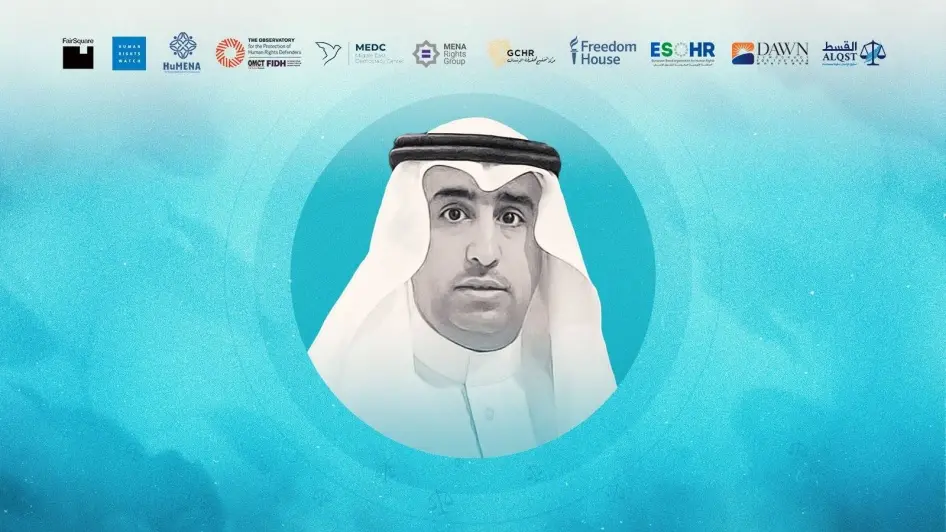
Release of Mohammed al-Bejadi is now a united demand from Saudi and international rights groups. They say the activist has been unlawfully held for over two years beyond his prison term. This ongoing detention, they argue, shows that Saudi Arabia’s repression of peaceful dissent has not eased, despite recent prisoner releases.
Al-Bejadi co-founded the banned Saudi Civil and Political Rights Association (ACPRA) in 2009. Authorities arrested him in May 2018 during a crackdown on women’s rights defenders. A court sentenced him to 10 years, suspending five. His term ended in April 2023. Yet, he remains in Buraydah Prison without legal representation. According to ALQST, an independent Saudi rights group, he has endured torture, physical abuse, and long periods without contact with the outside world.
Detention Beyond Sentences
In April 2025, UN Special Rapporteur Mary Lawlor warned that Saudi authorities often keep prisoners past their sentences. She said this practice breaks both Saudi law and international standards.
Other ACPRA members have faced the same fate. Mohammed al-Qahtani and Essa al-Nukheifi spent more than two years longer in prison than their sentences required before conditional release in January 2025. In some cases, authorities have retried political prisoners nearing release and extended their terms. This has created fear among detainees that they might never be freed.
Ongoing Crackdown
Saudi Arabia has freed some prisoners in recent months, but many remain behind bars for peaceful activism. Those released often face strict conditions such as travel bans and electronic ankle monitoring.
Notable detainees include Issa al-Hamid (nine years), Mohammed al-Otaibi (17 years), Waleed Abu al-Khair (15 years), and Israa al-Ghomgham (13 years). Others include aid worker Abdulrahman al-Sadhan, who is still missing, as well as activists, journalists, and members of the Huwaitat tribe on death row or serving long sentences.
The execution of journalist Turki al-Jasser and a rise in executions for non-violent drug offences have intensified global concern.
Al-Bejadi’s Longstanding Activism
Al-Bejadi’s activism spans decades. In 2007, he spent four months in jail without trial. From 2011 to 2016, he served over five years for joining a peaceful protest outside the Ministry of Interior. During that protest, he said: “All prisoners of conscience are my family,” highlighting his commitment to defending the oppressed.
Coordinated Call for His Release
Rights groups including Human Rights Watch, Freedom House, and the Gulf Centre for Human Rights have joined the call for his immediate and unconditional release. They also demand freedom for all others held past their sentences and anyone jailed for peacefully exercising basic rights.
These NGOs say that releasing such prisoners is vital for Saudi Arabia to meet its obligations under international law. For Mohammed al-Bejadi, freedom is long overdue.